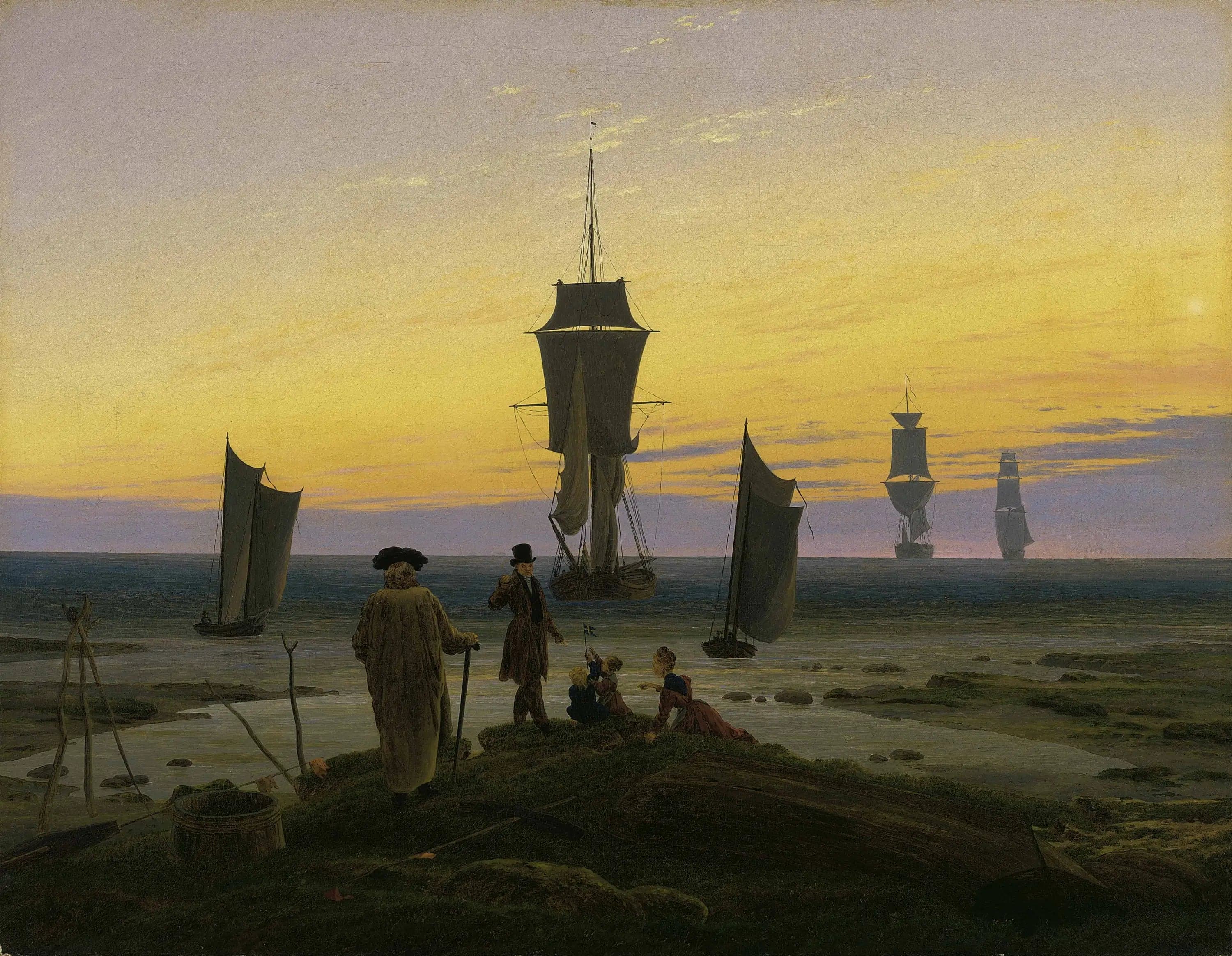
The Ages of Life
- Original dimensions
- 94 x 72.5 cm
- Movement
- Romanticism
- Museum
- Leipzig Museum of Fine Arts
- Year
- 1834
Scene depicted
In “The Ages of Life,” Caspar David Friedrich stages a captivating emotional journey. The composition depicts human figures, representing the different stages of existence, while placing them within the grandeur of nature. The silhouettes, intertwined with a striking landscape, evoke feelings of nostalgia and contemplation, symbolizing the universal quest for meaning at every stage of life.
Historical context
Created in 1834, this iconic painting shines within the romantic history, an artistic movement that emphasizes emotion and nature. The canvas represents a fascinating moment in the city of Leipzig, where it remains, carefully preserved at the Museum of Fine Arts. In this pictorial work , Friedrich delivers an exploration of the ages of life, anchoring its precise dimensions and timeless message in a geographical setting imbued with melancholy.
Place in the artist's career
“The Ages of Life” marks a turning point in Friedrich's career, a pivotal period where he achieves a balance between artistic conception and emotional depth. This painting lies between “ The Wanderer above the Sea of Fog ” and “ The Sea of Ice ,” two other canvases that illustrate his stylistic evolution, blending sensitivity and technical mastery. This masterpiece embodies the maturity of his artistic journey while remaining rooted in the romantic tradition.
Anecdote
Friedrich once stated: “Nature is the reflection of our soul.” It is in this poetic breath that the very essence of his masterpiece lies. His inspiration sprouted during a walk in the heart of the forest, as the sun rose, caressing the treetops with golden light, thus revealing the fleeting beauty of life. This enchanting atmosphere nourished every brushstroke of the painting .