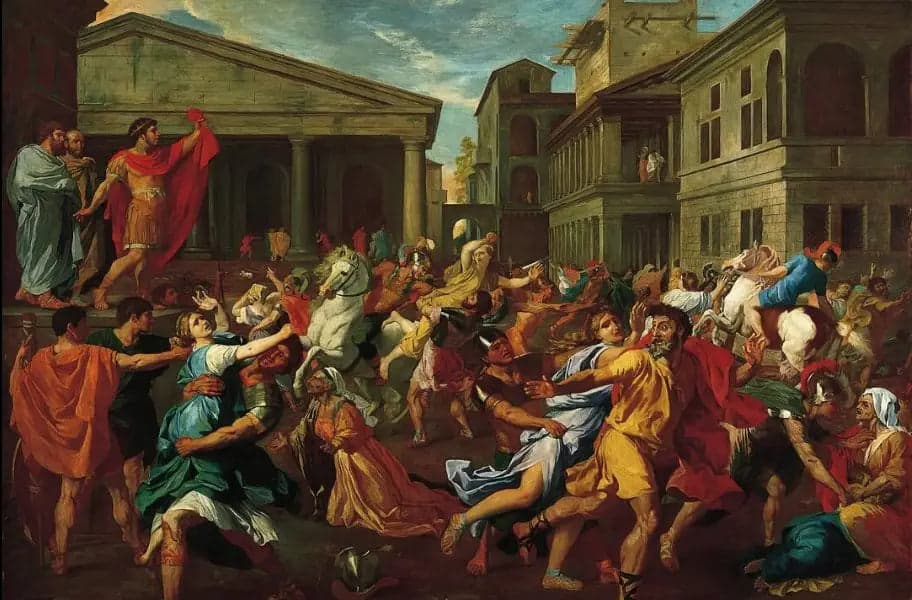
The Abduction of the Sabine Women
- Original dimensions
- 207 x 150 cm
- Museum
- Norton Simon Museum
- Year
- 1861
Scene depicted
This historical painting illustrates a dramatic moment where the Romans abduct the Sabine women to marry them. The palpable tension between the actions of the men and the heartbreaking expressions of the women constitutes the heart of this pictorial work. The vigor of the embraces, the movement of the bodies, and the way Degas captured this moment of passion and conflict give the canvas its emotional power, thus revealing a duality between desire and despair.
Historical context
Created in 1861, this painting is an iconic work by the famous French artist Edgar Degas and is part of the Impressionist movement. It emerges in a rich historical context, as Paris is in the midst of artistic and cultural effervescence. The canvas is currently housed in the prestigious Norton Simon Museum , where it continues to captivate art lovers. The majestic dimensions of this canvas make it a centerpiece that instantly draws the eye.
Place in the artist's career
This painting marks an important milestone in Degas's career, reflecting his desire to represent human reality in all its complexity. It is interesting to put it in perspective with other works like The Dance Class and The Exit from the Conservatory, which also show themes of movement and human interaction, but with different tones. The Abduction of the Sabine Women thus reveals a growing stylistic and emotional maturity.
Anecdote
It is said that Edgar Degas once declared: “Art is a capture of emotion, a moment frozen in movement.” It is undoubtedly this thought that inspired him during the creation of his masterpiece . Imagine him on a sunny morning, strolling through the streets of Paris, observing passersby and soaking in the stories of daily life. This momentum found its strength in the striking composition of the painting that is The Abduction of the Sabine Women, a true ode to human dynamics.