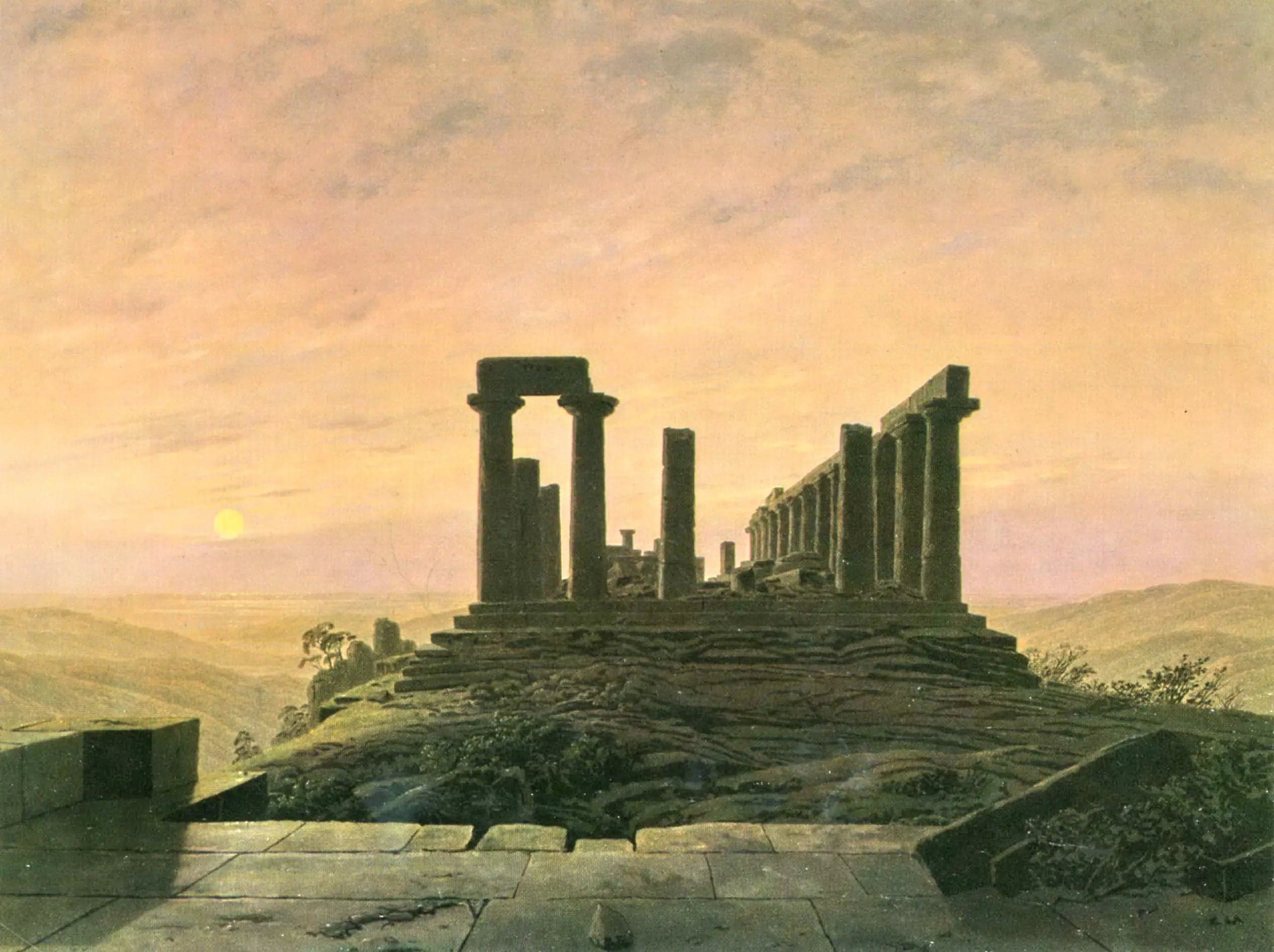
Temple of Juno in Agrigento
- Original dimensions
- 72 x 54 cm
- Museum
- Museum am Ostwall
- Year
- 1828
Scene depicted
The painting “Temple of Juno in Agrigento” depicts the majesty of Greek ruins at the heart of a romantic landscape. The abandoned ruins of the temple rise powerfully from the surrounding fields, creating a poignant dialogue between man and nature. Every element of this painting evokes an atmosphere of serenity and wonder, as if the echoes of the past still resonate in the pure air of Sicily.
Historical context
Artwork: Temple of Juno in Agrigento |BRK| Artist: Caspar David Friedrich |BRK| Year: 1828 |BRK| Museum: Museum am Ostwall |BRK| Dimensions: 72 x 54 cm |BRK| Art Movement: Romanticism |BRK|
Place in the artist's career
Situated at the heart of Friedrich's artistic journey, this painting marks a period of maturity. Alongside his other works such as “ The Wanderer Above the Sea of Fog ” and “ Abbey in the Oakwood ”, there is an evolution towards themes of melancholy and contemplation, propelling his style to unprecedented heights.
Anecdote
“Nature is a place where the soul flourishes.” This quote resonates in the hearts of those who contemplate Friedrich's masterpiece . Inspired by the solitary ruins of the temple, the artist is said to have found his creative impetus in the melancholy of misty mornings, when light filtered through the columns, revealing the secrets of nature and history while evoking deep introspection.