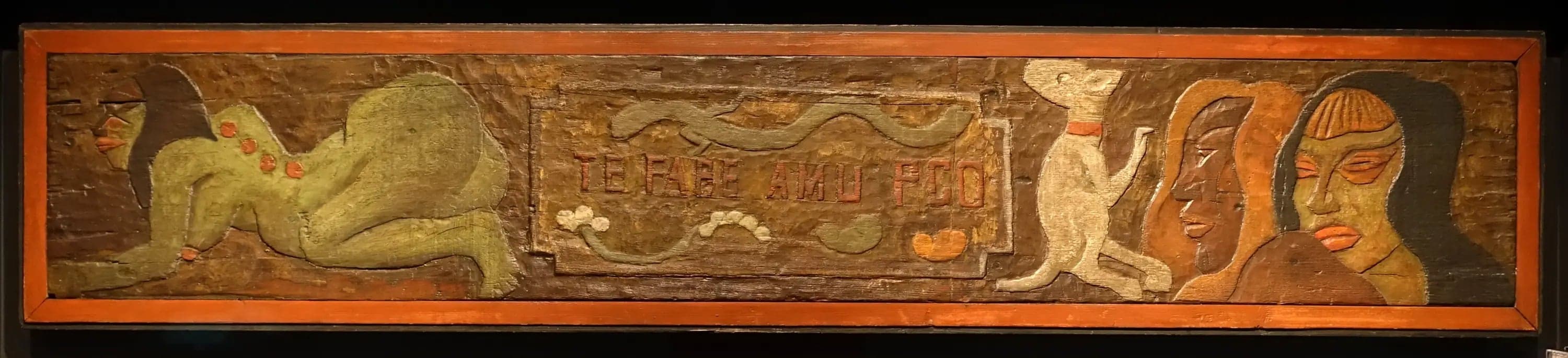
Te Fare Amu
- Original dimensions
- 148 x 25 cm
- Museum
- Princeton University Art Museum
- Year
- 1896
Scene depicted
In this canvas , the scene depicts a traditional house, a symbol of Polynesian culture. Evoking harmony between architecture and the surrounding nature, Gauguin captures a suspended moment, where the gaze gets lost in the relaxed textures and shades, immersing the viewer in a serene and intoxicating atmosphere. Every detail, every nuance of color whispers the story of the inhabitants of this distant land.
Historical context
Created in 1896, the painting "Te Fare Amu" is part of the post-impressionist movement, an artistic current marking the transition to more personal and bold forms of expression. Paul Gauguin , then in Polynesia, draws inspiration from the wild beauty and cultural traditions of these islands, creating a canvas that transcends the limits of his time. Currently exhibited at the Princeton University Art Museum , this voluptuous work measures 148 x 25 cm, testifying to an unalterable resilience.
Place in the artist's career
"Te Fare Amu" is a milestone in Gauguin's artistic evolution, fitting into a period where he seeks authentic emotional elements and bold palettes. In parallel, works such as "Vision after the Sermon" and "The Woman with the Flower" show the growing evolution of his techniques and the rise of expressionism in his pictorial compositions.
Anecdote
"A canvas is the reflection of the soul," Gauguin once declared while contemplating the lush nature of a morning in Polynesia. At the heart of this inspiration, he felt the need to capture the essence of simple life, the vibrant colors of the earth, and human warmth, making "Te Fare Amu" unforgettable.