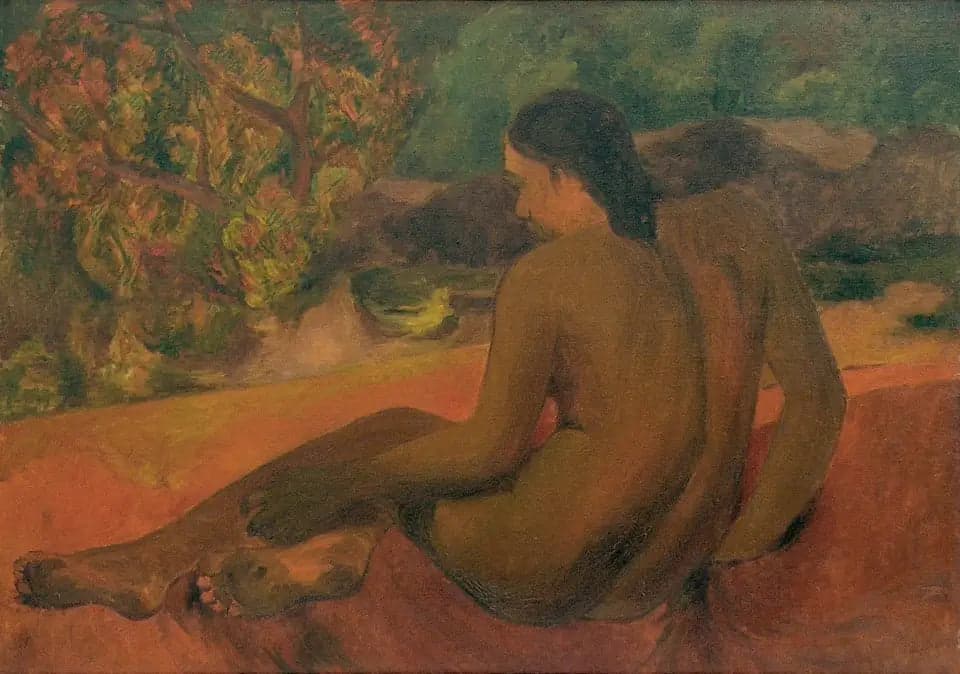
Tahitian Woman II
- Original dimensions
- 143 x 98 cm
- Museum
- National Museum of Belgrade
- Year
- 1898
Scene depicted
In "Tahitian Woman II," Gauguin presents a majestic female figure, immersed in a harmony of shadows and lights, dressed in warm and bright colors. This painting is a celebration of sensuality and spirituality, immortalizing the very essence of Tahitian life through the beauty of the female body, contributing to the mystical aura that envelops this pictorial work.
Historical context
Created in 1898, the painting "Tahitian Woman II" finds its roots in the exoticism and cultural intensity of Tahiti, an island in the Pacific Ocean, where Paul Gauguin sought to escape the modernity of the Western world. This canvas is emblematic of the symbolist movement that elevated painting to deeper levels of emotional and spiritual interpretation. Currently housed in the National Museum of Belgrade, this work measures 143 x 98 cm, a true window into the Tahitian soul.
Place in the artist's career
"Tahitian Woman II" represents a pivotal moment in Gauguin's career, marking his artistic blossoming during his stay in Tahiti. This masterpiece is often associated with other significant works such as "Vision After the Sermon" and "Where Do We Come From? What Are We? Where Are We Going?", where the artist explores the symbolist depth, human emotions, and spirituality at the heart of his compositions.
Anecdote
"I paint women because they are the light of this world," Gauguin might have said during one of his morning walks, when dawn illuminated the landscapes of Tahiti. Awed by the pure beauty of Tahitian women, he drew inspiration from their bodies and souls, translating this union of beauty through the vibrant and evocative painting of this artwork.