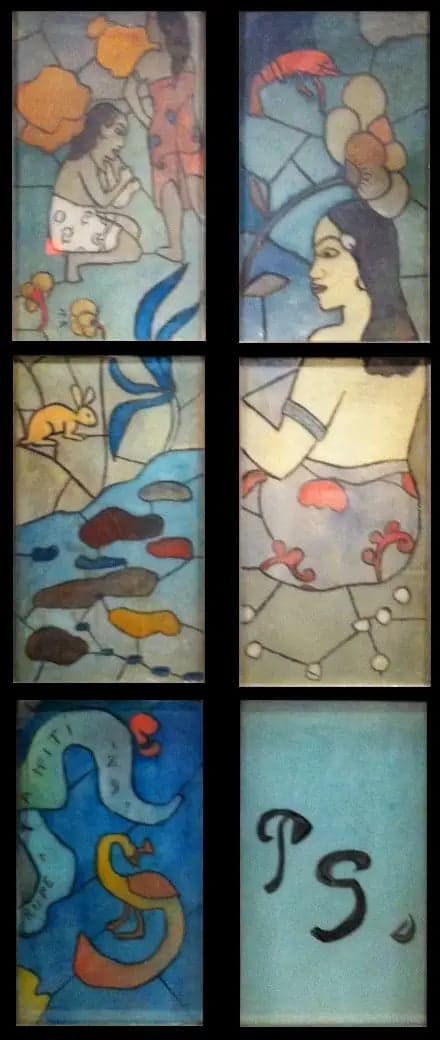
Tahitian Rupee
- Original dimensions
- 87 x 181 cm
- Museum
- New Orleans Museum of Art
- Year
- 1892
Scene depicted
This fascinating composition, known as "Roupie Tahiti", reveals a scene where culture and nature intertwine. The figures with shimmering hues are surrounded by lush landscapes, and every detail of this painting tells a story, that of a meeting between the artist and the soul of Tahiti. The scene, vibrating with a colorful harmony, invites the observer to feel the energy and serenity of this magical place.
Historical context
Created at the dawn of the 20th century, the painting "Roupie Tahiti" is set in a unique context: Tahiti, the enchanting island with vibrant colors, where Paul Gauguin found refuge and inspiration. An emblematic figure of post-impressionism , this pictorial work transports you to a universe where light and nature merge in a chromatic symphony. Currently exhibited at the New Orleans Museum of Art, this canvas of 87 x 181 cm evokes a distant world, bathed in sunlight and human warmth.
Place in the artist's career
Positioned as a crucial step in Gauguin's career, "Roupie Tahiti" stands out as an expression of his stylistic exploration. Compared to his earlier works such as "Vision after the Sermon" and "The Fiancées of Winter", this canvas marks an evolution towards colorful abstraction, representing an emotional synthesis of his artistic quest.
Anecdote
“I did not seek to paint reality, but the emotion it evokes.” These words resonate like an echo of his artistic journey. One sunny morning, at the turn of a colorful alley, Gauguin captured the essence of a perfect moment, infusing his masterpiece with the strength of inner peace, a reflection of Tahitian beauty.