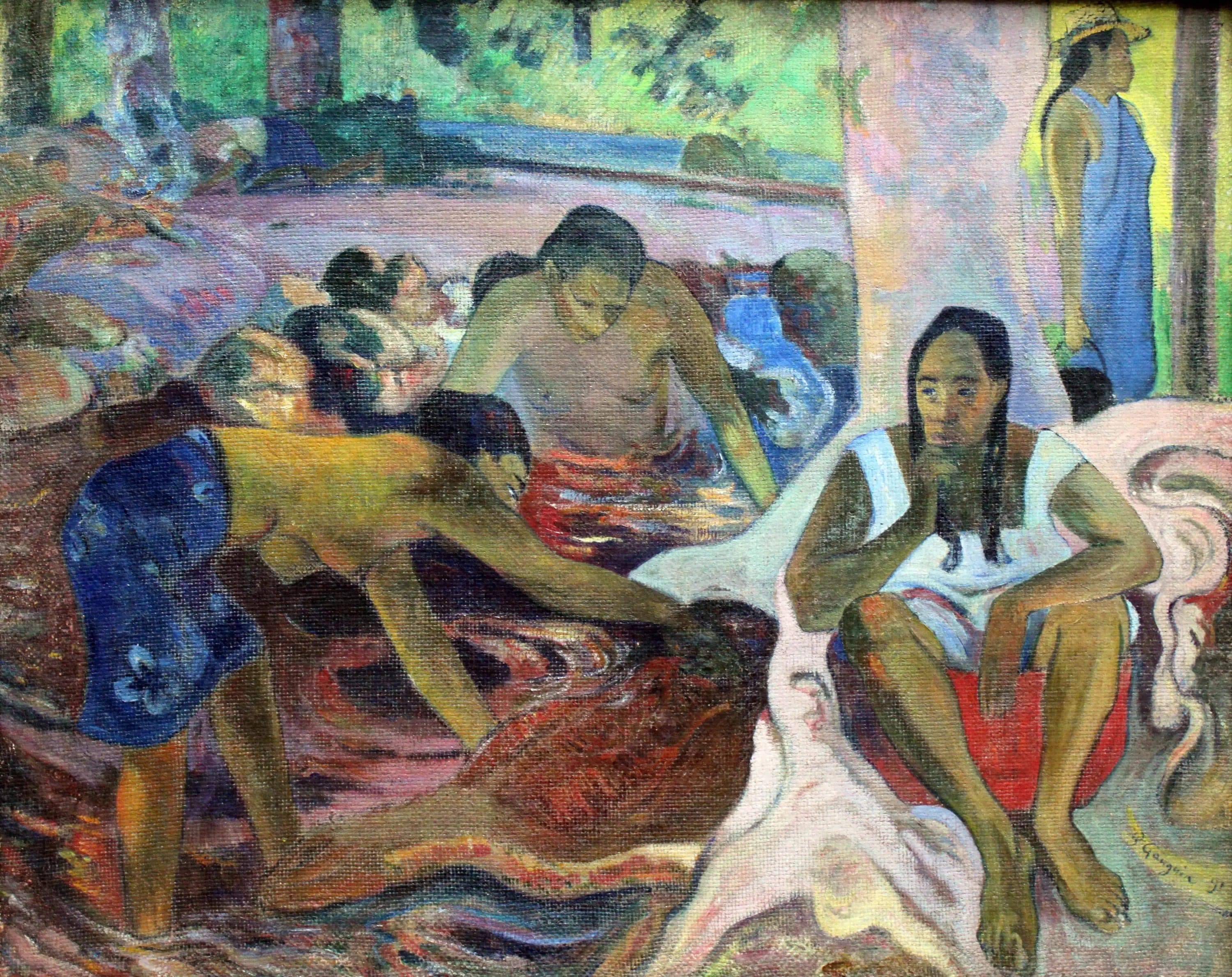
Tahitian Fisherwomen
- Original dimensions
- 90 x 71 cm
- Museum
- Alte Nationalgalerie
- Year
- 1891
Scene depicted
The canvas “Tahitian Fisherwomen” illustrates two women, essential figures of this peaceful Eden. They are busy harvesting seafood, their attachment to the land and water evident in every gesture. The gentle and serene gaze of Gauguin's paintings blends with a lush landscape, where each element tells a story of life and harmony with nature, like a hymn to the Tahitian way of life.
Historical context
Created in 1891, this painting emblematic of Paul Gauguin is born on the enchanting shores of Tahiti. Through this canvas , the artist, a key figure of the post-impressionist movement, forges a bridge between the West and the flourishing landscapes of Oceania. This pictorial work, celebrated for its colorful richness and fusion of cultures, is exalted today at the Alte Nationalgalerie .
Place in the artist's career
This masterpiece stands as a pillar in Gauguin's career, marking a period of stylistic and emotional maturity. While paintings such as “Vision after the Sermon” explore spiritual themes, “Tahitian Fisherwomen” reflects a search for authenticity, an escape into the exacerbation of colors and the purity of forms.
Anecdote
“Art is a form of freedom, and my quest has led me where the soul finds its voice.” Thus speaks Gauguin, often in a waking dream, inspired by the beauty of the young Tahitian women he observes. He remembers the smell of the earth after rain and the laughter resonating in the warm air, memories that, instilled in this painting , breathe the authenticity of a vibrant world rich in simplicity.