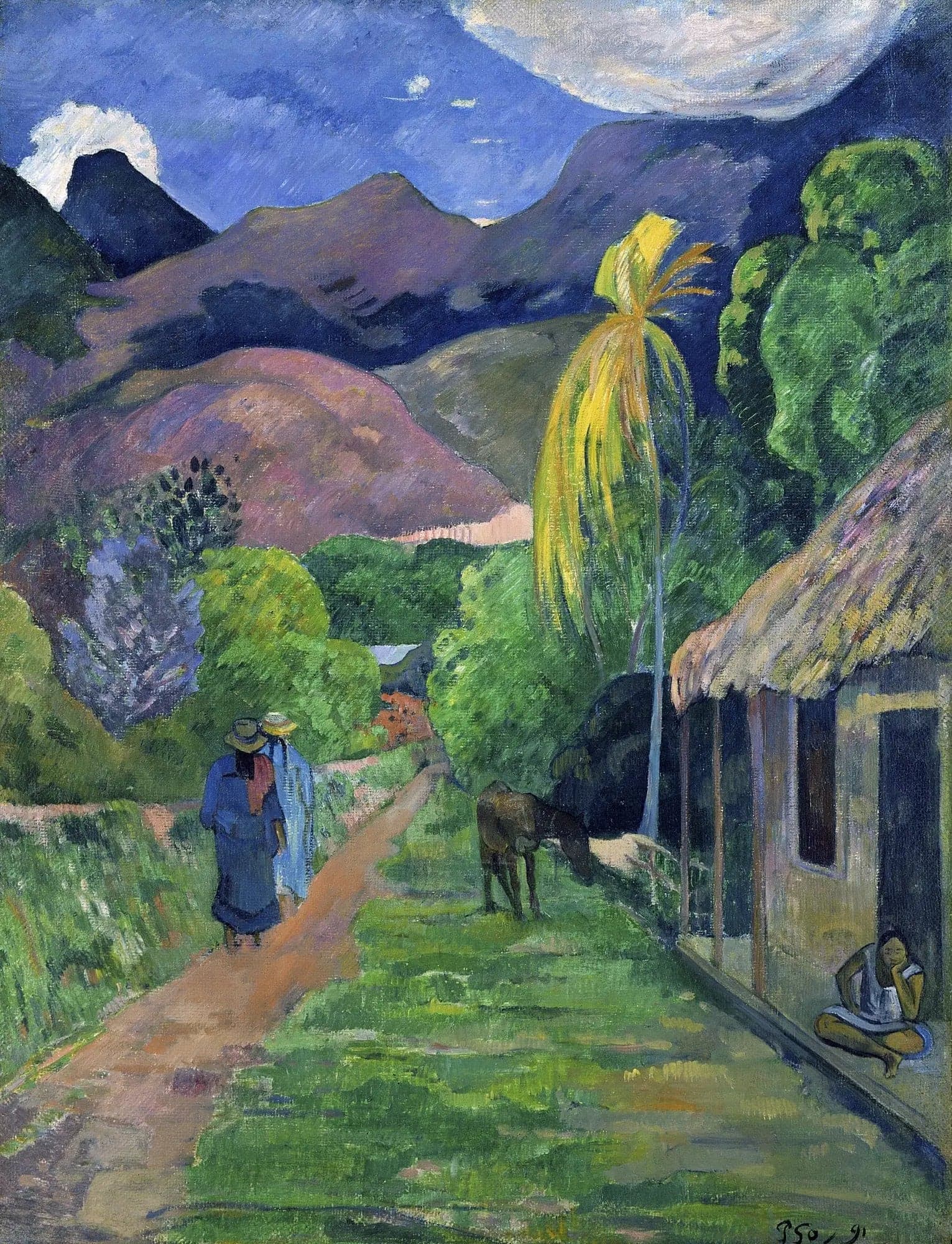
Tahiti Street
- Original dimensions
- 88.5 x 115.5 cm
- Museum
- Toledo Museum of Art
- Year
- 1891
Scene depicted
The canvas "Rue de Tahiti" offers a majestic picture of a lively street, bathed in light, where lush nature meets the lives of the inhabitants. The rosy cheeks of Tahitian women and the vibrant facades of local houses are witnesses to a daily life marked by an alchemy between tradition and modernity. Every element of this pictorial work breathes warmth and friendliness, immersing the viewer in a tropical dream.
Historical context
Created in 1891, the painting "Rue de Tahiti" evokes the pictorial escape of an artist in search of sensuality and vibrant colors, immersed in the vibrating universe of Polynesia. Paul Gauguin , an iconic figure of Impressionism , settled in Tahiti, far from Europe, allowing him to appropriate the cultural and aesthetic riches of the place. The canvas is now exhibited at the Toledo Museum of Art , a reference for appreciating its captivating dimensions of 88.5 x 115.5 cm.
Place in the artist's career
This canvas is part of Gauguin's most prolific period, where he turned away from artistic conventions to embrace a bolder creativity and style. Alongside "Vision after the Sermon" and "The Yellow Christ," "Rue de Tahiti" represents an evolution towards colorful abstraction and a strong emotional symbolism , marking a turning point in his career.
Anecdote
"I wanted to paint the dream, the silence of the landscapes," said Gauguin, one bright morning on the beach of Tahiti. Inspired by the raw beauty and exoticism of this new environment, he captured the magic of color and movement, bringing "Rue de Tahiti" to life, a masterpiece imbued with the island's soul.