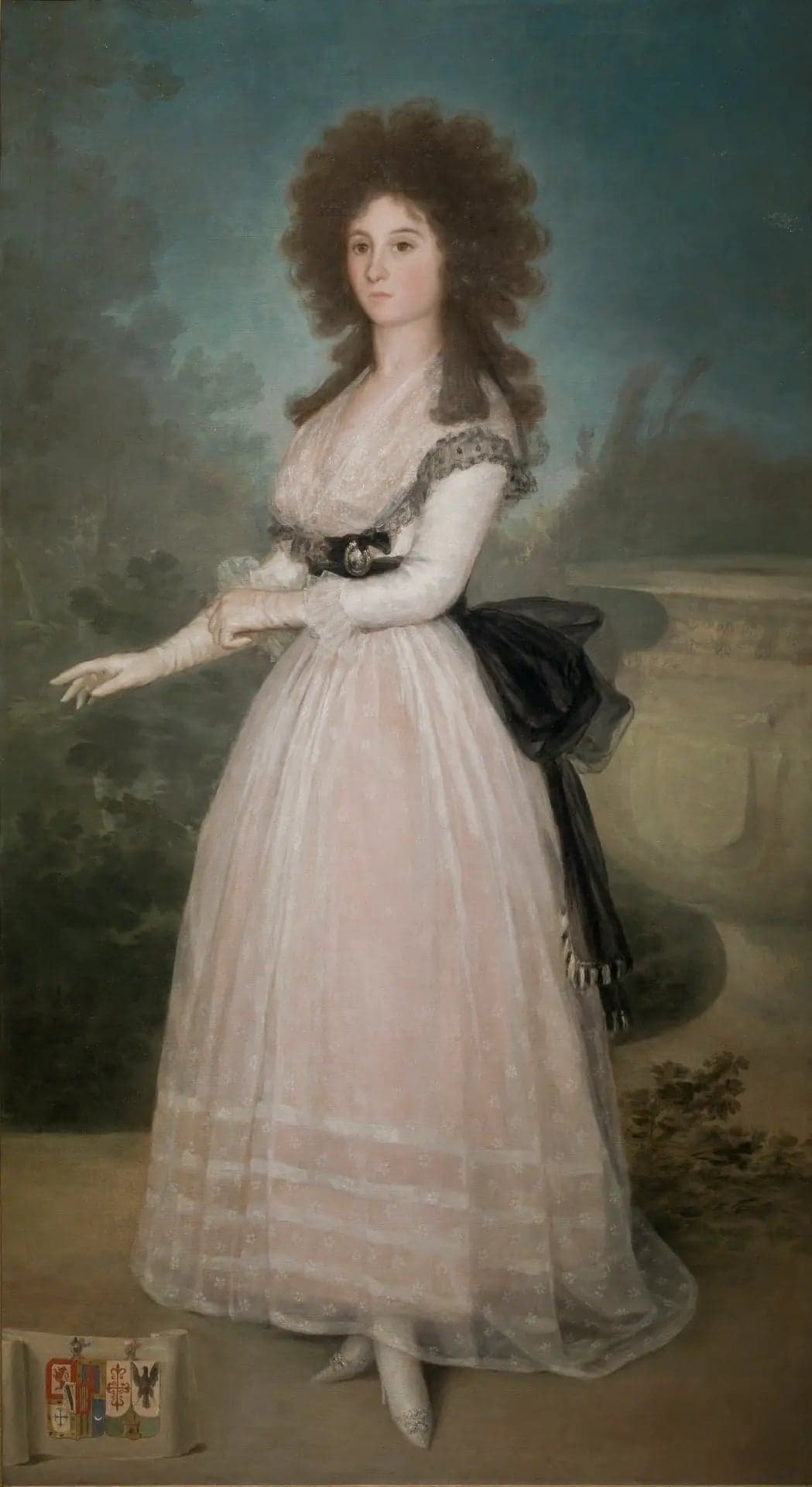
Tadea Arias de Enríquez
- Original dimensions
- 106 x 191 cm
- Museum
- Prado Museum
- Year
- 1789
Scene depicted
The canvas "Tadea Arias de Enríquez" offers a striking portrait of a noblewoman in period dress, her elegance highlighted by subtle plays of light. In this way, Goya chronicles an aristocracy fulfilled yet already marked by the shadow of impending revolutions.
Historical context
Created at the heart of the late 18th century in Madrid, this painting is emblematic of the romantic movement, a time of social and ethical upheaval. The canvas is currently housed in the Prado Museum, guardian of Spain's artistic heritage. Its impressive dimensions, 106 x 191 cm, capture the emotional intensity of this pictorial work.
Place in the artist's career
This pictorial work stands as a turning point in Goya's career, a phase where his style asserts itself with vigor. Alongside La Maja Desnuda and The Executions of May 3, 1808 , "Tadea Arias de Enríquez" illustrates a growing mastery of emotion and realism .
Anecdote
Francisco de Goya once declared: "Art must reflect the soul of society." This painting , capturing Tadea's face, was inspired by a luminous encounter in the streets of Madrid, where a beam of spring light revealed the beauty of her gaze. Each brushstroke still resonates with that fleeting meeting.