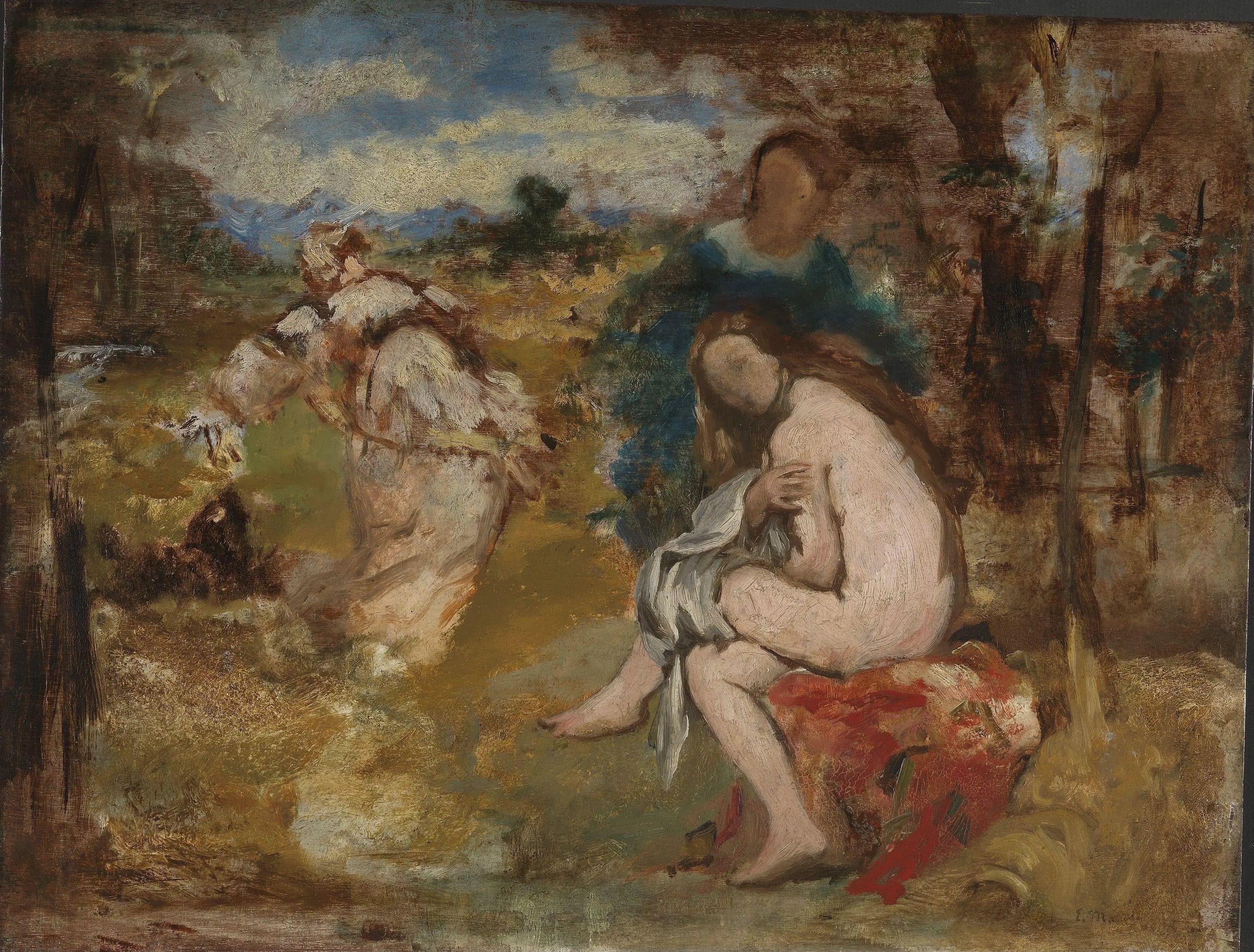
Surprise Nymph
- Original dimensions
- 46 x 35.5 cm
- Museum
- National Museum
- Year
- 1860
Scene depicted
This pictorial work depicts a nymph, surprised in a moment of delicacy, evoking innocence and sensuality. The scene is imbued with a natural charm, capturing a fleeting moment of earthly paradise. Every element of the canvas is designed to evoke an immediate connection with the viewer, transforming simple observation into an unforgettable sensual experience.
Historical context
Created in 1860, the painting "Nymph Surprise" by Édouard Manet is rooted in 19th century Paris, a time bubbling with artistic innovation. Manet, a central figure of realism , emerged as a pioneer of the impressionist movement. This iconic canvas is currently displayed at the National Museum, where it continues to fascinate visitors with its emotional depth and stylistic boldness.
Place in the artist's career
"Nymph Surprise" represents a pivotal moment in Manet's career, a fusion of his realistic approach with bolder and more modern elements. In parallel with works such as "Olympia" and "Le Déjeuner sur l'herbe," one can identify the evolution of his artistic language, a constant dialogue between tradition and the avant-garde.
Anecdote
"Light is my accomplice, it dances on the canvas, revealing the soul of things," Manet might have said one spring morning, as he drew inspiration from the Parisian gardens. It is in this vibrant setting that the pure emotion of the Nymph Surprise comes to life, making each brushstroke enchanting.