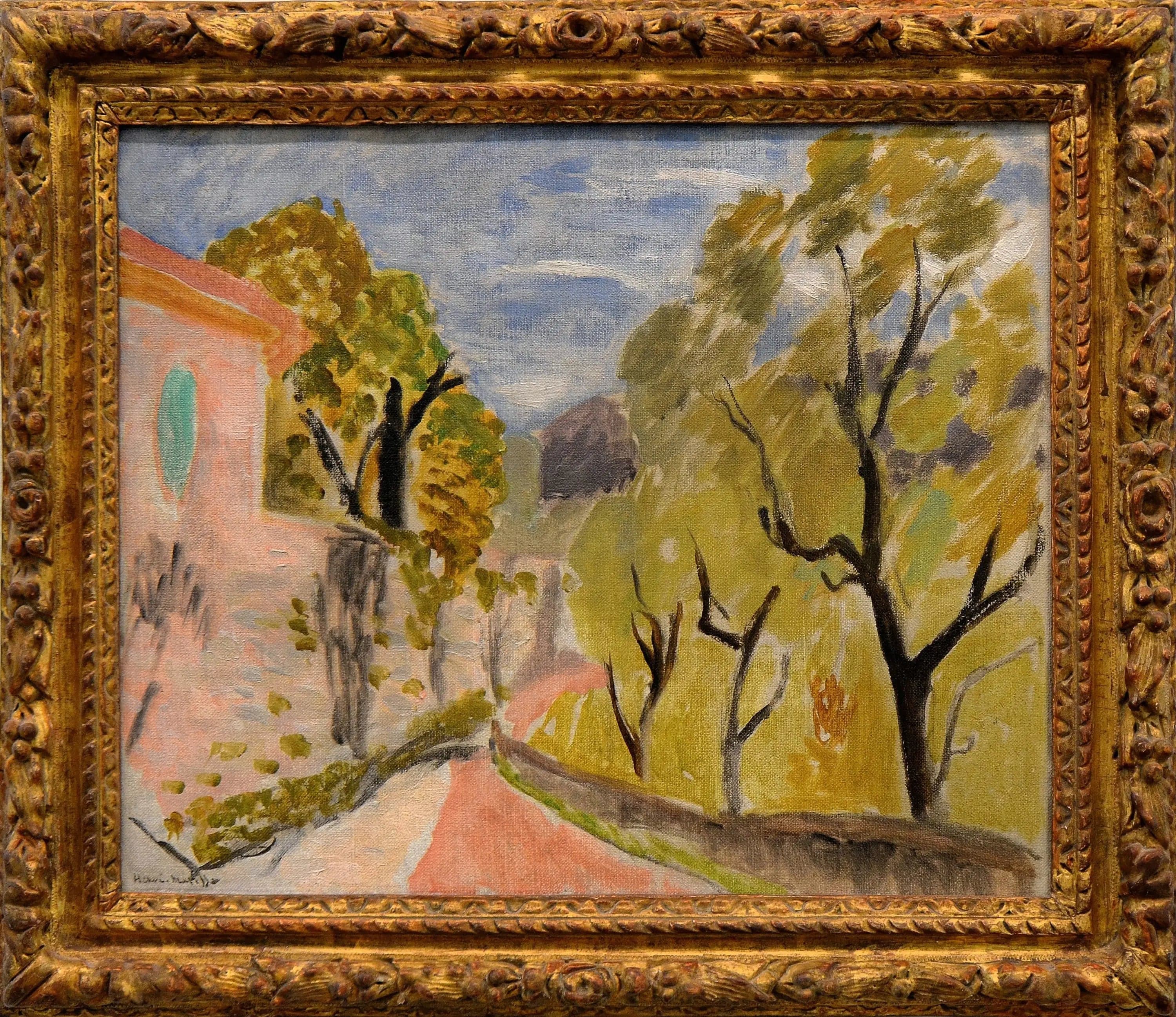
Street in the South
- Original dimensions
- 46 x 38 cm
- Museum
- André-Malraux Museum of Modern Art
- Year
- 1919
Scene depicted
In Street in the South , Matisse transports the viewer to the sunny sidewalks of a small street by the Mediterranean. The colorful houses are alongside lush trees, where the sun's rays dance on the facades. The movement is palpable, as if the calm of the place is suddenly crossed by the laughter of carefree childhood. The work captures fleeting moments, true bursts of life frozen by the magic of painting .
Historical context
Created in 1919, the painting titled Street in the South came to life in a post-war context, where Matisse explores the lights of southern France. This iconic work is part of the Fauvist movement, advocating the experimentation of bright colors and liberated forms. Currently, this canvas is preserved at the André-Malraux Museum of Modern Art , a true showcase for this pictorial work, with captivating dimensions of 46 x 38 cm.
Place in the artist's career
Street in the South represents a pivotal moment in Matisse's career, reflecting his stylistic maturity after a series of canvases exploring the visual foundations of Fauvism . Alongside The Dance and The Joy of Life , this work illustrates the constant evolution of the artist, merging vibrant emotions with the search for new forms.
Anecdote
“Color is not an accessory, it is emotive,” said Matisse. It was at the turn of a sunny alley on a spring morning that he drew inspiration for this canvas . Through the vibrant colors and joyful shapes, Street in the South evokes a feeling of freedom and liveliness so present in the work of this artist. The shadow of a past tremor fades away, giving way to a display of joy.