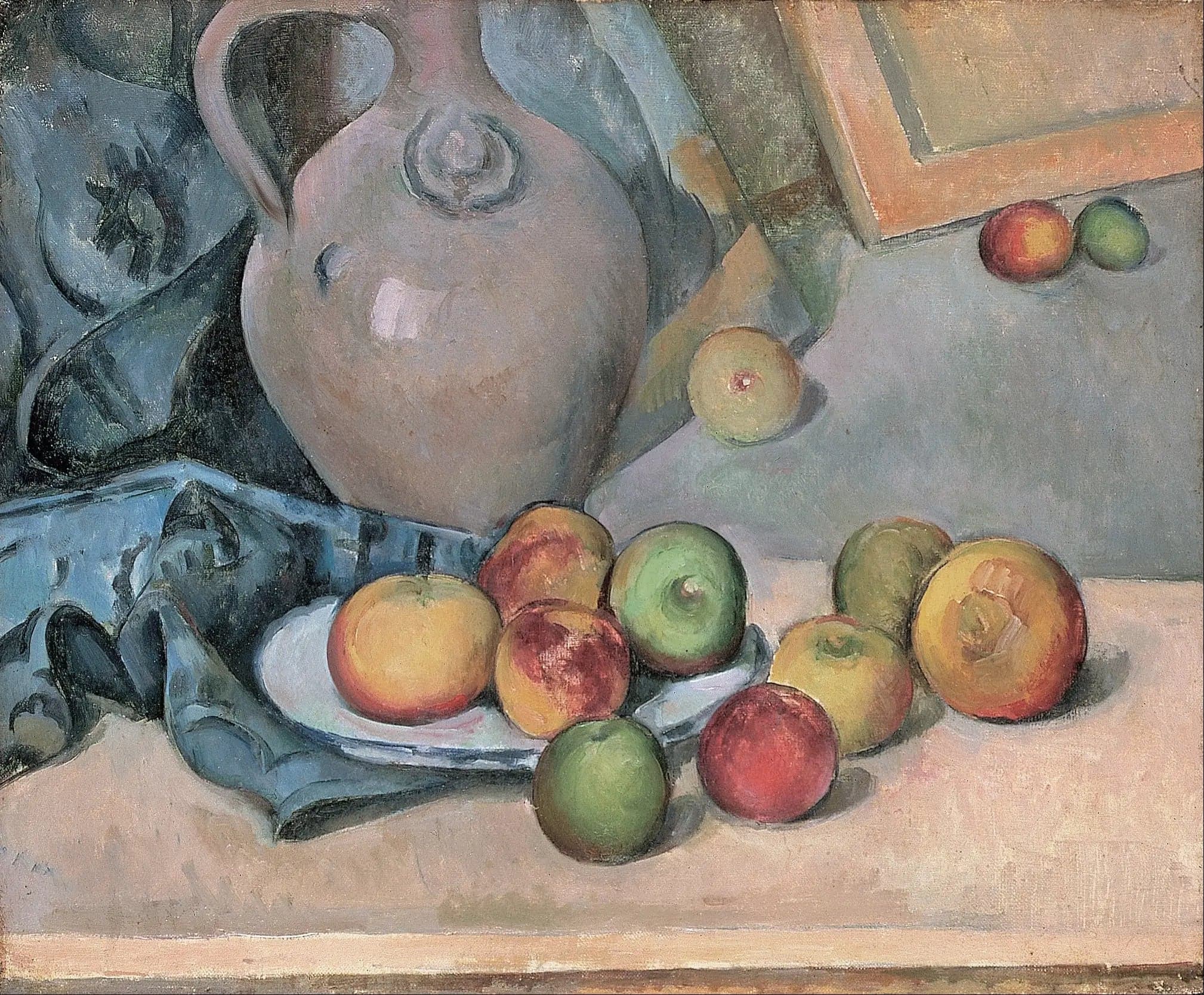
Stoneware pitcher
- Original dimensions
- 46 x 38 cm
- Museum
- Beyeler Foundation
- Year
- 1894
Scene depicted
This captivating painting features a stoneware pitcher, a simple yet meaningful object, that seems to tell a story. The austere composition reflects the relationship Cézanne had with nature, art, and everyday objects. Through a subtle play of light and shadow, the artist manages to infuse a soul into each represented element, making this painting a tribute to the beauty of the everyday.
Historical context
Created in 1894, the painting emblematic of Paul Cézanne , “Pichet de grès”, plunges its roots into the sunny city of Aix-en-Provence, in the heart of French Provence. This era, rich in artistic movements and creative innovations, marks the decline of realism and the emergence of post-impressionism , of which Cézanne is one of the main avatars. Today, this canvas majestically resides at the Beyeler Foundation , a museum that celebrates modern art in the enchanting setting of Basel, Switzerland.
Place in the artist's career
“Pichet de grès” stands as a pivotal moment in Cézanne's career, symbolizing his transition to artistic maturity. At the crossroads between the transcendent canvas of “Montagne Sainte-Victoire” and the vibrant “Still Life with Apples”, this pictorial work testifies to his stylistic evolution, blending subtlety and emotion.
Anecdote
“Art is a harmony parallel to nature,” said Cézanne, finding his inspiration at the turn of a quiet country road, under a sky tinged with shimmering colors. This quest for harmony illuminates the evocative power of his masterpiece , “Pichet de grès”, revealing an intimacy and emotional depth that resonate through time.