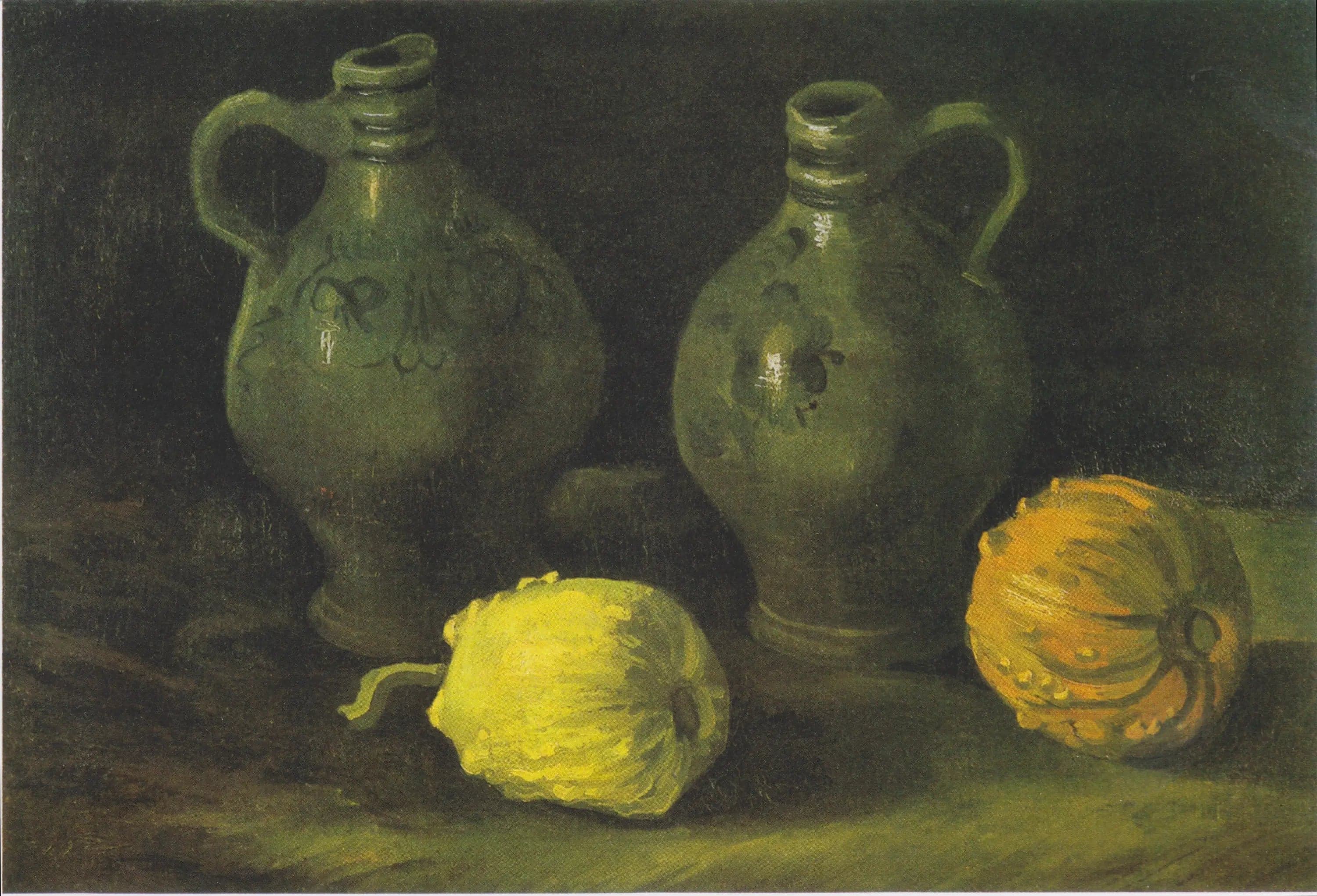
Still Life with Two Jars and Two Pumpkins
Scene depicted
In this painting, Van Gogh invites us to an intimate contemplation of inanimate objects. Two pumpkins, full of character, stand proudly alongside jars, creating a silent dialogue between nature and art. Each element of this scene offers a glimpse into domestic life, while also revealing the artist's deep emotions and reflections on the everyday. These simple objects then become the discreet heroes of a larger and universal story.
Historical context
Created in 1885, this iconic work is rooted in Nuenen , a charming town in the Netherlands, where Vincent van Gogh draws his inspiration from the simplicity of everyday objects. This painting is part of the Post-Impressionist movement that marked his era, a period of stylistic exploration vibrant with the desire for authenticity. Although its current location is not specified, the impressive size of this canvas is 85 x 58 cm.
Place in the artist's career
This painting is situated at the beginning of a promising career, marking a period of experimentation for Van Gogh. Compared to works such as * The Sunflowers * and * The Starry Night *, one can observe a constant evolution, both technically and emotionally, where light and colors take an increasingly central place. Still Life with Two Jars and Two Pumpkins testifies to his desire to explore the depths of human perception through everyday elements.
Anecdote
“It is in the banal that the sublime hides” could have been said by Van Gogh, referring to this composition filled with meaning and beauty. Imagine a spring morning, where the rays of the sun filtered through the windows of his studio, awakening the bright colors of the pumpkins and jars, enriching his gaze with a vibrant and warm light. This painting breathes the very essence of that fleeting moment, forever captured on the canvas.