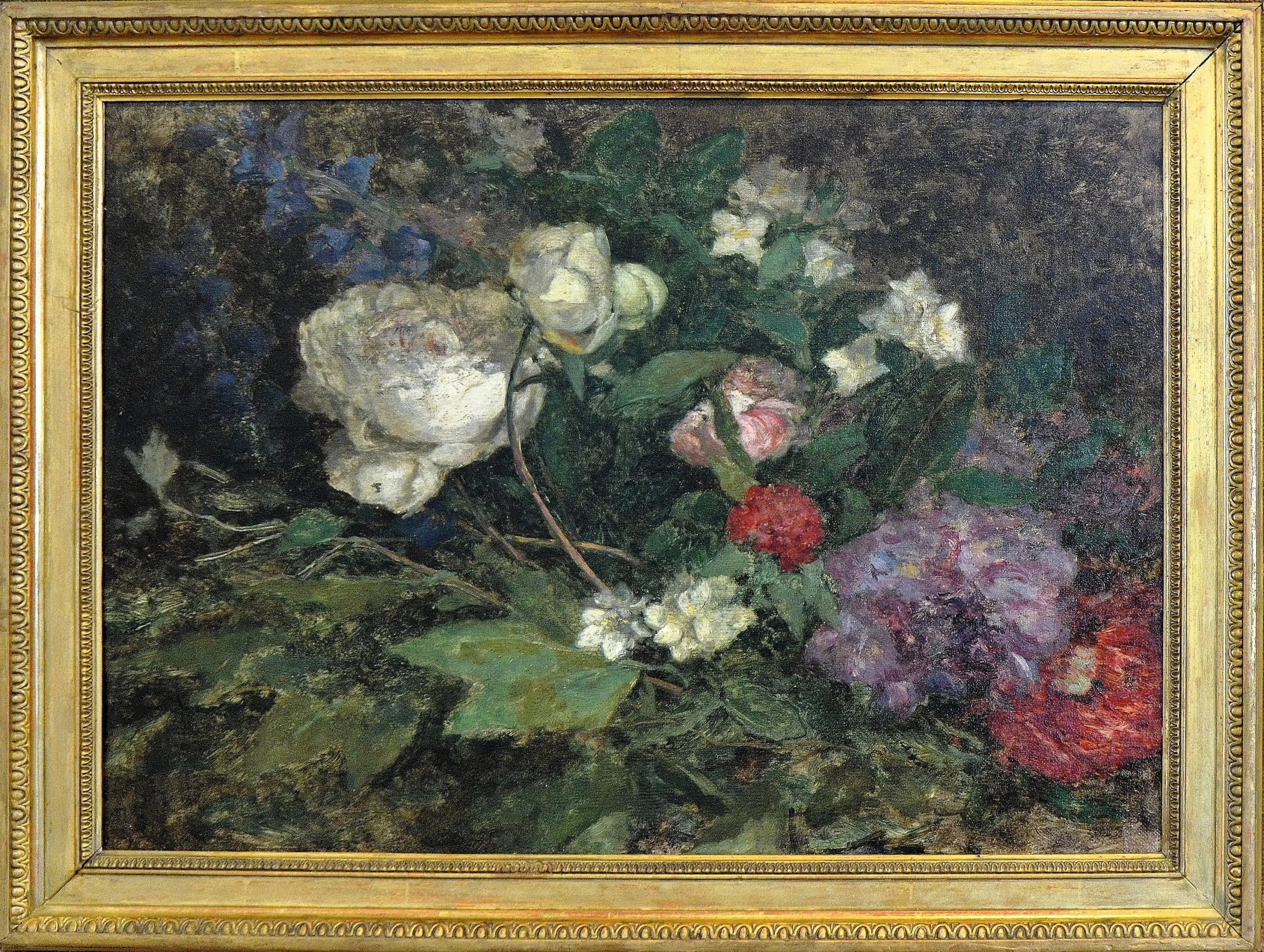
Still Life with Peonies and Lilac
- Original dimensions
- 54 x 38.2 cm
- Museum
- André-Malraux Museum of Modern Art
- Year
- 1858
Scene depicted
In this pictorial work , Boudin exquisitely captures the vivid colors and shimmering texture of the flowers. The serenity of a still life unfolds, evoking a fleeting moment of beauty, where the radiant brightness embraces the soft hues of the peonies and syringas. The elements of the composition intertwine, transforming a simple scene into a dialogue between nature and art.
Historical context
Created in 1858, this canvas is a brilliant testimony to the emerging Impressionist movement, at a time when France, and more specifically Normandy, is transforming into a flourishing artistic scene. The painting is currently housed in the André-Malraux Museum of Modern Art , a place that celebrates artistic expression and the rich history of the masters of painting.
Place in the artist's career
This painting symbolizes a turning point in Eugène Boudin 's career, marking the beginning of his mastery and sensitivity to details. At this time, he simultaneously explores other paintings , such as “The Landing of the Fishermen” and “Deauville Beach,” thus demonstrating his stylistic evolution, from academicism to an increasingly Impressionist approach.
Anecdote
“In every petal, there is a ray of light that dances and makes nature sing.” These words from Eugène Boudin evoke the decisive moment when he poetizes what he sees. In the heart of spring, he loses himself in a sunlit alley, inspired by the intoxicating scent of peonies and syringas. This sensory atmosphere is the source of the evocative power of this painting .