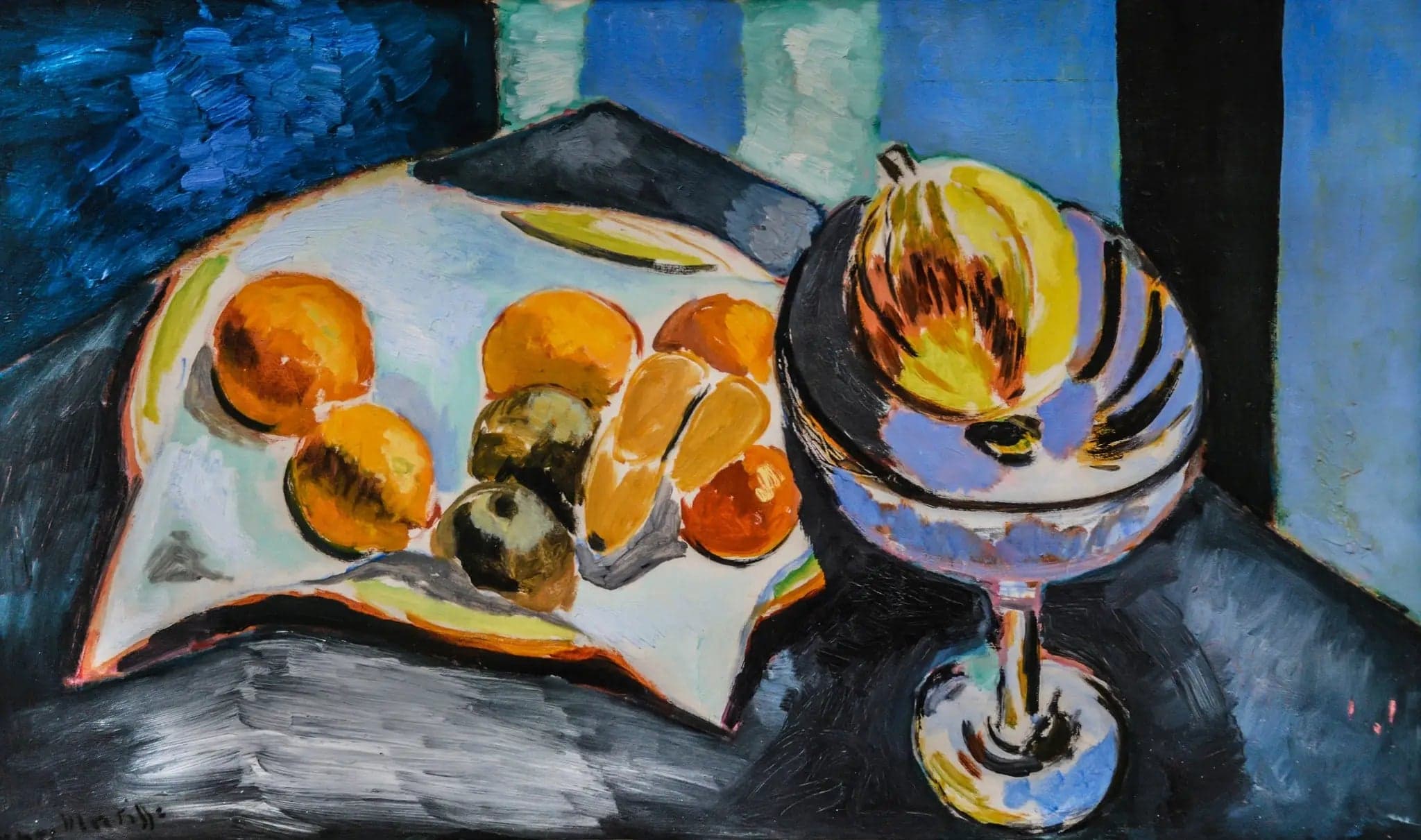
Still Life with Fruits
- Original dimensions
- 76 x 46 cm
- Museum
- Staatliche Kunsthalle Karlsruhe
- Year
- 1915
Scene depicted
The painting "Still Life with Fruits" depicts a bold composition where juicy fruits flourish in a harmonious encounter. Between shadows and lights, each element becomes an ode to nature, inviting the viewer to appreciate the ephemeral beauty of life. While playing with contrasting colors, Matisse manages to capture the essence of form, making this painting a vibrant celebration of natural splendor.
Historical context
Created in 1915, at a time when France is in the midst of the turmoil of World War I, this canvas emblematic, inherited from the city of Karlsruhe, Germany, is part of the Fauvist movement that celebrates bright colors and expressionism. The painting is today carefully preserved within the Staatsliche Kunsthalle, where it continues to inspire generations of art lovers and modern art enthusiasts.
Place in the artist's career
"Still Life with Fruits" represents a crucial milestone in Matisse's career, illustrating his period of artistic maturity, where he breaks free from academic conventions. Compared to other notable paintings such as "Woman with a Hat" and "The Dance," this painting reveals the master's technical evolution, as well as his unwavering quest for aesthetics.
Anecdote
Henri Matisse , often imbued with wisdom, expressed during his reflections: "Color is my muse, and each composition is a heartbeat." In painting this pictorial work in a light-filled studio in spring, the master immortalized not only the fruits but also the scents and sweetness of a beautiful day that, once captured, still resonate through the delicate fabric of the painting .