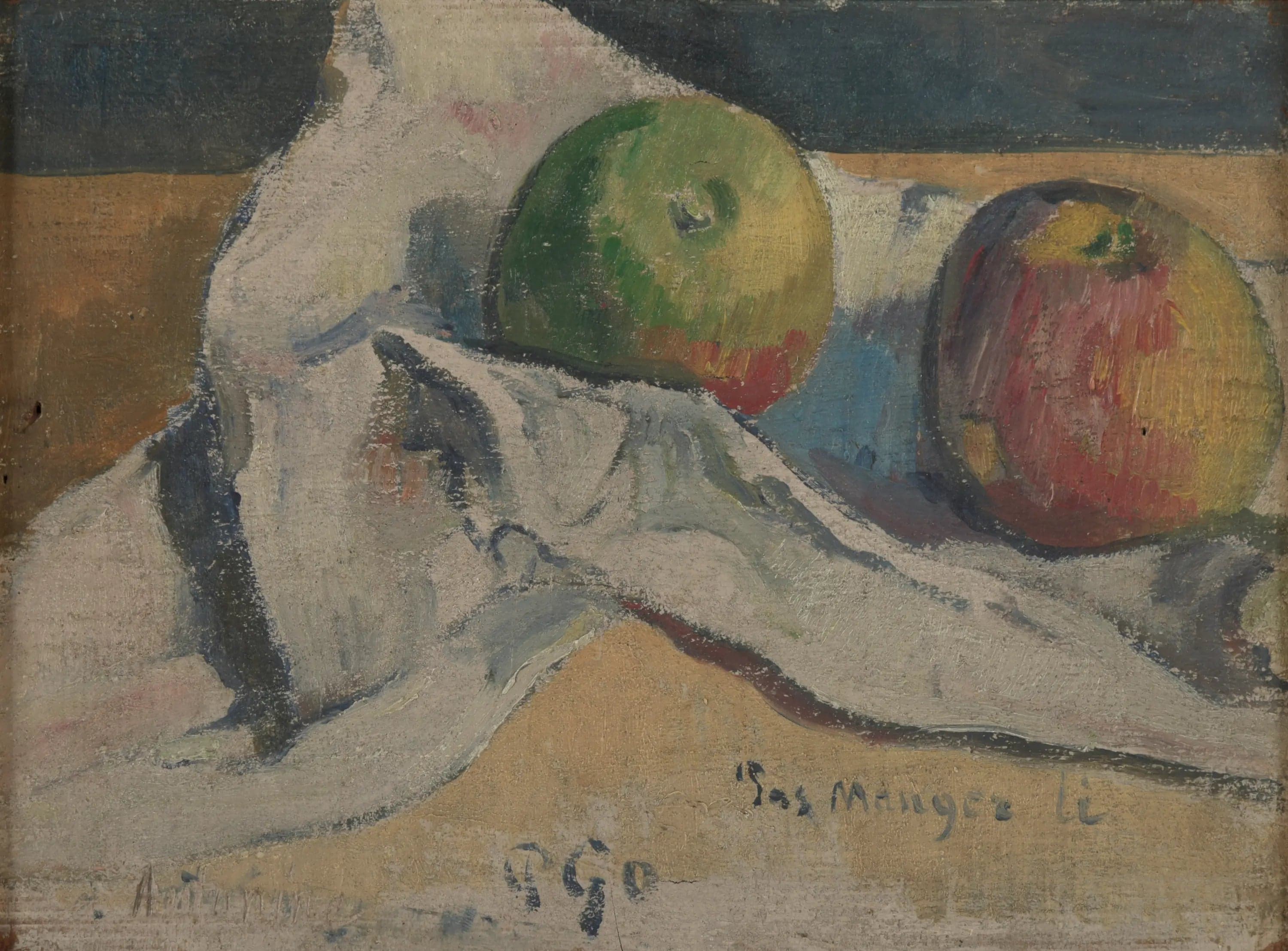
Still Life with Apples
- Original dimensions
- 26 x 19 cm
- Museum
- Museum of Fine Arts in Reims
- Year
- 1893
Scene depicted
The scene depicted in the painting “Still Life with Apples” by Paul Gauguin bursts with bright colors and organic shapes. This painting features a harmonious composition where the apples, beautifully intertwined, become the instruments of a visual symphony. Illuminated by soft light, each fruit seems to vibrate with a vital energy, suggesting an intimacy with nature that Gauguin cherished dearly.
Historical context
Created in 1893, during the post-impressionist period, this iconic painting by Paul Gauguin illustrates his quest for a colorful and subjective expression. Located in Reims, this painting reflects a time when art broke free from conventions, turning towards bolder representations, close to symbolism . Currently housed in the Museum of Fine Arts in Reims , this canvas measures 26 x 19 cm, revealing Gauguin's virtuosity in reduced dimensions.
Place in the artist's career
“Still Life with Apples” is situated at a turning point in Paul Gauguin's career, marked by a quest for authenticity and raw emotion. In contrast to his earlier paintings such as “Vision After the Sermon” and later “The Yellow Christ,” this painting illustrates the stylistic evolution towards a more striking emotional depth and a bold palette.
Anecdote
“In the simplicity of things, I find the complexity of being” could have been uttered by Paul Gauguin while contemplating the fruits of his garden. This pictorial work was born from a moment of contemplation, a sunny afternoon where light played on ripe apples, vibrant hues capturing the very essence of the moment. The painting evokes not only the beauty of the apples but also a true poetic impulse, a breath of subtle emotions animating the viewers.