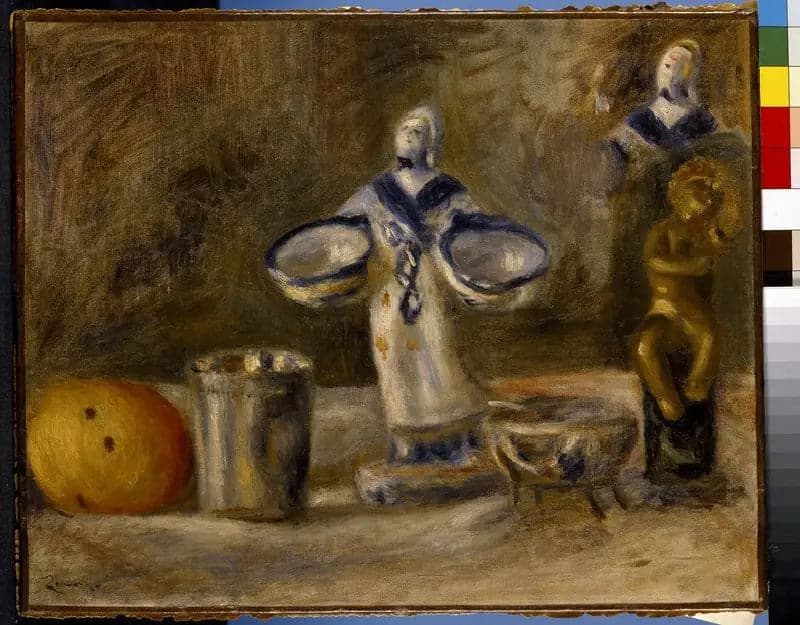
Still Life with a Faience Figure - Pierre
- Original dimensions
- 41.3 x 33 cm
- Museum
- Ashmolean Museum
Scene depicted
“Still Life with a Faience Figure” illustrates a benevolent aesthetic, integrating everyday objects into a harmonious composition. Renoir subtly blends delicate forms with plays of light that describe an atmosphere of tranquility. This painting, with its silent melody, immortalizes the beauty of small things, as a tribute to the conviviality of the time.
Historical context
Created in 1876 in Paris, this painting is part of the Impressionist movement, marking an era of freedom and innovation. The canvas is now housed at the Ashmolean Museum in Oxford, an iconic place that celebrates European artistic heritage. The dimensions of 41.3 by 33 cm give this painting an intimate, immersive presence.
Place in the artist's career
This painting is situated at a time when Renoir fully explores the nuances of Impressionism . Compared to other works like “Luncheon of the Boating Party” and “The Umbrellas,” it reflects an evolution in his approach to light and movement, expanding his emotional range with finesse.
Anecdote
“Every masterpiece must speak to the soul,” said Renoir. This thought materialized one sweet spring morning as he wandered the streets of Montmartre, encountering the bold colors of the village's faience. This canvas exemplifies this meeting between the simplicity of everyday life and the complexity of human emotions.