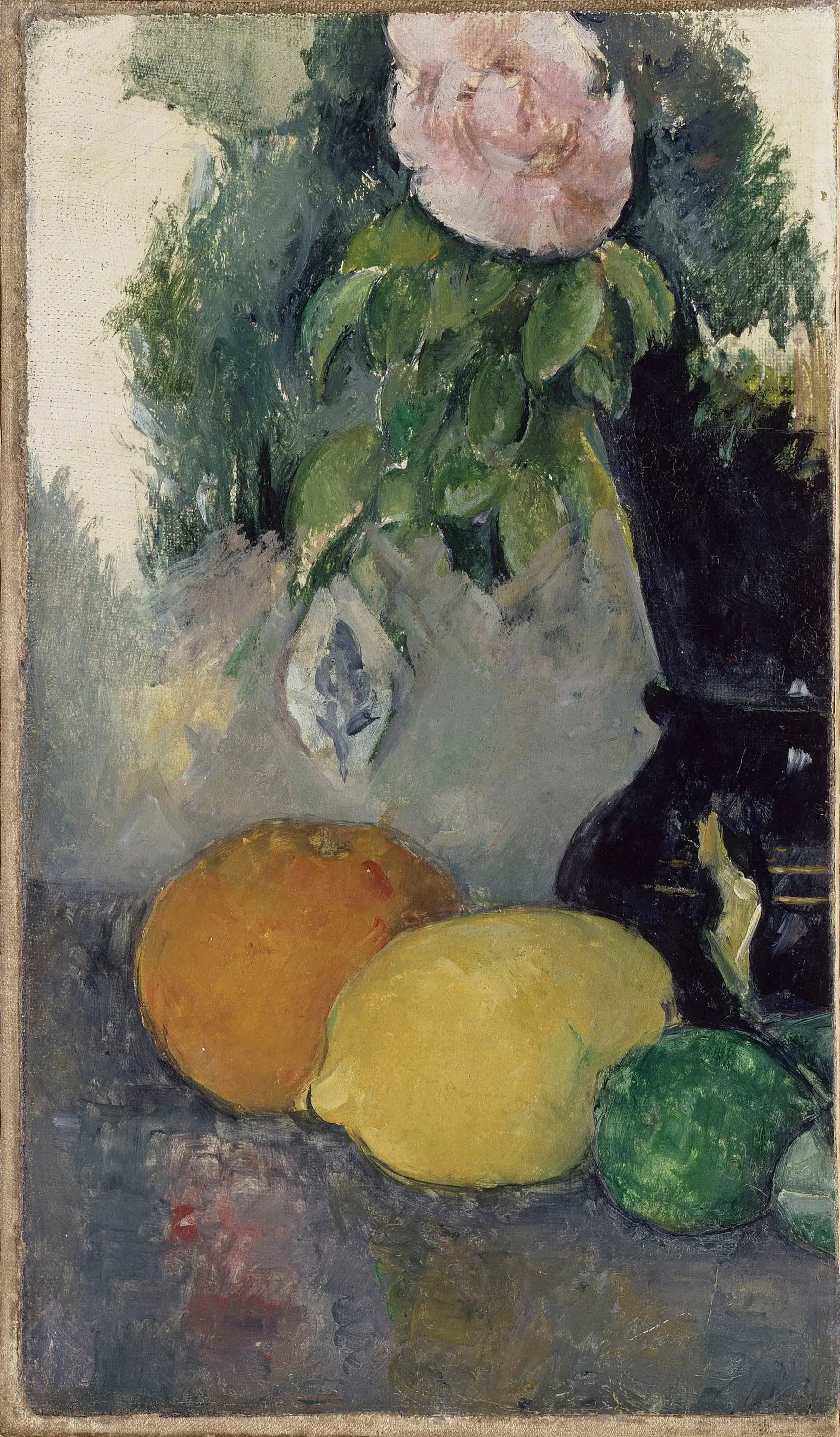
Still life, rose and fruits
- Original dimensions
- 21 x 35 cm
- Museum
- Orangerie Museum
- Year
- 1880
Scene depicted
In his composition, Cézanne elaborates an intimate scene where blooming roses coexist with colorful fruits. The delicacy of the petals contrasts with the robustness of the apples and pears, each contributing to the subtle harmony of the canvas. The play of light accentuates varied textures, making the still life vibrate with its own life.
Historical context
Created in 1880, this painting is part of the Impressionist movement, a major artistic movement of which Cézanne is one of the pioneers. The canvas, capturing the warmth of Southern France, reflects the influences that shaped art in the 19th century. Currently, this painting is displayed at the Orangerie Museum in Paris, where its floral charm continues to enchant visitors.
Place in the artist's career
This painting , a true reflection of Cézanne's artistic thought, is situated at a turning point in his career. Already recognized for works such as "The Card Players" and "Mont Sainte-Victoire," he delivers here a synthesis of his style, marking an evolution towards controlled abstraction, while maintaining a deep connection with the reality of nature.
Anecdote
"Nature is a permanent painting, each light draws a new story." Imagine Cézanne, one spring morning, wandering in his garden, inspired by the delicate scent of roses mixed with the freshness of fruits. This painting evokes that feeling of fullness and rediscovered simplicity, capturing the fragile moment of ephemeral beauty.