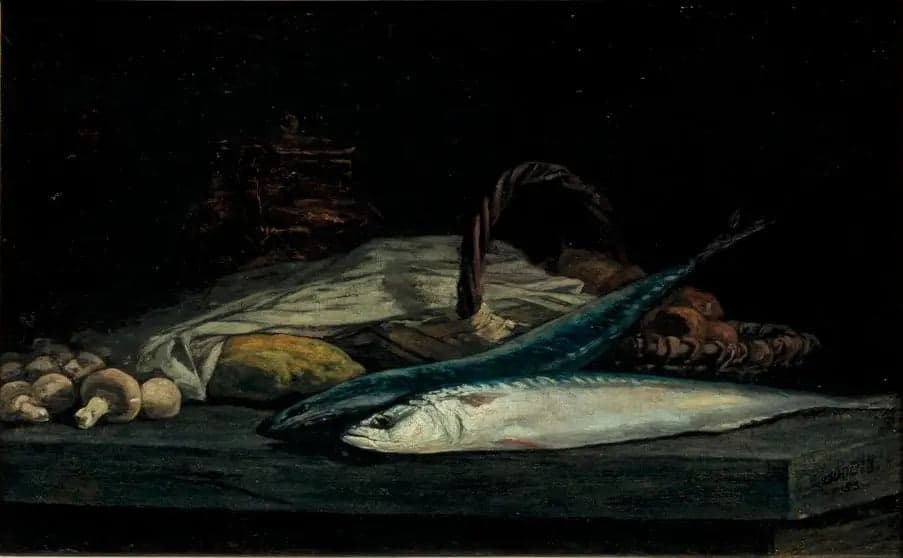
Still Life
- Original dimensions
- 60.4 x 36.8 cm
- Museum
- Centraal Museum
- Year
- 1858
Scene depicted
The canvas "Still Life" by Eugène Boudin captures the elegance of everyday objects arranged with care. A product of simple beauty, the scene represents the meeting of natural elements and art objects, creating a fascinating harmony where each detail underscores the relationship between man and nature. The composition, delicate and meticulous, appeals to the deepest emotions, paying tribute to the richness of everyday life.
Historical context
This painting emblematic was created in 1858, in the beautiful city of Haarlem, in the heart of the Netherlands. Renowned for its impressionist movement, the period of the creation of this canvas is marked by a deep exploration of luminous shades and vibrant colors. Currently preserved at the Centraal Museum , this masterpiece is a showcase of the artist's mastery and his era, measuring 60.4 x 36.8 cm.
Place in the artist's career
This canvas marks a key period in Boudin's career, representing a turning point towards artistic maturity. In parallel with works such as "The Beaches of Trouville" and "The Port of Honfleur," a notable technical evolution is observed, both in the handling of light and in the interpretation of colors, reflecting an artistry in full effervescence.
Anecdote
Eugène Boudin once stated: "Light must dance on the canvas like on the waves of the sea." This thought illustrates his inspiration found by the water's edge, where the lapping of the waves and the gentle rays of the sun shaped his artistic approach. Thus, the painting of this still life evokes a sense of serenity, suspended in time.