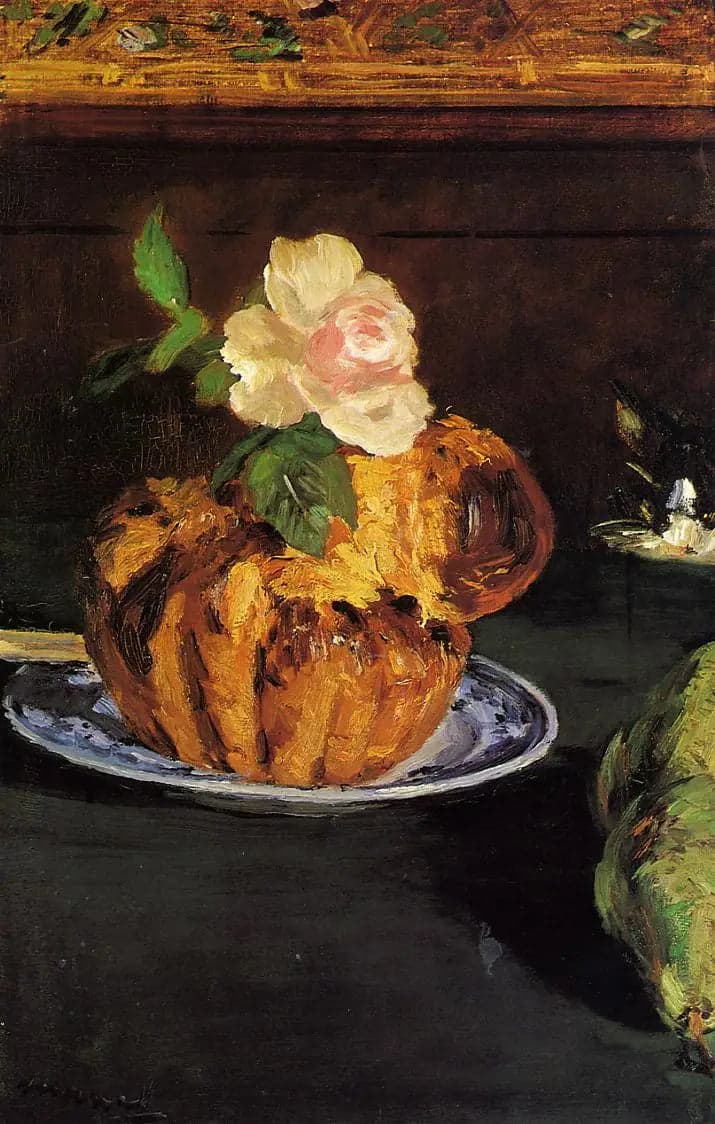
Still Life, Brioche
- Original dimensions
- 35.24 x 55.25 cm
- Museum
- Carnegie Museum of Art
- Year
- 1880
Scene depicted
In this pictorial work , Manet chooses to depict a brioche, the central piece of a composition that evokes the ephemeral beauty of everyday products. The delicacy of the textures and the simplicity of the elements resonate with the artist's sensitivity to the pleasures of life, transforming a mundane meal into a scene of subtle poetry.
Historical context
In 1880, Édouard Manet created this iconic painting in a Paris experiencing artistic upheaval, where the Impressionist movement began to assert itself. This painting , displayed at the Carnegie Museum of Art , reveals the genius of its composition while illustrating the tension between tradition and modernity that characterizes this era.
Place in the artist's career
This painting is situated in a period where Manet seeks to assert himself, a turning point between his innovative impulse and his traditional roots. Alongside it, other paintings like “Luncheon on the Grass” and “Olympia” testify to a remarkable evolution of his art, reinforcing his status as a pioneer of modernism.
Anecdote
Manet, in an inspiring quote, once stated: “Painting is a cry of the soul.” This painting came to life one spring morning when the artist encountered a golden brioche, illuminated by the soft sunlight. This fleeting moment is the very essence of the still life he immortalized on canvas.