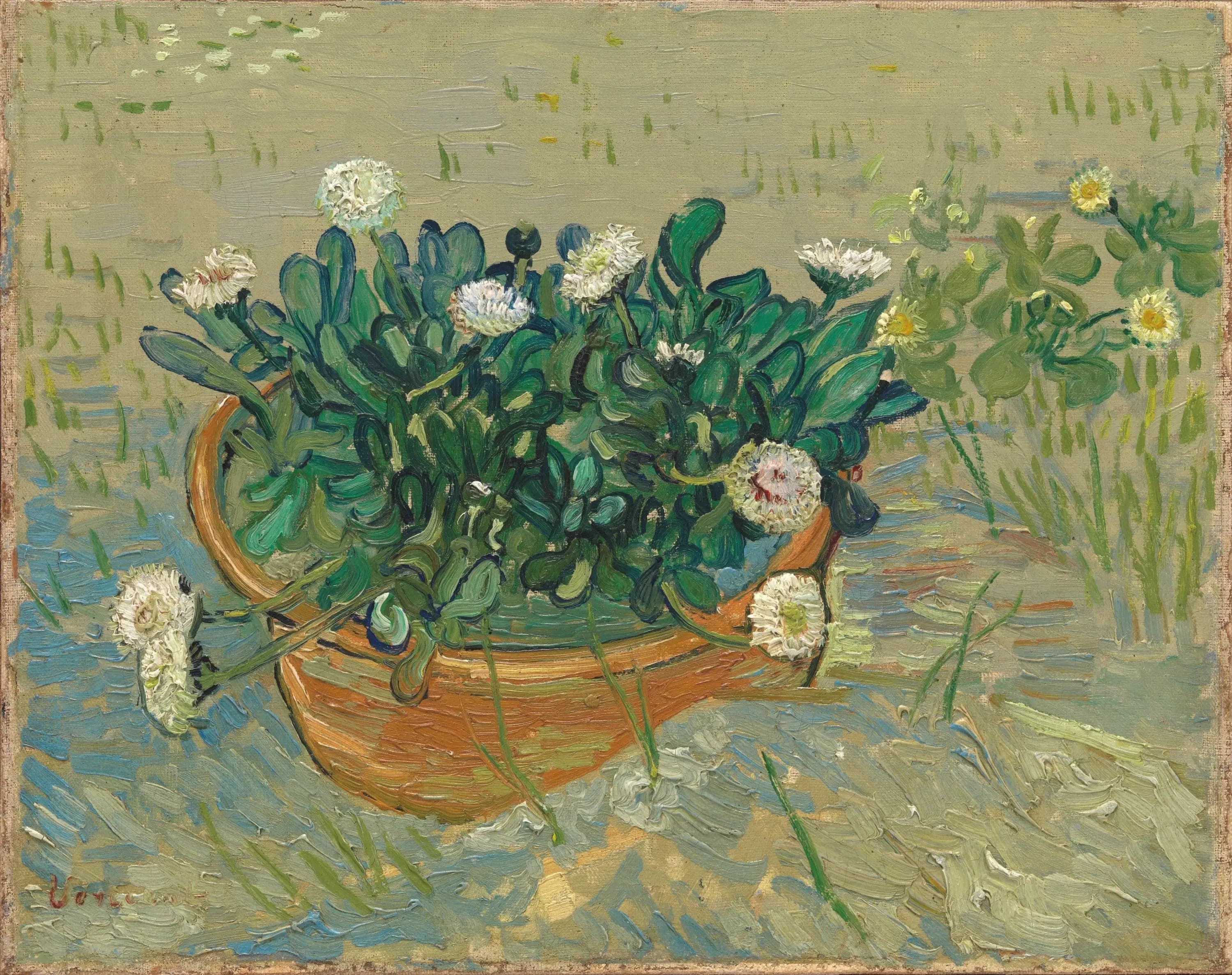
Still Life: Bowl with Daisies
Scene depicted
In this painting, Van Gogh celebrates the ephemeral beauty of nature through a simple bowl filled with daisies. The flowers , with their radiant freshness, bloom in a composition that suggests both serenity and the dynamics of life. Every detail, carefully observed, awakens the imagination and transports the viewer to a lush floral universe.
Historical context
Created in 1888, the painting “ Still Life : Bowl of Daisies” is a vibrant testament to Vincent van Gogh 's stay in Arles , a city in the south of France imbued with light and bright colors. Cited in the Virginia Museum of Fine Arts , this iconic work measures 42 x 33 cm and is an integral part of the post-impressionist movement.
Place in the artist's career
“ Still Life : Bowl of Daisies” is part of a flourishing period in Van Gogh's career, where his technique evolved towards more expressive forms. This canvas echoes other famous works such as “ The Starry Night ” and “ The Sunflowers ,” reflecting his relentless exploration between color and light, as well as the raw emotion of landscapes and everyday objects.
Anecdote
“I want my canvases to evoke the full consent of life, so that one can almost smell the fragrance of the flowers and hear the whisper of the leaves.” This reflection from Van Gogh resonates during the creation of the masterpiece , inspired by a bright morning in Arles . The daisies, captured in their simplicity, become messengers of beauty and lightness.