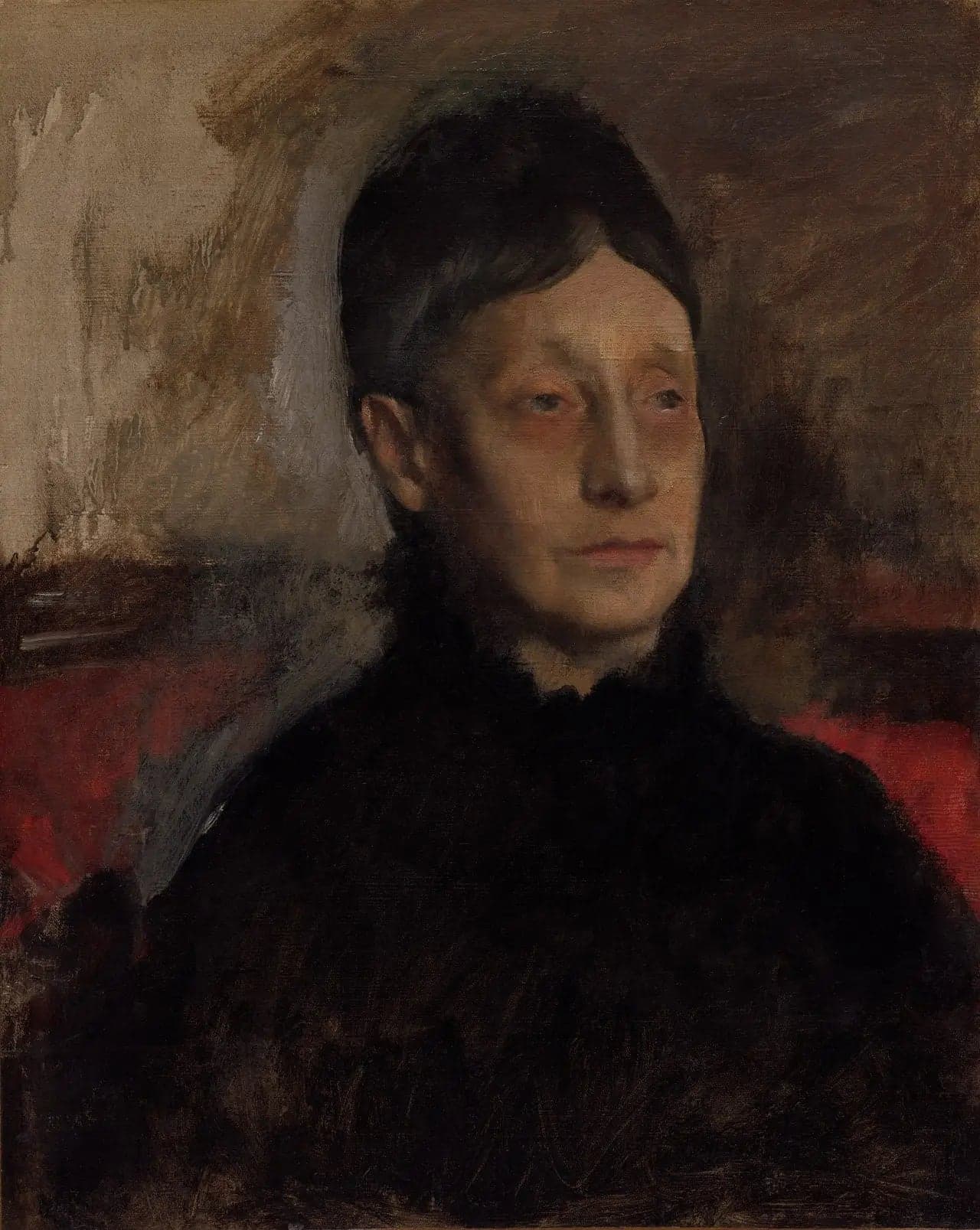
Stefanina Primicile Carafa, Marchioness of Cicerale and Duchess of Montejasi
- Original dimensions
- 39.4 x 49 cm
- Museum
- Cleveland Museum of Art
- Year
- 1875
Scene depicted
The painting “Stefanina Primicile Carafa, marquise de Cicerale et duchesse de Montejasi” represents the timeless beauty of a woman of high aristocracy in the 19th century. With a serene presence, the marquise poses in her elegant attire, embodying the dignity and refinement of her rank. The meticulous details of her face and dress reveal an exceptional skill of Degas, who highlights feminine grace in subtly worked lighting.
Historical context
Created in 1875, this painting embodies the genius of Edgar Degas , a great master of the Impressionist movement. Located in France, this work is distilled in a fascinating cultural context, where art and high society intertwined with elegance. Today, the canvas is housed at the Cleveland Museum of Art , a sanctuary for art enthusiasts. With its dimensions of 39.4 x 49 cm, this canvas stands in history as a true testament to the aristocratic life of its time.
Place in the artist's career
This canvas represents a pivotal moment in Degas's career, as he begins to master the technique of portraiture while preserving the dynamism of his subjects. Compared to other paintings , such as “The Dancer with the Palette” and “The Dancers,” this work illustrates the sophistication and ease that Edgar achieves at this time, while remaining true to his unique and nervous style.
Anecdote
“Art must be an urban truth, a breath of life within the light,” Degas might have said while contemplating the beauty of the marquise. This emotion seized him during a Parisian stroll, one spring morning, when the bright light illuminated every person encountered, thus sparking the inspiration that would bring this masterpiece to life. The painting of Stefanina Primicile Carafa then becomes an echo of this luminous revelation.