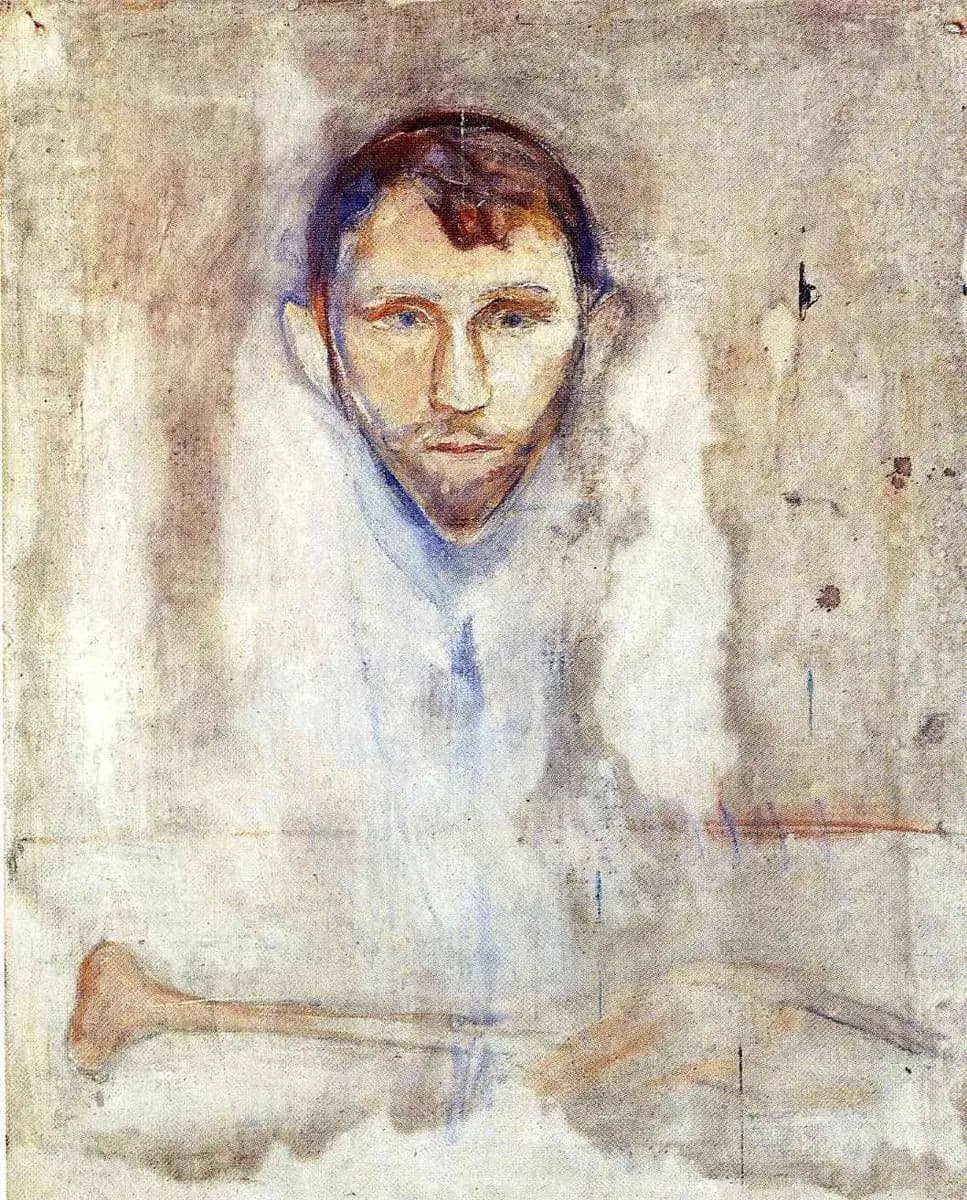
Stanisław Przybyszewski
- Original dimensions
- 55.5 x 62.5 cm
- Museum
- Munch Museum
- Year
- 1895
Scene depicted
The canvas "Stanisław Przybyszewski" depicts a contemplative figure, their gaze laden with deep reflections. Munch captures a disturbing essence, evoking an inner dialogue that resonates with the viewer. Each brushstroke is an invitation to penetrate the intimacy of the individual's thoughts, revealing the tensions between isolation and connection.
Historical context
Created in 1895, the painting "Stanisław Przybyszewski" by Edvard Munch is rooted in the rich cultural context of Oslo, Norway. This canvas , emblematic of the expressionist movement, belongs to a time when art became a powerful means of expressing human emotions. Today, this work resides in the Munch Museum, offering a fascinating window into the creative genius of the artist.
Place in the artist's career
"Stanisław Przybyszewski" stands as a crucial milestone in Munch's career, highlighting his style in full bloom. It echoes other canvases , such as "The Scream" and "The Madonna," where the artist explores themes of vulnerability and passion. This work reveals his ability to capture raw emotions, testifying to his artistic evolution towards yet unexplored depths.
Anecdote
One day, Munch reportedly stated: "Art lives only by what it reveals of the human soul." This thought is palpable in the painting "Stanisław Przybyszewski," inspired by a face encountered in a quiet alley on a spring morning. This fleeting meeting infused an emotional intensity into this masterpiece, transforming a simple portrait into a true exploration of the soul.
Major exhibitions
Edvard Munch : portraits