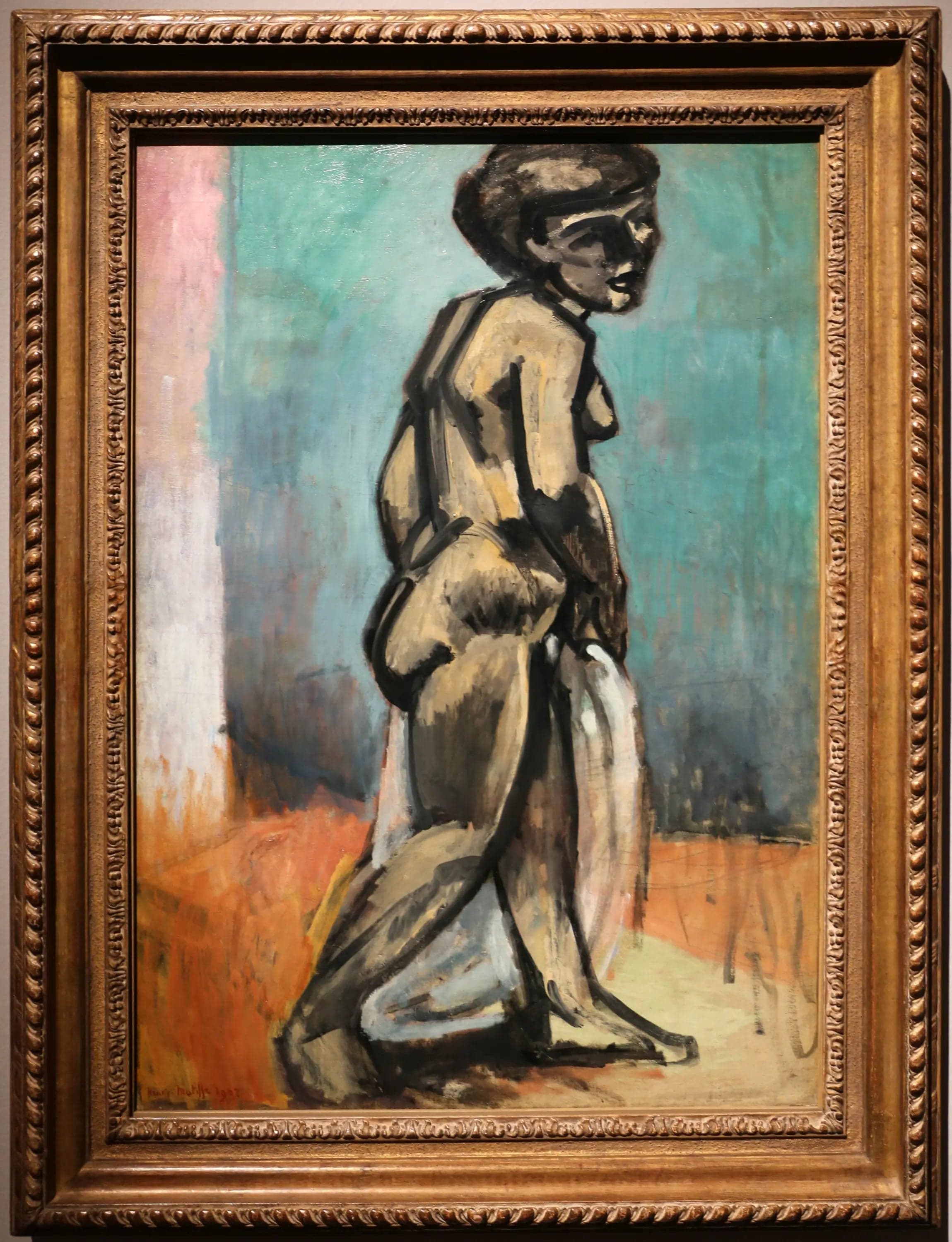
Standing Nude
- Original dimensions
- 92.1 x 64.8 cm
- Museum
- Tate
- Year
- 1907
Scene depicted
The painting "Standing Nude" depicts the human form with palpable sensuality and chromatic boldness. Matisse, with his innovative approach, plays with contours and volumes, transforming the figure into a dynamic dance. The work evokes not only bodily beauty but also offers a reflection on the very essence of humanity, a tribute to freedom and the expression of the body.
Historical context
Painted in 1907, during the Fauvist period, this painting is a masterpiece of artistic innovation that marked the city of Paris, the cradle of modern art. It is here, in the heart of France, that Matisse created this pictorial work, celebrating the human form in bold hues and a fluid composition. Today, the painting resides within the walls of the Tate Museum, a sanctuary of art that houses countless masterpieces.
Place in the artist's career
This painting represents a major turning point in Matisse's career. It marks the beginning of his true exploration of Fauvism , a period where he moves away from academic conventions to embrace a more personal and emotional visuality. To illustrate this evolution, it can be compared to other works such as "The Dance" and "The Joy of Life," which testify to an unceasing quest for expressive freedom.
Anecdote
Henri Matisse often said: "Color must be a vibrant call to emotion." It was during a bright spring morning, as the light danced on the walls of his studio, that inspiration struck. The simple beauty of a nude body, captured under soft light, transformed his creative momentum into a masterpiece timeless: Standing Nude .