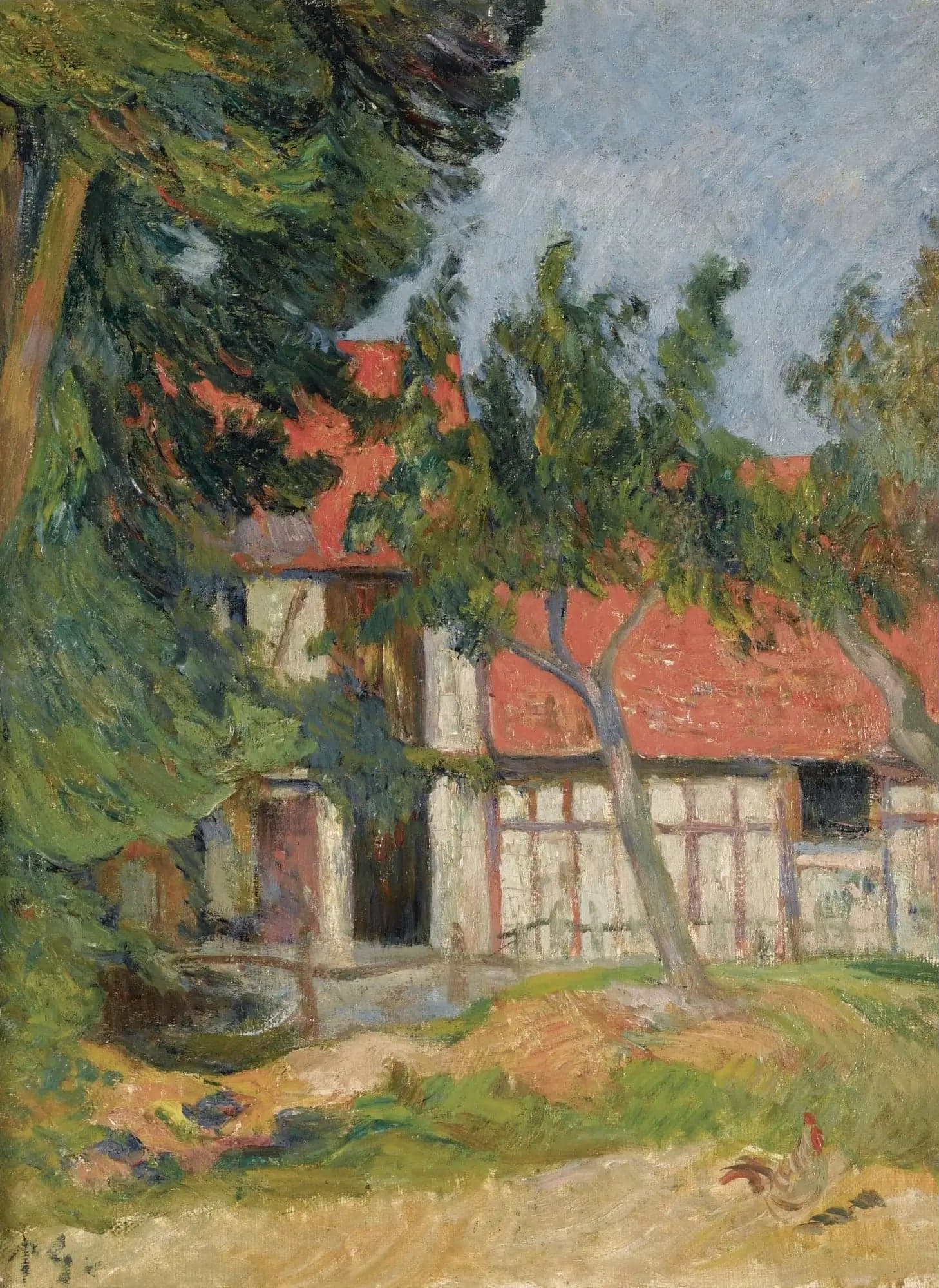
Stable near Dieppe I, or Cottage in Normandy II
- Original dimensions
- 27 x 35 cm
- Museum
- Not specified
- Year
- 1885
Scene depicted
This painting immerses us in the heart of a rural scene. We discover a cozy cottage, nestled next to a barn paying tribute to simple peasant life. The composition evokes a peaceful atmosphere, where natural elements blend harmoniously with human constructions, honoring the authenticity of the Norman landscapes. The painting transports us to a time when nature and man coexisted in beautiful harmony.
Historical context
Created in 1885 in Dieppe, this painting is an iconic work from the post-impressionist movement, depicting the serene beauty of the Norman countryside. At that time, Paul Gauguin sought to capture the authenticity of rural life, far from urban turmoil. The canvas evokes nostalgia for a simple, rural world, while resonating with the emotions of everyone. Today, this masterpiece represents a symbol of a past that we regret but also celebrate.
Place in the artist's career
Étable près de Dieppe I, ou Chaumière en Normandie II marks a turning point in Gauguin's career. Situated at a time when he begins to explore increasingly bold styles, this canvas testifies to his transition from post-impressionism to more symbolic experimentation. In parallel with other works like La Vision après le Sermon and Où allons-nous ?, we can see how he evolves artistically by incorporating deeper themes and bolder techniques.
Anecdote
“My heart awakens every morning to the song of birds and the scent of flowers,” Gauguin said. It was at the turn of an isolated path, bathed in the soft light of a morning, that the artist found inspiration for this canvas . The painting perfectly reflects this moment of deep connection with nature, offering viewers an echo of tranquility and beauty.