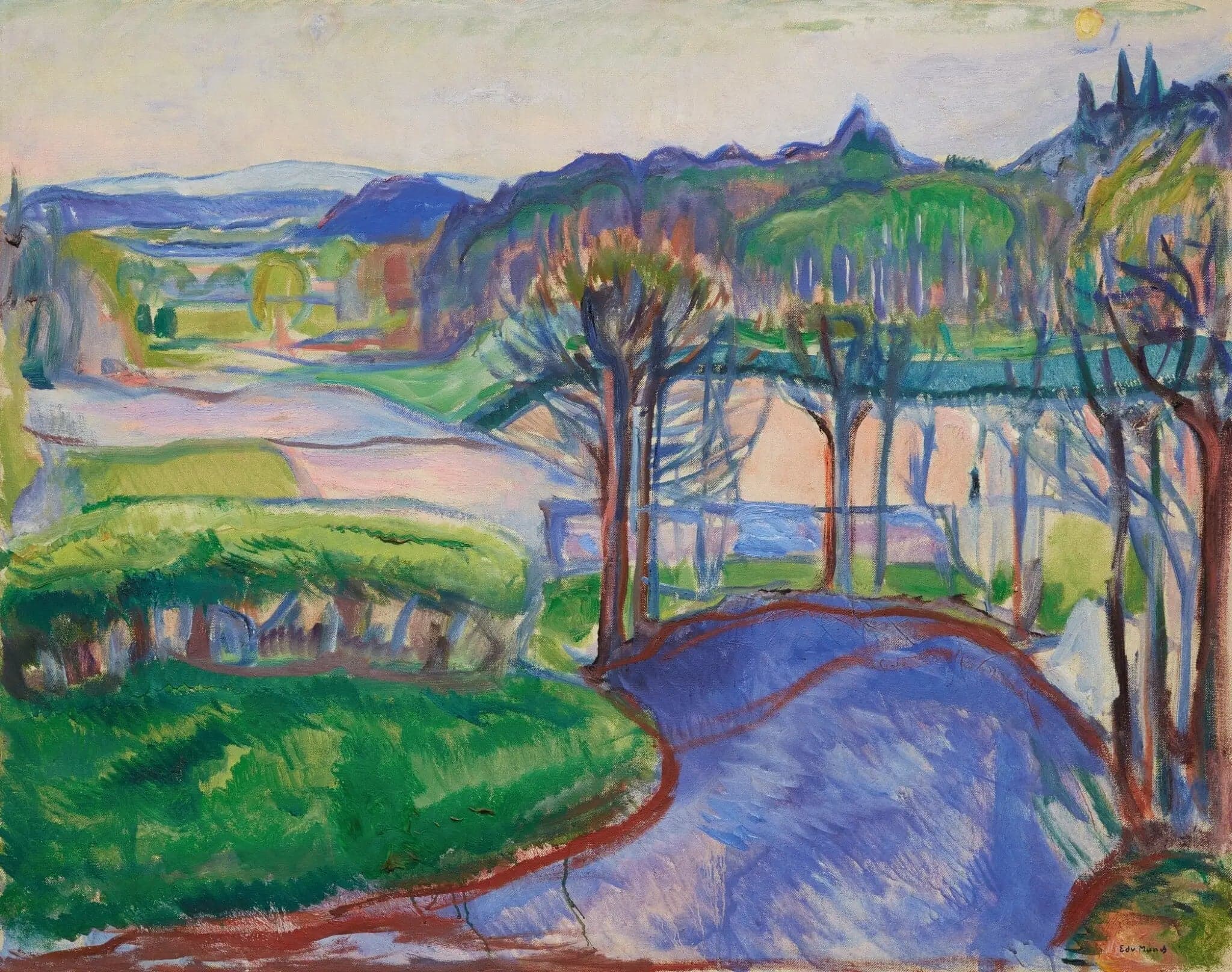
Spring Landscape
- Original dimensions
- 19.5 x 21.5 cm
- Museum
- Not specified
- Year
- 1882
Scene depicted
The painting “Spring Landscape” depicts a lush Norwegian countryside, re-embracing the light, almost palpable, infusing the landscape with a unique delicacy. The waves of green and yellow intertwine, painting a scene where life reclaims its rights, inviting the viewer to feel this seasonal rebirth, full of promises and renewal.
Historical context
Created in 1882, this painting evokes a vibrant spring in the heart of Norway, reflecting the beginnings of the expressionist movement to which Edvard Munch contributed. The work, rooted in a time when art questions and redefines its codes, captures the essence of a flourishing nature, vibrant with colors. Currently, the canvas remains in the shadow of private collections, waiting to be rediscovered by art enthusiasts.
Place in the artist's career
“Spring Landscape” is part of a period of discovery for Munch. After works such as “The Madonna” and “The Scream,” this painting marks a turning point, revealing a softer and more poetic approach, contrasting with his darker paintings. This canvas testifies to an evolution towards art that reveals the ephemeral beauty of nature.
Anecdote
“Nature lives and breathes at the same time as I do.” This quote from Munch resonates perfectly with the origin of his masterpiece . Imagine a quiet morning, when the sun dances on the budding leaves, filling the air with a sweet floral scent. It is this precise moment that inspired the painting “Spring Landscape,” a work imbued with olfactory and visual memories.