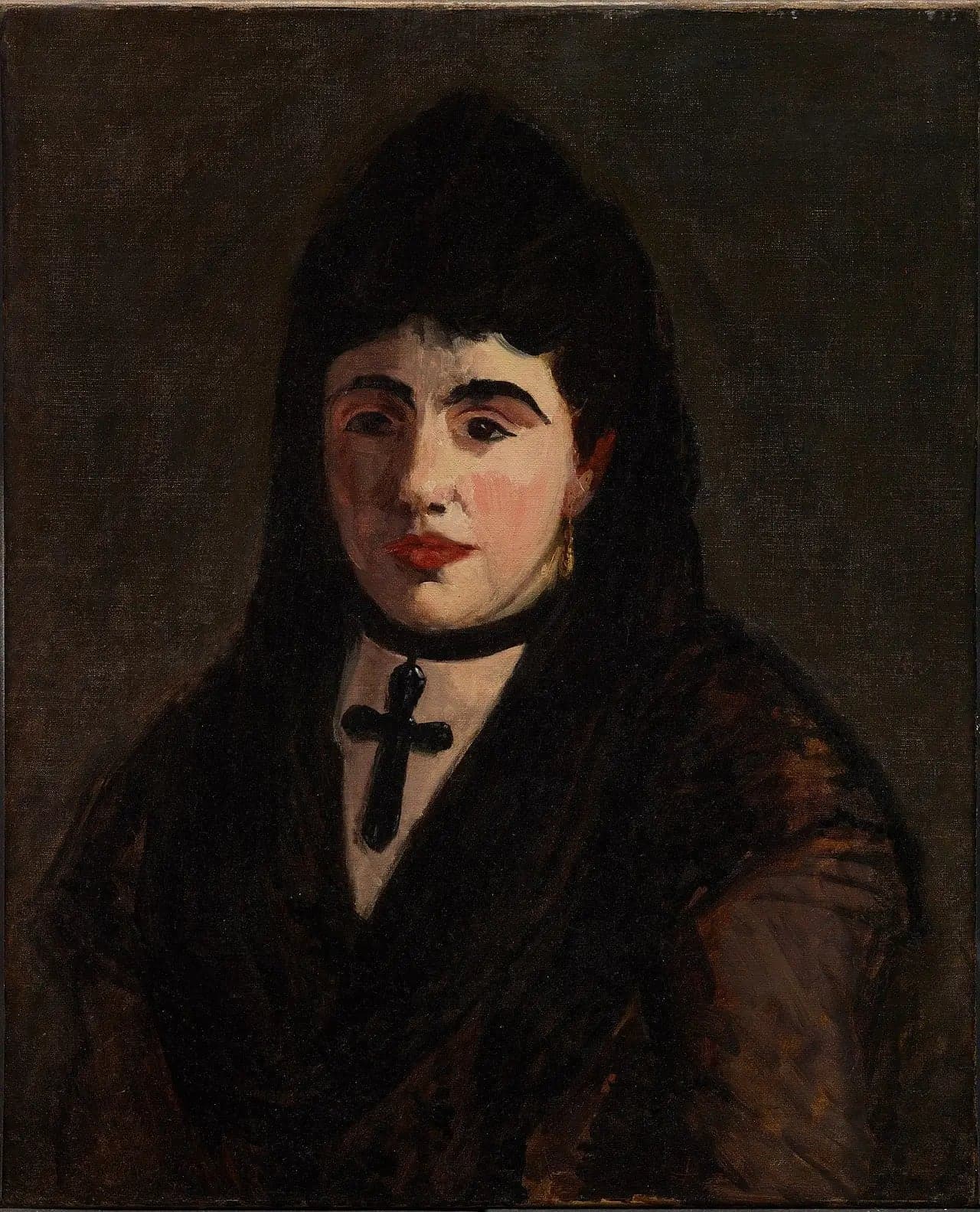
Spanish Woman at the Black Cross
- Original dimensions
- 46.99 x 60.96 cm
- Museum
- Dallas Museum of Art
- Year
- 1865
Scene depicted
In this striking painting , Manet depicts a woman draped in sumptuous fabrics, evoking Spanish culture. Her posture, imbued with dignity and mystery, draws the eye, while the black cross behind her creates a dramatic contrast, highlighting the tensions between tradition and modernity. It is a suspended moment, charged with palpable emotion.
Historical context
This iconic masterpiece, painted in 1865, emerges from the Parisian artistic effervescence, a central point of the Impressionist revival that redefines the codes of painting. The work is currently located at the Dallas Museum of Art in the United States, captivating viewers with its bold composition and innovative use of light and color.
Place in the artist's career
Spanish at the Black Cross marks a key milestone in Manet's career, revealing his transition to artistic maturity. By placing it alongside his other works such as Olympia and Luncheon on the Grass, one perceives a remarkable stylistic evolution, a constant search for light and the expression of feelings.
Anecdote
“Each painting is a window into the human soul.” These words from Manet resonate strongly when contemplating his work. The inspiration for Spanish at the Black Cross was born from a fleeting moment when he caught sight of a mysterious silhouette in an alley in Madrid, bathed in the soft glow of a summer morning. The painting thus becomes a reflection of an evocative encounter, imbued with delicate melancholy.