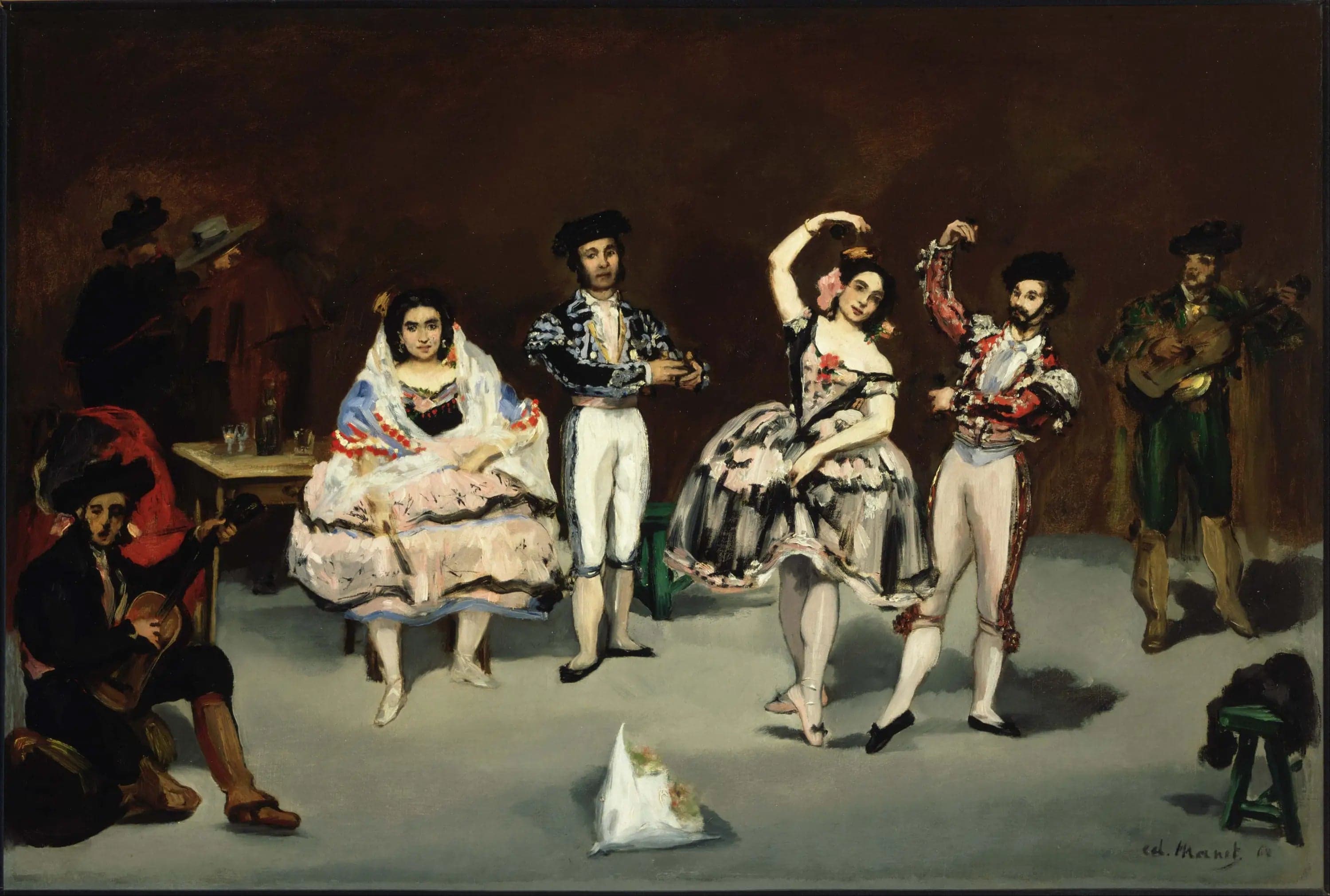
Spanish Ballet
- Original dimensions
- 35.63 x 24 cm
- Museum
- Phillips Collection
- Year
- 1862
Scene depicted
The painting "Spanish Ballet" presents a vibrant scene, where ballerinas dressed in colorful costumes dance to the rhythm of an enchanting tune. The graceful movements of the dancers blend with the notes of music, creating a captivating atmosphere. The composition is both a celebration of the art of dance and a reflection on the ephemeral beauty of artistic performances.
Historical context
Created in 1862, the painting "Spanish Ballet" by Édouard Manet is part of the historical impressionist movement in Paris, where light, movement, and emotions harmonize. In the vibrant context of 19th century Paris, this painting evokes both the bohemian seaside and the refinement of Spanish dance, revealing a committed perspective on the art and culture of the time. Today, this exceptional masterpiece is preserved at the Phillips Collection in Washington, testifying to the importance of this work in the history of art.
Place in the artist's career
This painting represents a significant milestone in the career of Édouard Manet , an artist in search of free expression. This painting is at the crossroads of his artistic exploration, succeeding "Luncheon on the Grass" while foreshadowing works such as "Olympia." It illustrates a growing maturity, both technically and in terms of emotional depth.
Anecdote
“Every movement of the dance is a poetry, a vibration of the soul that I seek to capture.” These words of Manet resonate like a melody when one immerses oneself in the genesis of this canvas . Inspired by a sunny morning when he encountered dancers bursting with life, he conceived this painting , immortalizing the passionate spirit of an eternal ballet.