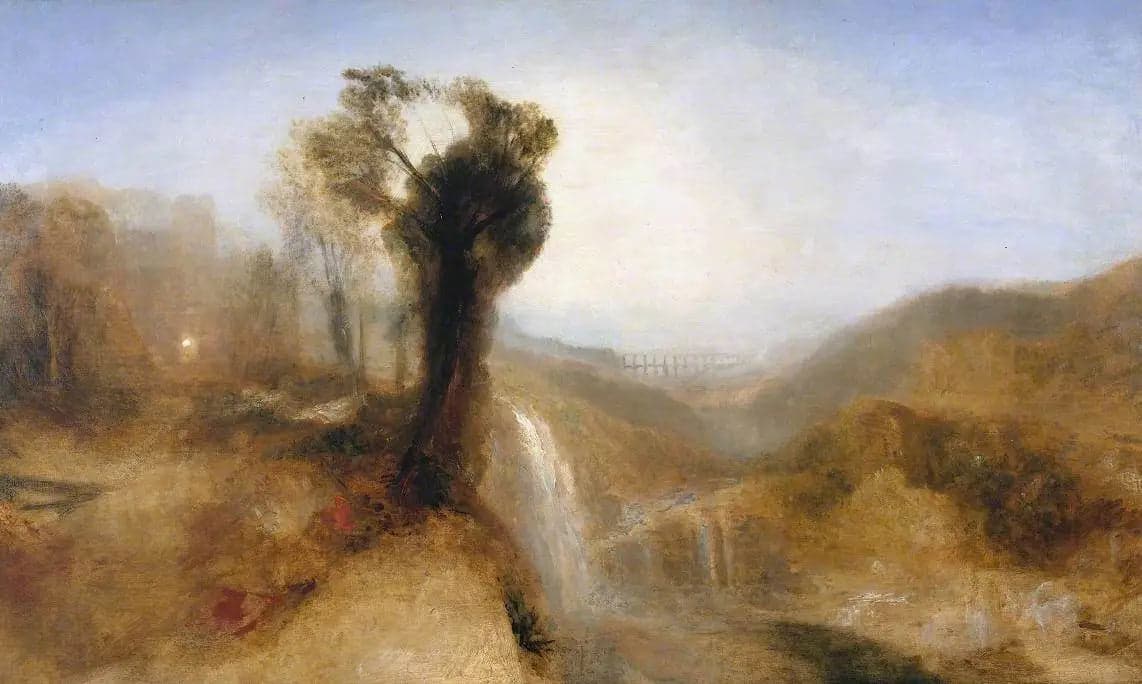
Southern Landscape with an Aqueduct and Waterfall
- Original dimensions
- 150.2 x 249.2 cm
- Museum
- Tate
- Year
- 1828
Scene depicted
In this masterpiece, Turner immerses us in the heart of a southern landscape where the majestic aqueduct stands, supported by a lush frame of hills and waterfalls. The canvas depicts a symphony of light and colors, where the sparkle of water evokes the murmur of streams and the fresh scent of the surrounding forests, inviting the viewer to feel the magic of British nature.
Historical context
Created in 1828, this painting emblematic of Turner fits within the romantic framework of 19th century England, a time when nature was both a source of inspiration and reflection. The painting is currently housed in the Tate museum in London, where its impressive dimensions of 150.2 x 249.2 cm fascinate and attract art lovers. This work marks the peak of the romantic movement led by artists who sought to capture the sublime essence of nature.
Place in the artist's career
Southern Landscape with an Aqueduct and Waterfall stands as a canvas landmark in Turner’s career, representing a period of artistic maturity. Following his famous paintings such as The Fighting Temeraire and Rain, Steam and Speed, the evolution of his technique is manifested here in the bold use of light and color, revealing a deep emotional connection with nature.
Anecdote
Turner is said to have once stated: "Light is the true subject of painting." At the heart of a misty morning, inspired by the soothing breath of the rivers of Southern England, he created this canvas that evokes memories of serenity. He managed to capture the tranquil strength of nature, making each brushstroke of the painting a tribute to the ephemeral beauty of life.