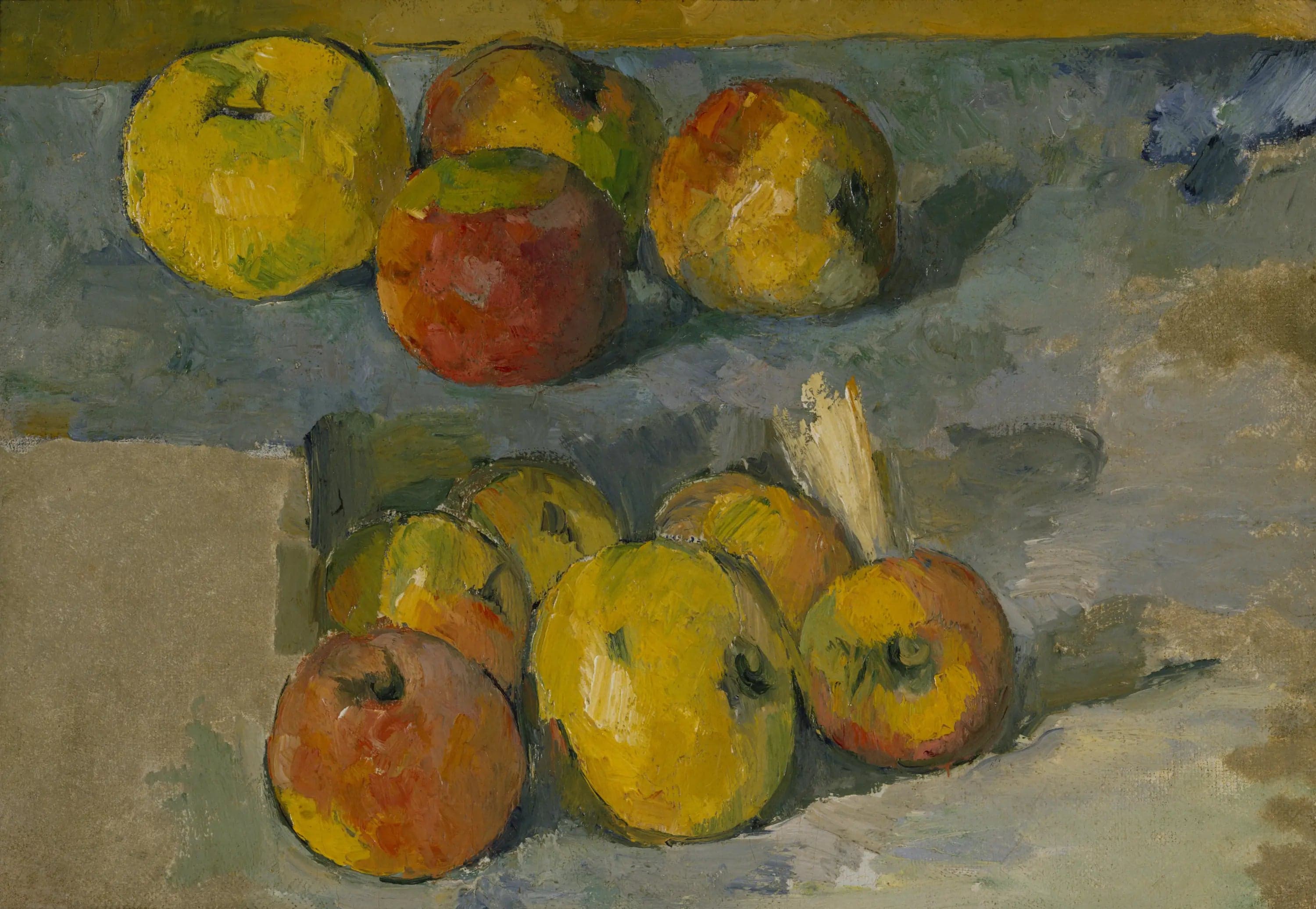
Some Apples
- Original dimensions
- 33 x 22.9 cm
- Museum
- Metropolitan Museum of Art
- Year
- 1878
Scene depicted
This canvas presents a group of apples delicately placed on a table, revealing Cézanne's mastery in capturing nuances and texture. The simplicity of the scene contrasts with the complexity of colors and shapes, where each fruit becomes a reflection of a unique perception. The composition, both ordinary and extraordinary, highlights the genius of the artist, capable of drawing the very essence of nature.
Historical context
Created in 1878, this painting is the result of a creative surge that occurred in Aix-en-Provence, the birthplace of the great artist. Belonging to the Impressionist movement, this pictorial work illustrates Cézanne's constant quest to capture reality through light and form. Today, the canvas rests at the Metropolitan Museum of Art in New York, displayed among other masterpieces of art history.
Place in the artist's career
Located at the heart of Cézanne's career, Some Apples marks a transitional phase towards a bolder use of color and form. This composition approaches his later works such as *Still Life with Apples* and *The Large Bathers*, where the search for structure and light refines, leading the artist to distance himself from academic conventions.
Anecdote
“A simple apple can hold a multitude of stories,” said Cézanne, inspired by the shapes of nature surrounding him in his garden. That morning, the dew sparkled on the apples, giving them an almost magical aura. This sensory memory is found in the evocative strength of Some Apples , drawing the eye like a sweet scent of earth and ripe fruit.