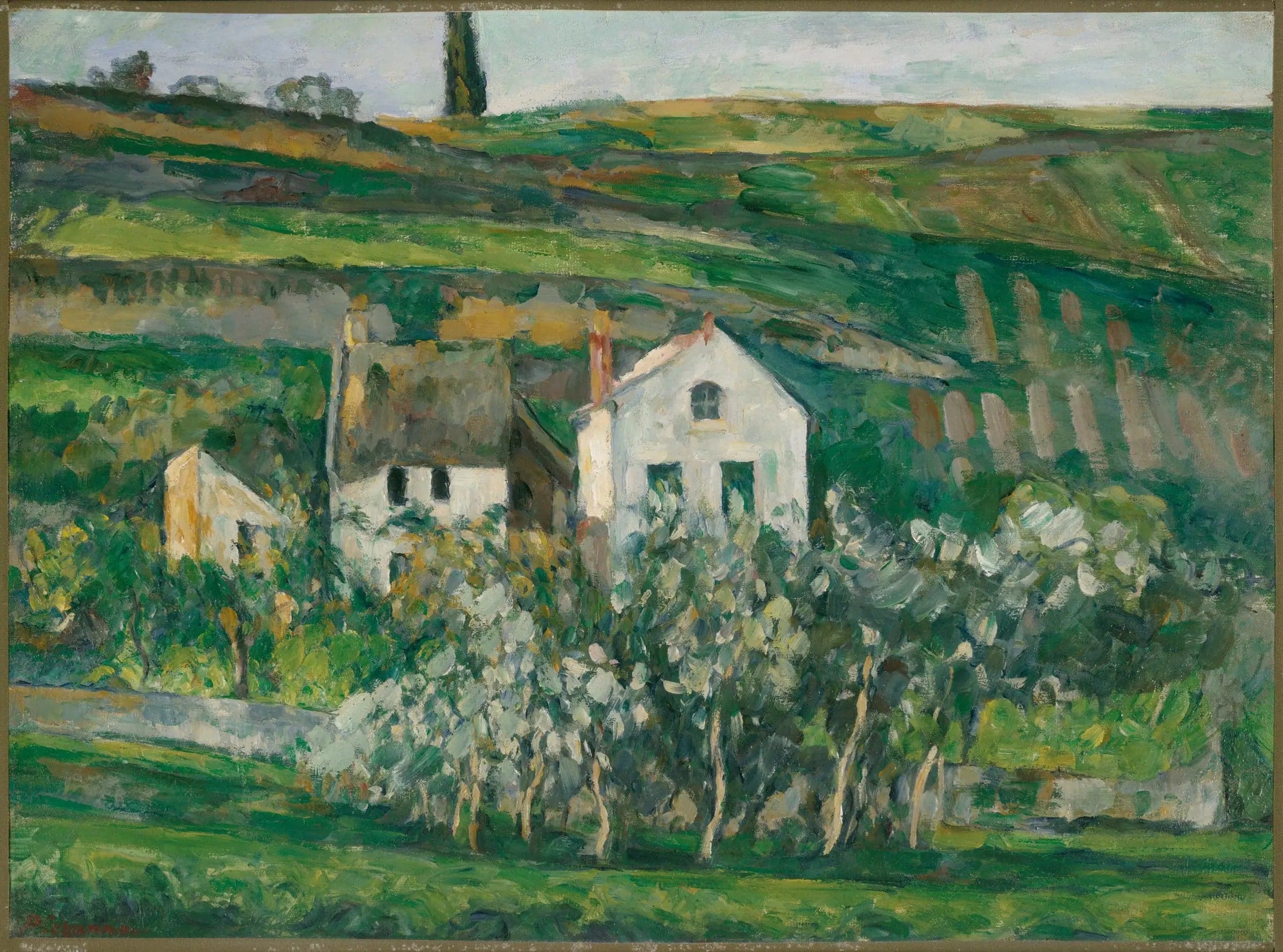
Small Houses in Pontoise, near Auvers-sur-Oise
- Original dimensions
- 51 x 40.5 cm
- Museum
- Fogg Art Museum
- Year
- 1873
Scene depicted
This painting offers a captivating view of the colorful small houses of Pontoise, integrated into a lush landscape that evokes the tranquility of rural life. The shimmering light and shadows dance between the buildings, translating the humility and beauty of everyday life. The pictorial work is a mosaic of colors and shapes, painting a lively scene that embodies the peaceful spirit of its time.
Historical context
Created in 1873, this iconic painting is set in the charming village of Pontoise, a region that has nourished the imagination of Impressionist artists. Cézanne, a major figure of Post-Impressionism , captured the essence of this corner of France, where nature and architecture meet in harmony. The painting is currently housed at the Fogg Art Museum and measures 51 x 40.5 cm, a canvas that invites contemplation and escape.
Place in the artist's career
“Small Houses in Pontoise, near Auvers-sur-Oise” represents a pivotal moment in Cézanne's career. This painting, often considered a promising beginning, is part of the continuity of works such as “The Garden of the Podane” and “The Montagne Sainte-Victoire,” where one can observe a marked stylistic evolution characterized by an incessant quest for color and form.
Anecdote
“Nature wants to be captured, but it demands delicate attention.” These words of Cézanne resonate through every brushstroke of his masterpiece. Imagine him, one spring morning, sitting near the small houses of Pontoise, imbued with the fresh and gentle air of the countryside, sensing the magic of the place and inspired to immortalize this fleeting moment. Every detail of the canvas is an invitation to this silent encounter between the artist and his environment.