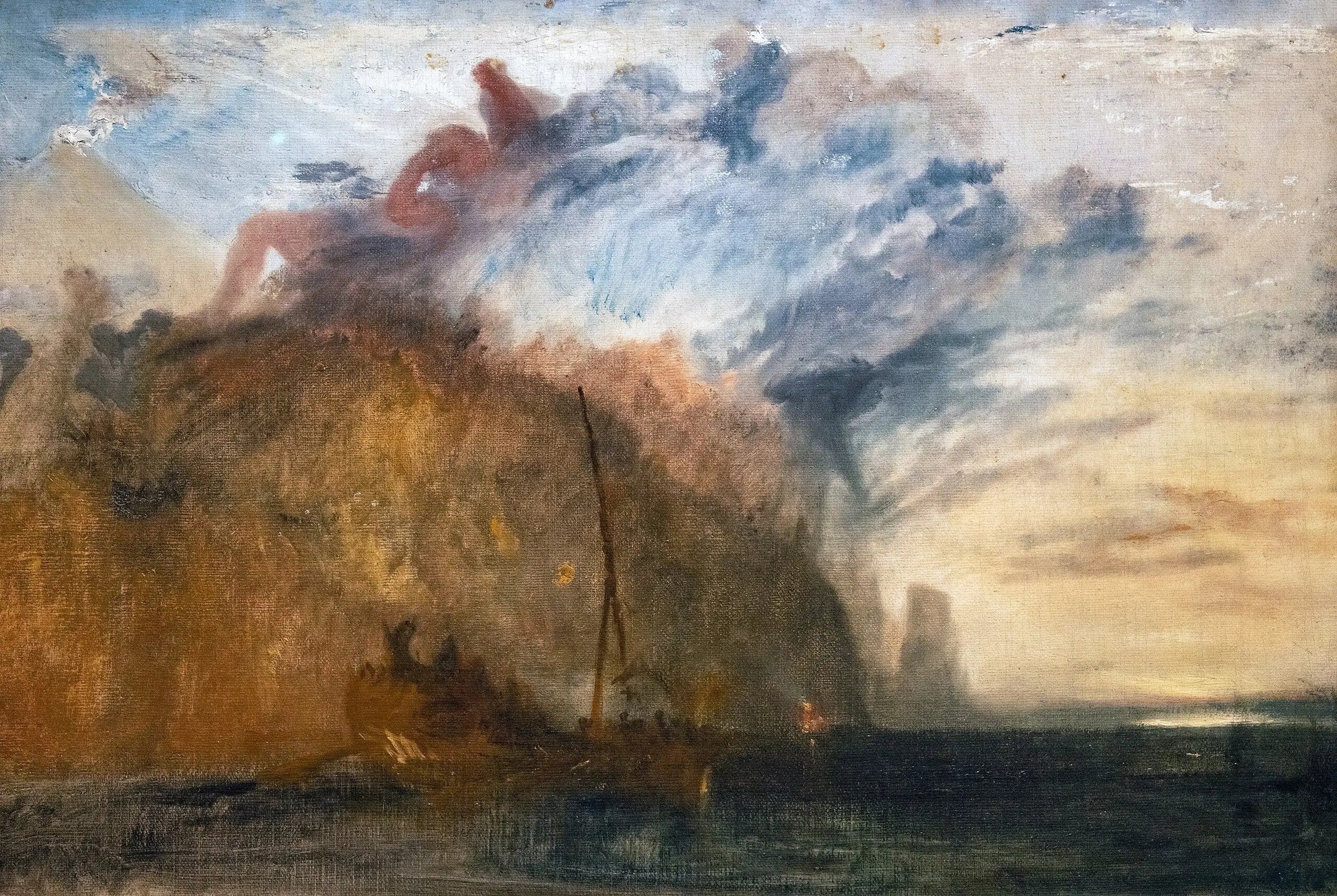
Sketch for ‘Ulysses Deriding Polyphemus’
- Original dimensions
- 60 x 89.2 cm
- Museum
- Tate
- Year
- 1827
Scene depicted
This captivating painting highlights Ulysses and his companions mocking the cyclops Polyphemus, a scene filled with dramatic tension and bravery. The contrast between the ferocity of the monster and the determination of the heroes shines through, creating a visual narrative rich in stakes.
Historical context
Created in 1827, Turner's painting finds its inspiration in mythological epic. London, the artistic crossroads of the 19th century, sees the emergence of this major artist of Romanticism . This painting, now preserved at the Tate , testifies to his genius.
Place in the artist's career
Sketch for ‘Ulysses Deriding Polyphemus’ stands as a central work in Turner's career. It marks a turning point towards a bolder understanding of light and shadow, akin to “The Fighting Temeraire” and “Rain, Steam and Speed” which foreshadow his mature style.
Anecdote
Turner once declared: “Light is the heart of my painting.” Imagine him, at the dawn of a spring day, crossing the shadows of an old dock, his spirit ignited by the excitement of maritime destinies. This emotion, this irresistible call, gave birth to this evocative canvas.