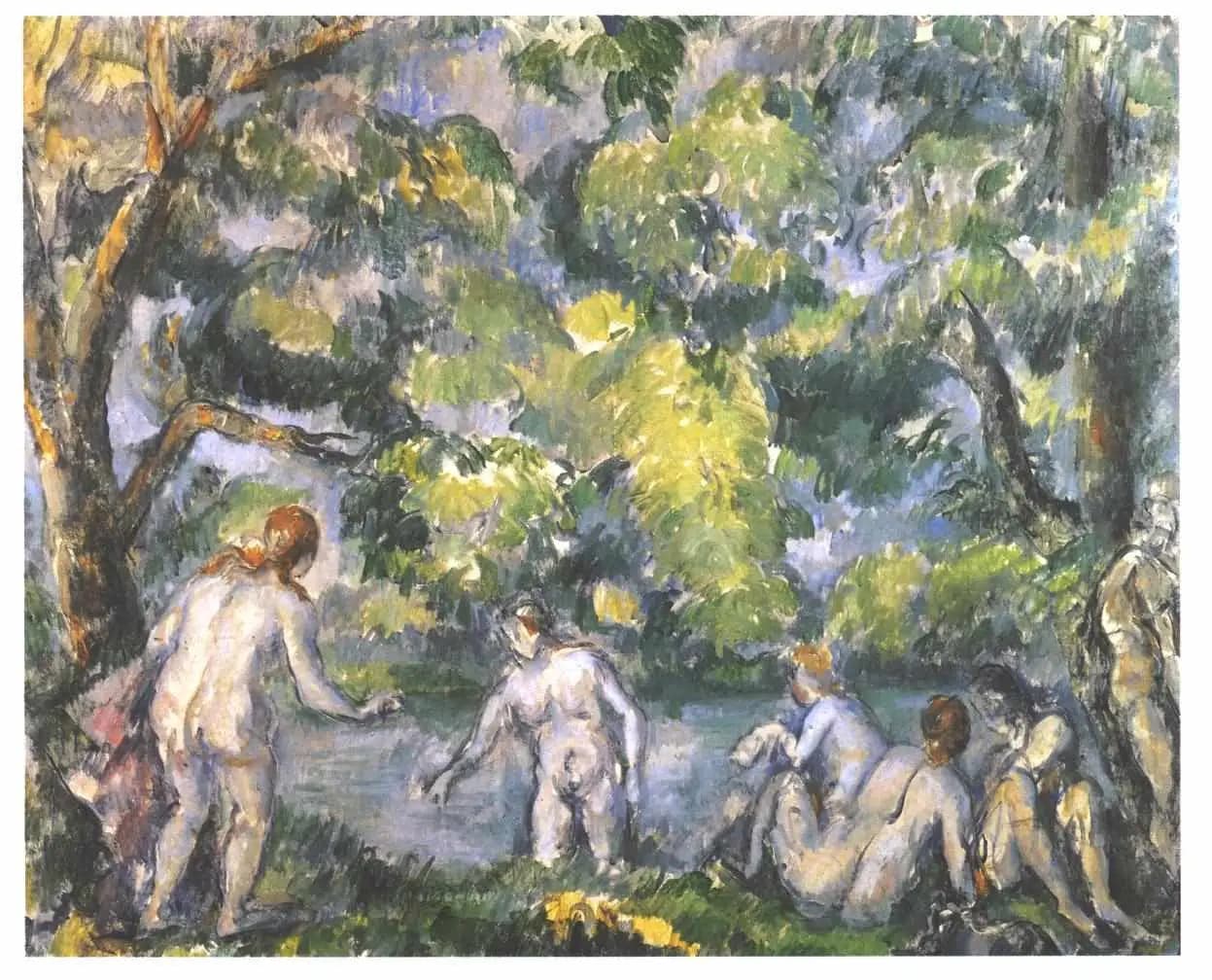
Six Bathers; The Undines
- Original dimensions
- 44 x 33 cm
- Museum
- Geneva
- Year
- 1887
Scene depicted
This pictorial work illustrates a suspended moment where the brilliance of the aquatic ripples meets the grace of the bathers. They, female figures bathed in light, blend with the natural elements, embodying both softness and dynamism. Each curve, each burst of color dialogues with the surrounding environment, weaving a captivating story that transcends mere decor.
Historical context
Created in 1887, this painting emblematic finds its roots in Aix-en-Provence, the beating heart of the Impressionist movement. The canvas is situated at a moment when Cézanne, in search of a new perception of nature, begins to develop his unique visual language. Today, this painting is preserved at the Museum of Geneva, inviting visitors to dive into the gentle interrelations between light and shadow, while revealing the dimensions of its 44 x 33 cm.
Place in the artist's career
Positioned at a significant turning point in his career, Six Bathers; The Ondines demonstrates the maturation of Cézanne's style. It is situated between “The Montagne Sainte-Victoire” and “The Large Bathers,” testifying to his evolution. Each painting reflects an incessant search for balance between form and color, a perfect fusion of his artistic aspirations.
Anecdote
Paul Cézanne , in a creative surge, said: “Nature is a painting that I paint.” While contemplating a spring morning, the fleeting moments of an aquatic life captured in the heart of a sparkling river, he was inspired by the delicacy and fluidity of the Ondines. This emotion resonates in the evocative power of Six Bathers; The Ondines .