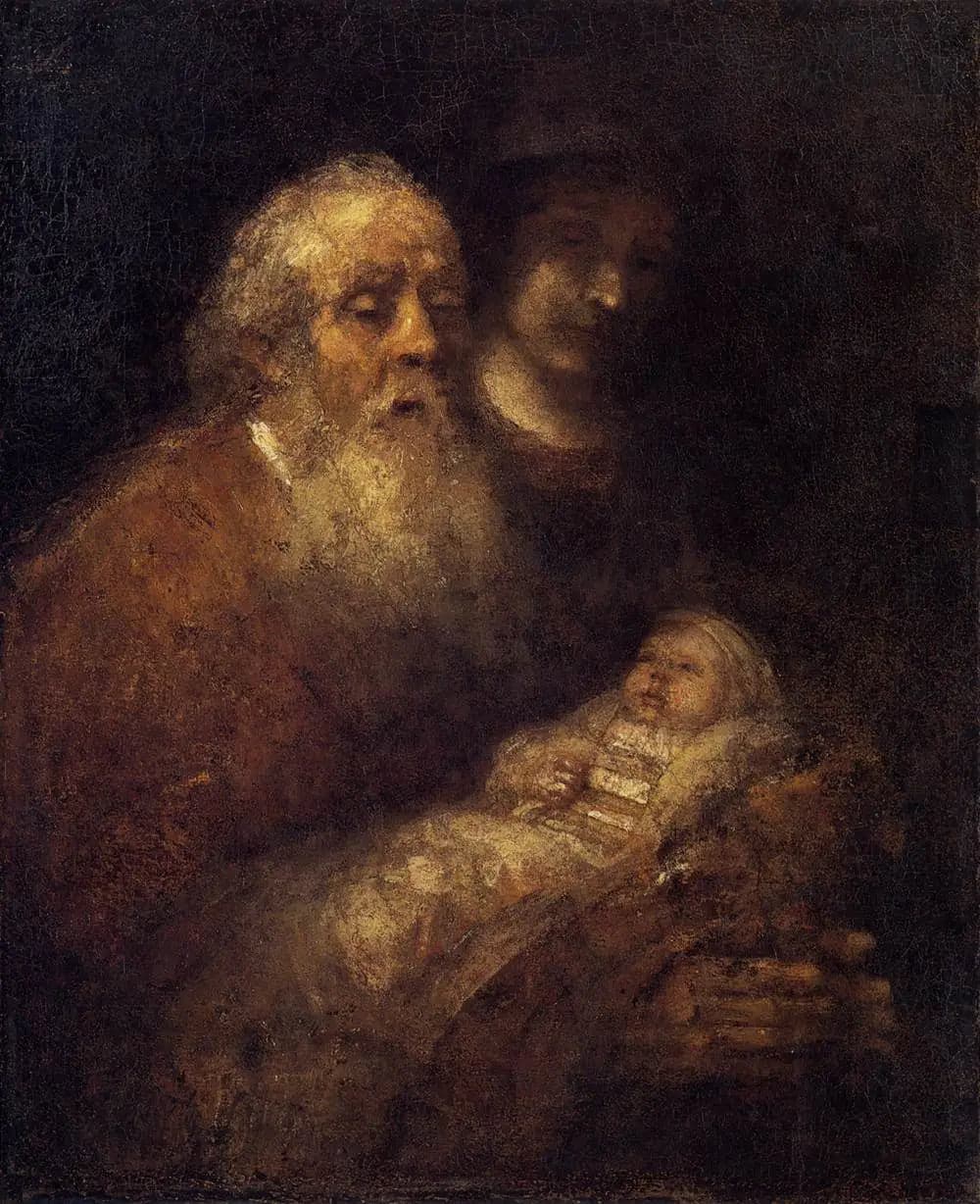
Simeon in the Temple
- Original dimensions
- 79.5 x 98.5 cm
- Movement
- Dutch Golden Age
- Museum
- Nationalmuseum
- Year
- 1669
Scene depicted
Siméon au Temple evokes a significant biblical scene: the meeting between the elderly Simeon and the child Jesus, in the temple of Jerusalem. At the center of this composition , Rembrandt captures the quintessence of faith and hope, illustrating the depth of feelings through the expressions of the characters. Light plays a central role, illuminating the divine innocence of the child while Simeon, with a gaze imbued with wisdom, receives a divine revelation.
Historical context
Created in 1669 in Amsterdam, during the emblematic period of the Dutch Golden Age, this painting by Rembrandt finds its place within the Nationalmuseum , where it continues to touch souls with its depth. Rembrandt , at the height of his genius, captures the essence of a sacred moment, rich in light and emotions. The canvas, measuring 79.5 by 98.5 cm, tells the story in a unique and timeless way.
Place in the artist's career
“Siméon au Temple” represents the pinnacle of Rembrandt 's career, a period when he manages to combine technique and emotion in an unprecedented way. Alongside other works like “The Night Watch” and “The Anatomy of Dr. Tulp,” this canvas illustrates his stylistic evolution, both in the mastery of light and in the complexity of the characters he depicts.
Anecdote
“Every brushstroke is a breath of life, a light that illuminates the soul.” These words carry the inspiration that Rembrandt felt as he painted this masterpiece in his light-filled studio. Imagine a spring morning, the scent of fresh colors and the echo of peaceful nature, where every detail of the scene is captured with overwhelming passion.
Major exhibitions
Late Rembrandt