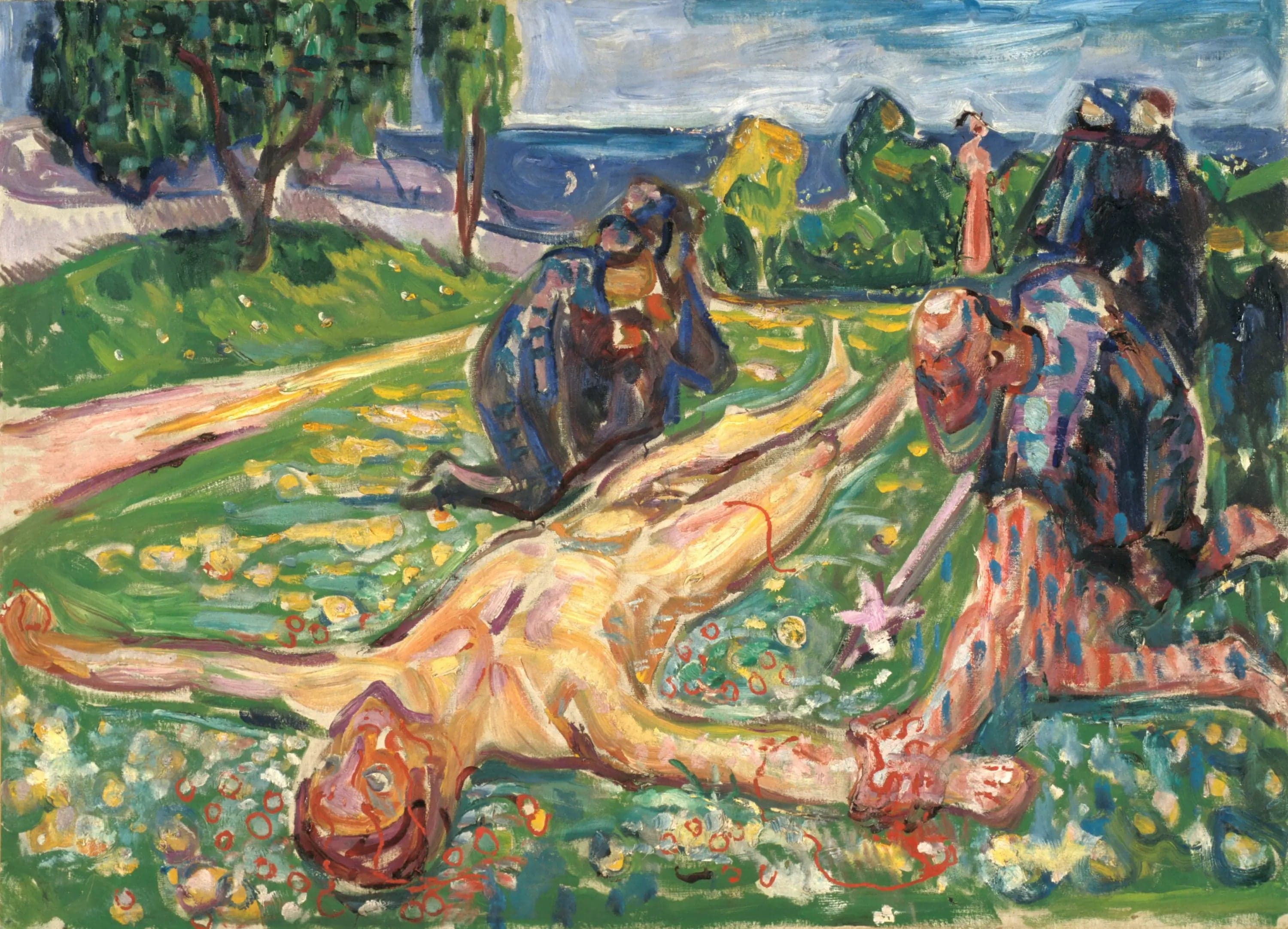
Sigurd Slembe
- Original dimensions
- 123 x 89 cm
- Museum
- Munch Museum
- Year
- 1909
Scene depicted
In “Sigurd Slembe,” Munch captures the protagonist's inner struggle, a recurring theme in his work. The painting features the Nordic hero Sigurd, facing his tragic fate. Filled with intense drama, the almost spectral figures seem to witness an eternal struggle between the individual and the forces that overwhelm him.
Historical context
Sigurd Slembe, painted by Edvard Munch in 1909, is rooted in Norwegian modernism. In Oslo, where the Munch Museum is located, this painting illustrates the artist's intense passion for expressing human emotions. In this artistic context, Munch immerses himself in the sufferings and passions of his time, using his canvas to address the social issues of his era.
Place in the artist's career
This masterpiece sits at the crossroads of Munch's exploration and stylistic maturity period. It can be compared to other works like “The Scream” and “The Madonna,” illustrating his technical evolution. Here, psychological depth combines with a virtuosity blending color and form, offering a new dimension to his exploration of human anxiety.
Anecdote
“Melancholy is my inspiration,” he might have declared one autumn morning as he observed nature tinged with colors. The idea for the painting “Sigurd Slembe” was inspired by a face encountered in a quiet street, a gaze filled with stories and secrets, resonating with that evocative force felt when looking at this painting .