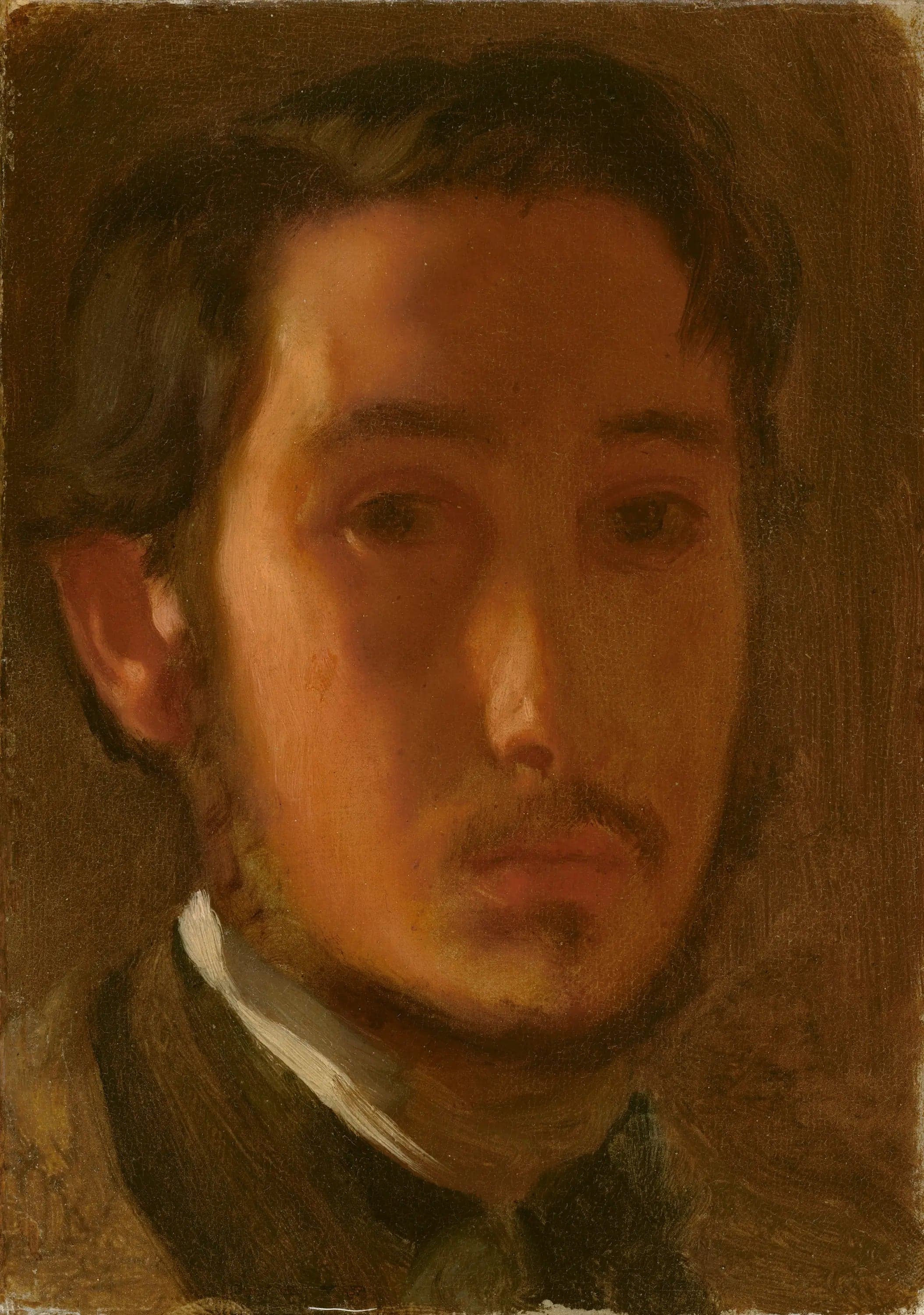
Self-Portrait with White Collar
- Original dimensions
- 15 x 20.5 cm
- Museum
- National Gallery of Art
- Year
- 1857
Scene depicted
This painting is a vibrant exploration of Degas's psyche. The self-portrait shows the artist dressed in a white collar, a touch that symbolizes both sophistication and vulnerability. The composition, where his piercing gaze seems to scrutinize the soul of the viewer, creates a silent yet powerful dialogue between the artist and his work. Each brushstroke reveals the torments and passions of the creator, evoking a striking emotional depth.
Historical context
Created in 1857, Self-Portrait with White Collar is at the heart of the Impressionist movement in Paris, a vibrant city of artistic innovations and cultural revolutions. Under the aegis of the 19th century, this iconic painting embodies the aspirations and doubts of an artist in search of his identity. Currently exhibited at the National Gallery of Art , this painting measures 15 x 20.5 cm, a size that gives it an intimacy that is both captivating and poignant.
Place in the artist's career
Self-Portrait with White Collar marks a pivotal moment in Degas's career, revealed as a master of intimate portraiture. In parallel with his other paintings , such as 'The Dance Class' and 'The Dancers', this pictorial work illustrates the evolution of his style, moving from an academic rigor to a more free and expressive narrative.
Anecdote
“Painting is not a material, but an expression of the soul,” could have said Edgar Degas as he contemplated himself in the mirror, his mind clouded by inspiration. Let us recall that spring morning, when the soft light filtering through the windows revealed his face, bathed in light. In this fragile moment, Edgar's canvas transformed into a witness of his introspection, offering a sincere reflection of his essence.