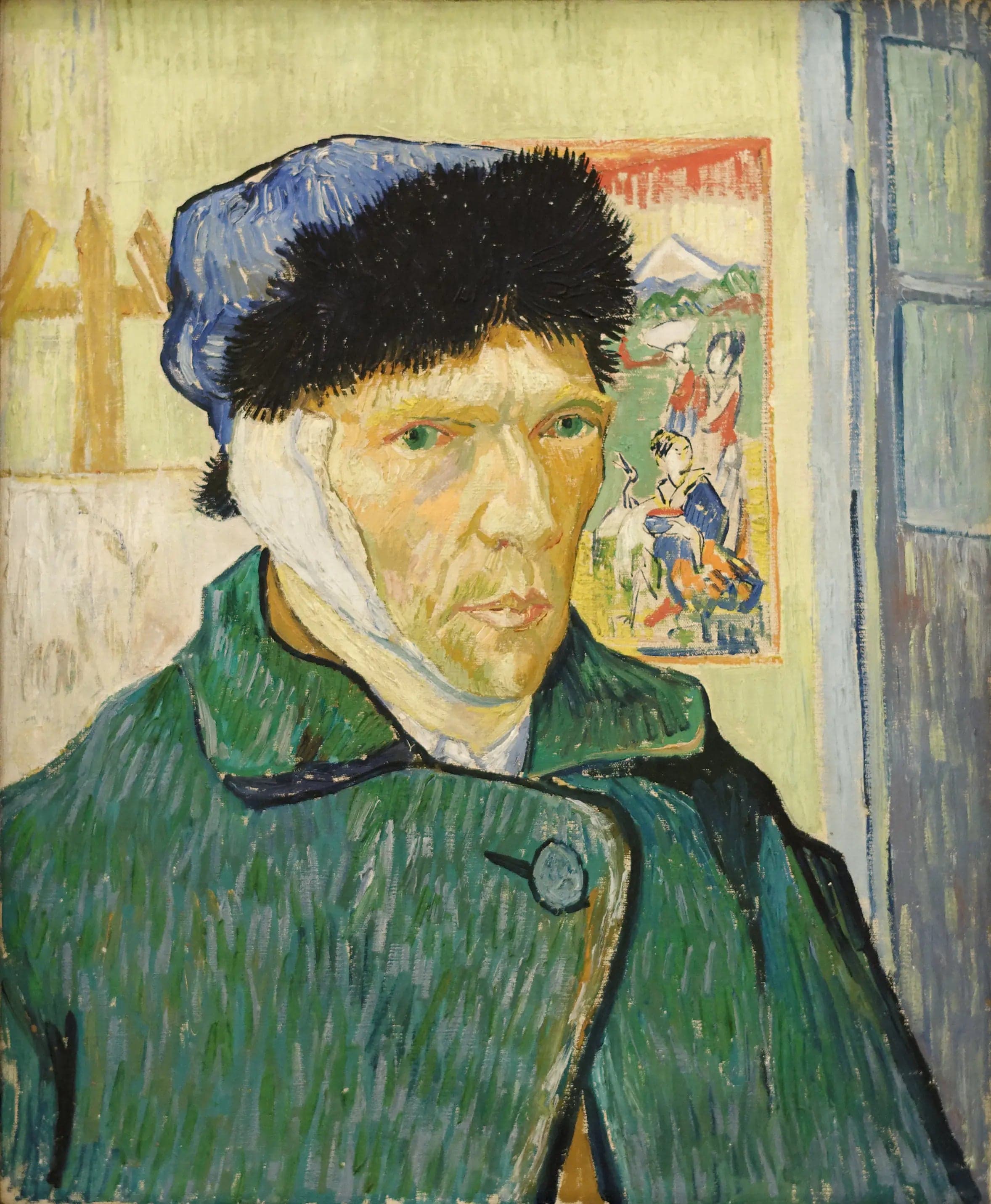
Self-Portrait with Bandaged Ear
Scene depicted
In this painting , the intense gaze of Vincent van Gogh confronts his suffering. The artist, playing with vibrant colors and nervous strokes, conveys an emotional autobiography. The shades of blue and orange evoke a poignant dialogue between shadow and light, reflecting his tumultuous state of mind. The canvas is not just a simple portrait ; it is a true inner odyssey.
Historical context
Created in 1889, this painting came to life in Arles , an iconic city in the south of France, during a period of artistic excitement. Vincent van Gogh , a major figure of post-impressionism , infuses this canvas with the passion and turmoil of his time. Today, the painting is preserved at the Courtauld Gallery in London, where it continues to amaze visitors with its dimensions of 50 x 60.5 cm.
Place in the artist's career
This painting occupies a central place in Van Gogh's career, marking a phase of artistic maturity. Alongside “ The Starry Night ” and “ The Sunflowers ”, “ Self-Portrait with Bandaged Ear” reveals the stylistic and emotional evolution of the artist, witnessing his transition from realistic observation to a more personal and poignant expression.
Anecdote
Vincent, on a stormy evening, said: “Even damaged, I remain an artist, always in search of light.” Drawing inspiration from his own struggles, the image of this self-portrait tells not only of the physical pain of a bandaged ear but also of a luminous resilience. This painting becomes a symbol of his quest for redemption.