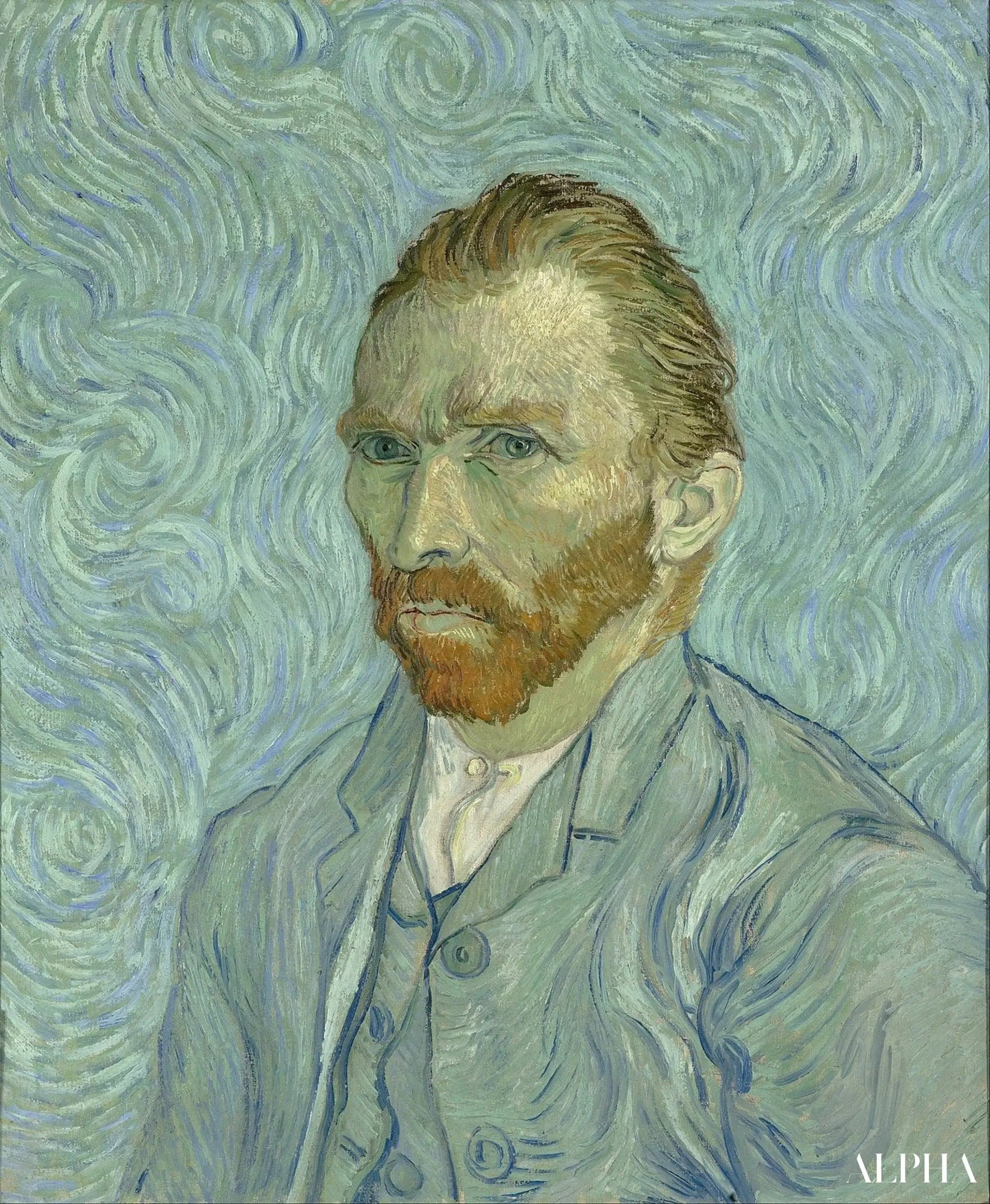
Self-portrait
- Original dimensions
- 35.5 x 46.5 cm
- Museum
- Emil G. Bührle Foundation and Collection
- Year
- 1887
Scene depicted
In this painting , Vincent van Gogh portrays himself with poignant strength and clarity. His expressive face, surrounded by vibrant and colorful brushstrokes, conveys a mix of tumultuous energy and delicacy. The composition reveals the play of light on his face and the background, evoking introspection and an intimate relationship with the act of creating.
Historical context
This iconic painting was created in 1887 in the vibrant context of Paris , then a must-see center of the Post-Impressionist movement. At that time, Vincent van Gogh , marked by his experience and artistic genius, laid the foundations for his future fame. Today, this masterpiece is housed within the Emil G. Bührle Foundation, where it continues to delight art lovers from around the world.
Place in the artist's career
This painting occupies a central place in Van Gogh's career, marking a period of artistic maturation. Alongside it, works such as " The Sunflowers " and " The Starry Night " illustrate his technical evolution where painting becomes a means of ensuring a dialogue between color and emotion, thus charting the path of a creator in search of authenticity.
Anecdote
Vincent van Gogh once shared these words: "I paint myself because I am often alone, and I am alone because I paint myself." The self-portrait is thus a window into his tormented soul, captured on a quiet morning, as the soft light of Paris offered him a moment of introspection. The intensity of the composition evokes this quest for self through painting .
Major exhibitions
The Emil Bührle Collection