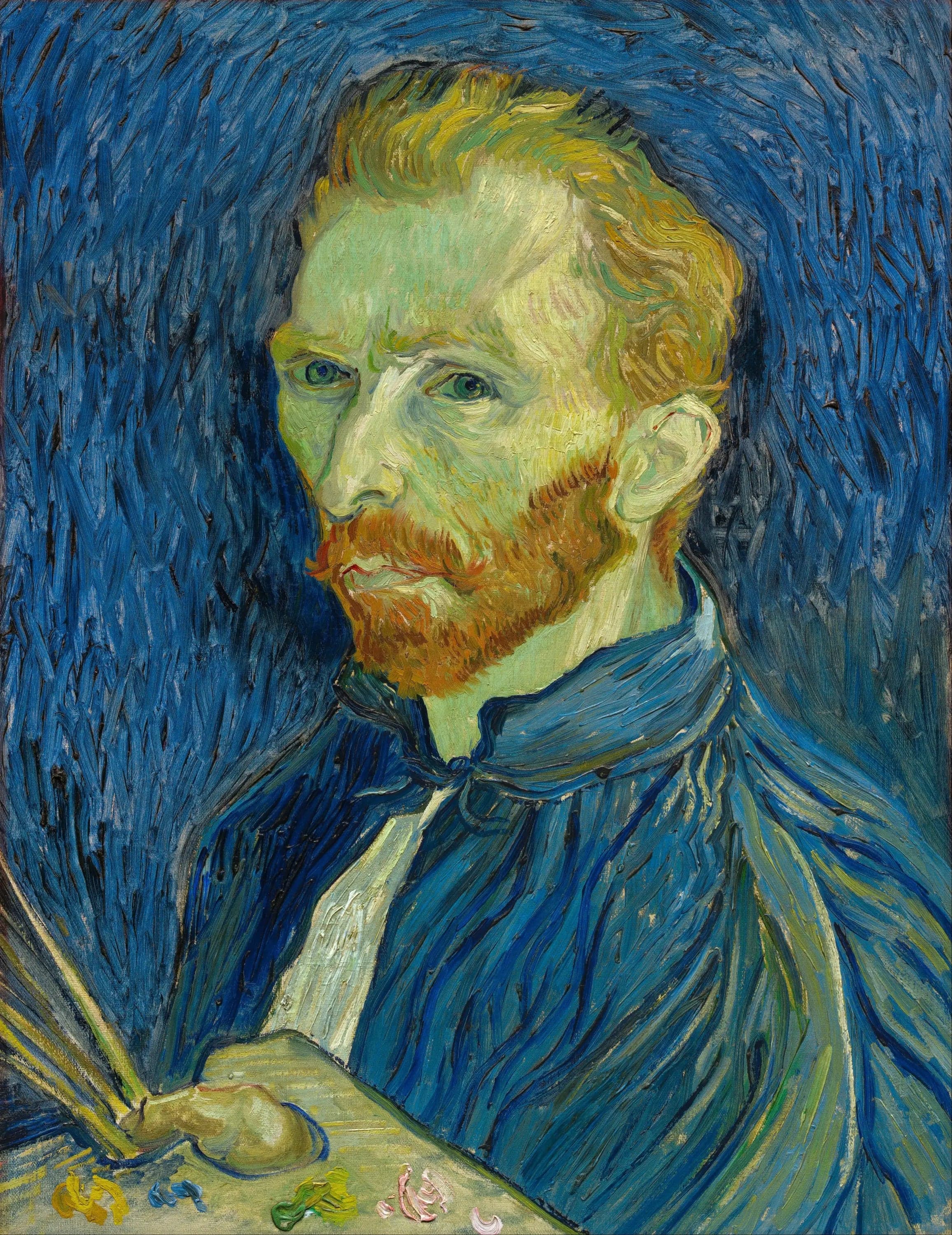
Self-portrait of Vincent van Gogh
Scene depicted
In this painting , Van Gogh turns towards himself, his intense and penetrating gaze offering poignant introspection. Through the vigorous strokes of this painting, he reveals his soul, his struggles, and his passions. The vibrant colors and rich texture testify to the depth of his emotions. Every detail of this artwork evokes the artist's quest for identity.
Historical context
Created in 1887, this masterful work comes to life in the heart of Paris , a vibrant symbol of the post-impressionist era. The painting, now exhibited at the Kröller-Müller Museum , spans a modest size of 24 x 32 cm, but its emotional reach is infinite. At this time, Van Gogh immerses himself in impressionist influences, seeking to capture light and emotion in every brushstroke.
Place in the artist's career
This painting marks a crucial milestone in Van Gogh's artistic evolution, positioning itself as a landmark between his beginnings in Holland and his bold explorations in France. In comparison, his later works like “ Starry Night ” and “ Sunflowers ” reveal a growing maturation and technical mastery, while preserving that unique emotional drive.
Anecdote
“Every face I encounter is a universe; it is through painting that I reveal my own inner paths.” These words resonate like an echo of the genesis of his masterpiece , captured at the turn of a Parisian alley, where the morning light gently caresses the blank canvas, ready to welcome his troubled spirit.