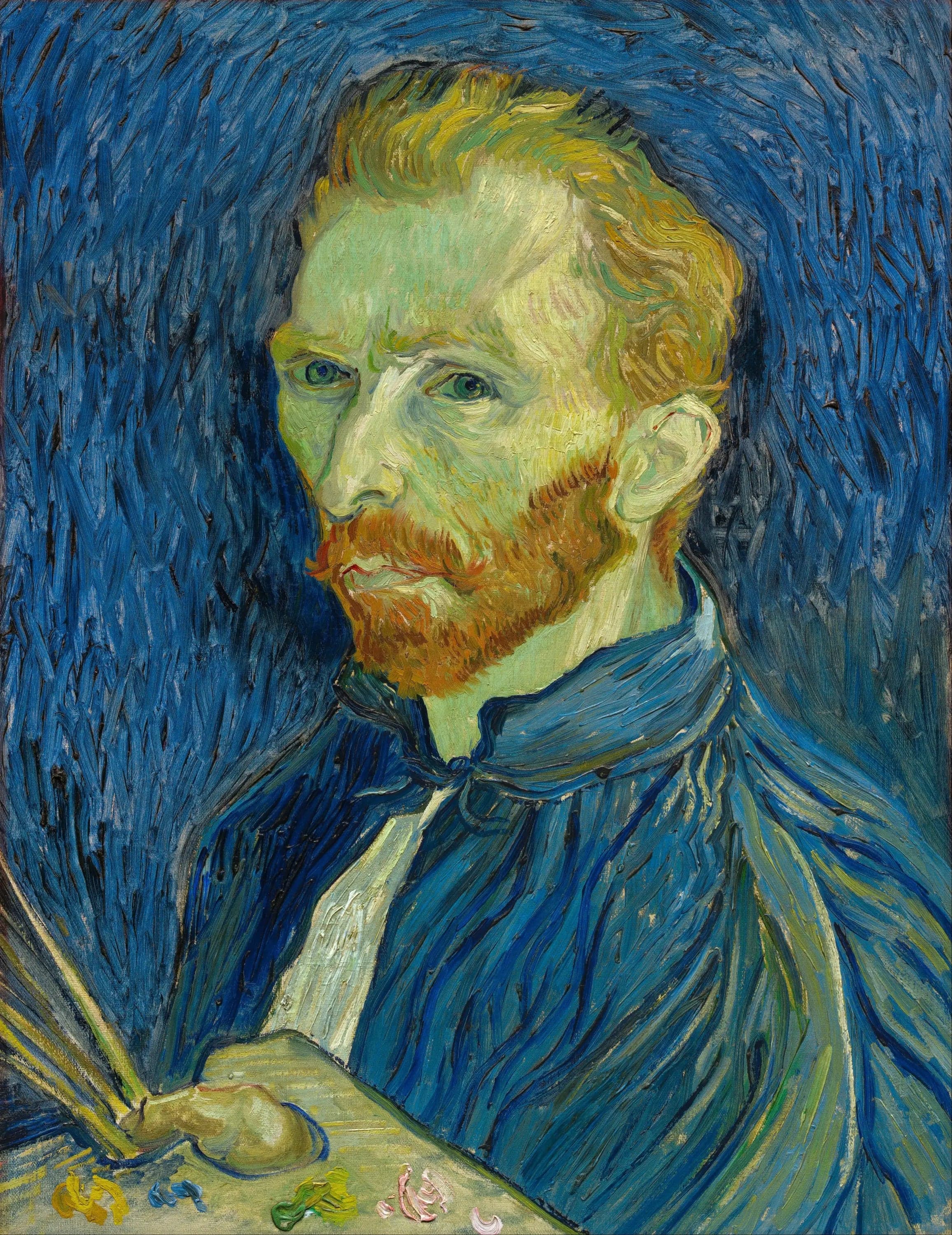
Self-portrait of Vincent van Gogh
Scene depicted
The self-portrait of Vincent van Gogh is an introspective work, reflecting the complexity of his mind. The artist paints himself with vibrant colors and energetic brushstrokes, each evoking his emotional state. It is a moment of pain and beauty where the face and gaze speak of anguish, solitude, but also of a vibrant passion for art and life.
Historical context
Created in 1888, during a tumultuous and artistically rich period, this painting is the poignant expression of an artist in search of himself. Made in Saint-Rémy-de-Provence , this work belongs to the post-impressionist period, as van Gogh explores themes of light and emotion. Currently exhibited at the National Gallery of Art , the canvas measures 44.5 x 57.79 cm, a format that invites introspective contemplation.
Place in the artist's career
This canvas represents a turning point in Van Gogh's career, marking a period of artistic maturation. By placing it alongside “ The Starry Night ” and “ The Sunflowers ,” one observes an evolution in his technique and his concern for light and color, testifying to a dazzling stylistic peak.
Anecdote
“I paint myself because I am often alone,” said van Gogh, referring to his moments of isolation in this city. This masterpiece was created one morning when the golden light of Provence illuminated his studio. The vibrant nature he observed through his window inspired deep emotions, captured in this canvas , highlighting his struggle under the onslaught of doubt.