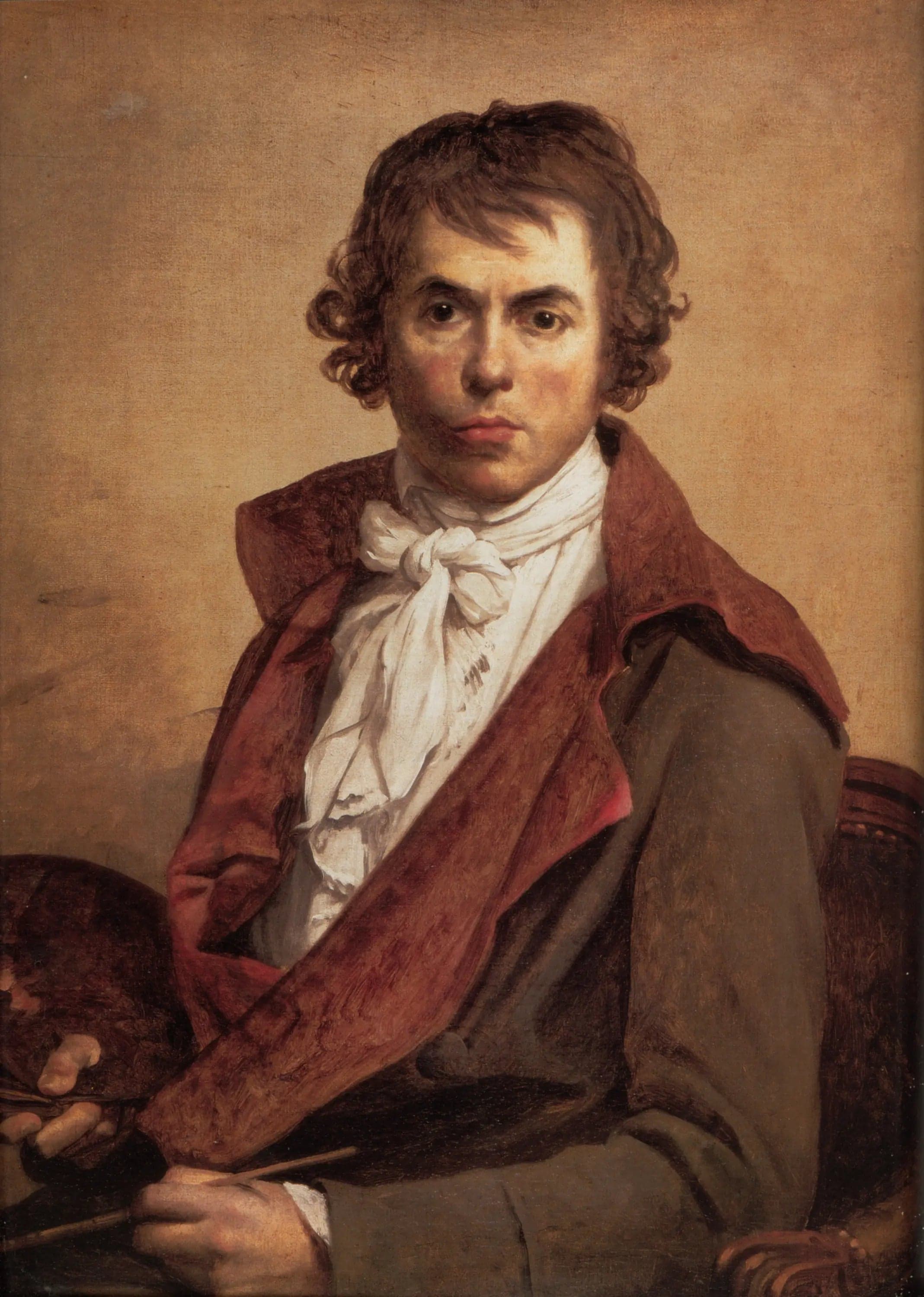
Self-Portrait - Jacques
- Original dimensions
- 64 x 81 cm
- Movement
- neoclassical painting
- Museum
- room 702
- Year
- 1794
Scene depicted
In this canvas , Jacques-Louis David presents himself without artifice. As a self-portraitist, he chooses to depict himself in a posture that is both solemn and introspective, reflecting his determination. This masterpiece , where every detail is meticulously planned, offers us a penetrating look at the artist's face, deeply rooted in his time while remaining timeless.
Historical context
Created in 1794, this painting is set against the tumultuous backdrop of the French Revolution, where art becomes a reflection of ideals of freedom and virtue. Jacques-Louis David , an emblematic figure of neoclassicism , created this canvas with a keen sense of composition and light. Currently displayed in room 702 of the museum, this work measuring 64 x 81 cm resonates with an era of significant cultural and political upheaval.
Place in the artist's career
Positioned at a crucial turning point in his career, Self-Portrait testifies to the promising beginnings of Jacques-Louis David . By relating it to works such as “ The Oath of the Horatii ” and “ The Death of Socrates ”, we observe an evolution in his approach to composition and emotion. This painting marks the advent of remarkable artistic maturity.
Anecdote
“Art is a way of revealing the soul.” These words could perfectly summarize the inspiration behind this masterpiece . Imagine an autumn morning, soft light filtering through a dusty window, and an artist seeking to capture not only his face but the very essence of his being. Every brushstroke in Self-Portrait is a declaration of passion and commitment.