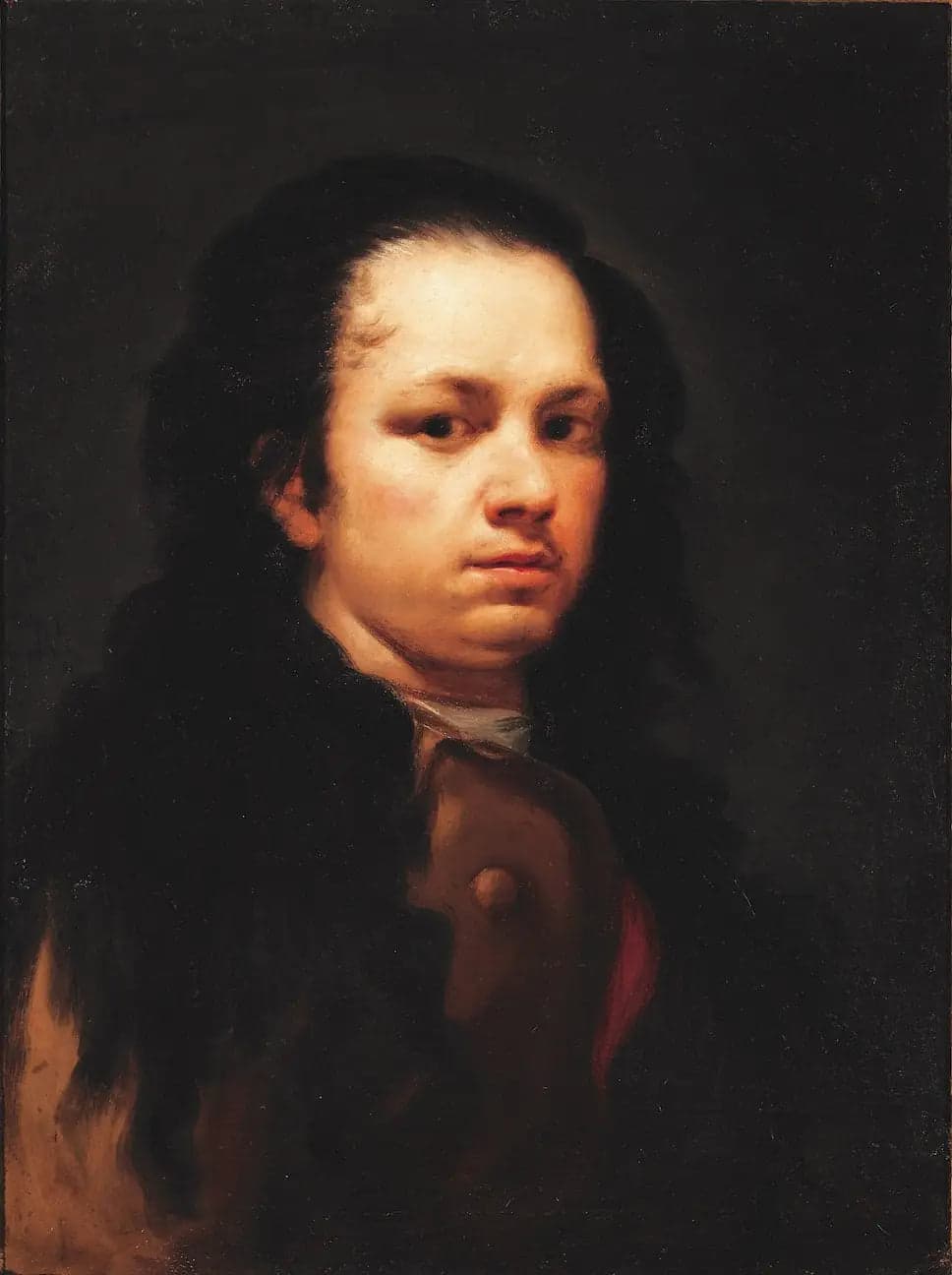
Self-Portrait
- Original dimensions
- 35.6 x 45.8 cm
- Museum
- Prado Museum
- Year
- 1815
Scene depicted
In this painting , Goya does not just paint his face; he immortalizes his soul. The intense expression, the frank gaze, the mastery of each stroke tell a story of creativity and defiance. This masterpiece reveals the concerns of an artist facing a changing world, a symbol of his deep introspection and artistic commitment.
Historical context
Created in 1815, this canvas is the result of a historical context where Spain was experiencing intense political and artistic upheavals. Francisco de Goya , a pioneer of romanticism , captured in his painting emotions that were both personal and national. Currently exhibited at the prestigious Prado Museum in Madrid, this masterpiece of 35.6 x 45.8 cm embodies the legacy of a turbulent era.
Place in the artist's career
The self-portrait of 1815 is part of a pivotal period in Goya's career, marking a stylistic maturation where he [re]discovers the evocative power of light. Alongside “The Naked Maja” and “The Executions of May 3, 1808,” this canvas reveals an evolution towards a more personal and emotional representation of his art.
Anecdote
“The truth of art lies in the sincerity of emotions,” said Goya. In the heart of a sunny morning, he captured his reflection in a mirror, welcoming the inspiration of his masterpiece through a golden light filtering through the window. This transformative experience is the source of the evocative power of his painting .