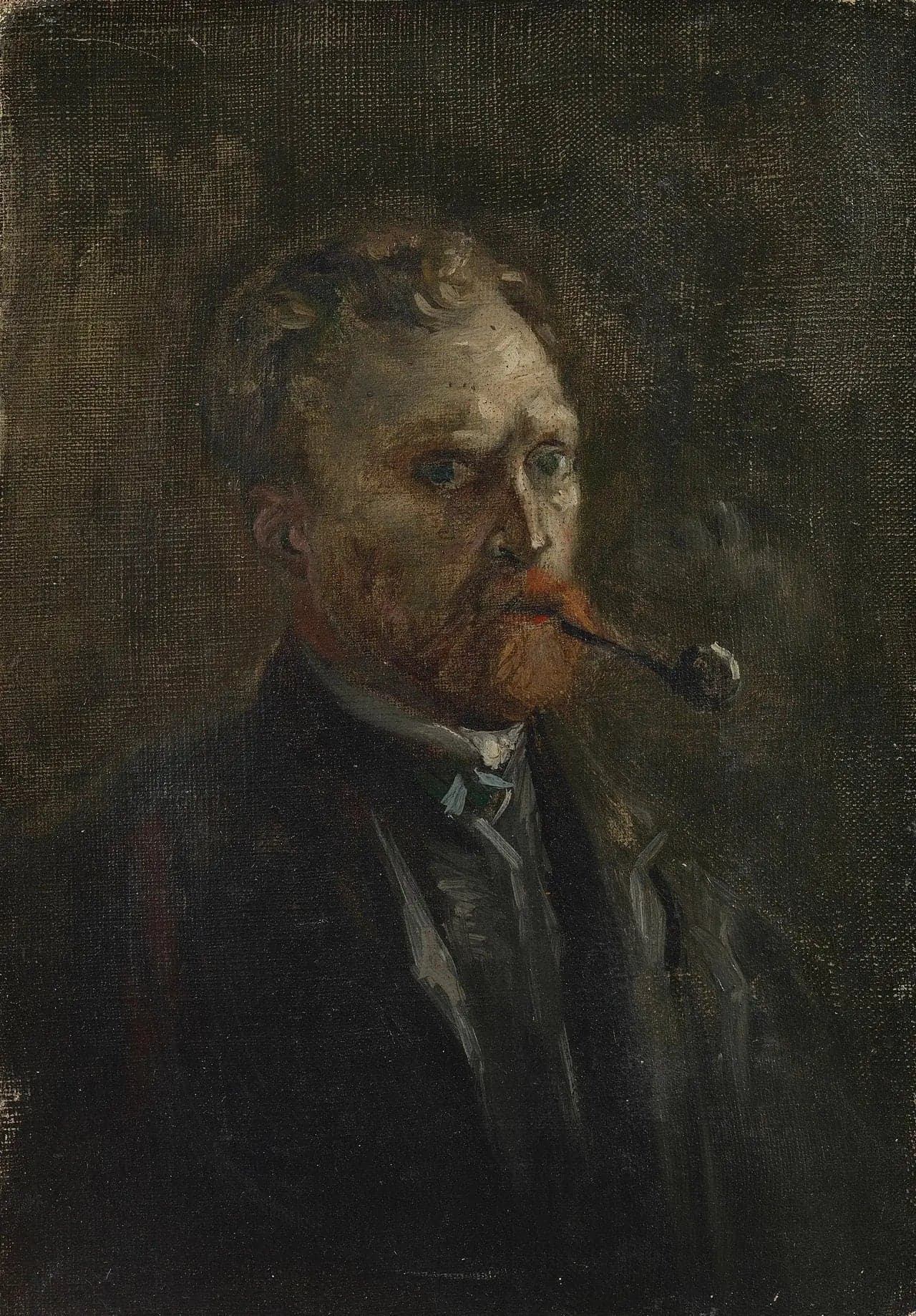
Self-portrait
Scene depicted
In this painting , Van Gogh explores not only his image but also his internal struggles. The vibrant background and bold touches of color evoke a depth of feeling, translating the intensity of his soul through the painting . The features of his face, marked by a mix of softness and melancholy, tell a story of introspection and authenticity in the face of trials.
Historical context
Precisely created in 1887 in Paris , this painting emerges from the heart of post-impressionism , an artistic movement that revolutionizes the perception of light and colors. At that time, Vincent van Gogh , then in search of identity and expression, immortalizes his image through a prism of vivid emotions. This work of art is currently preserved at the Van Gogh Museum in Amsterdam, where its dimension of 33 x 41 cm invites intimate contemplation.
Place in the artist's career
This painting , situated at a crucial period in the career of Vincent van Gogh , stands as a starting point towards artistic maturity. At this moment, he begins to explore his own identity, anticipating major works such as “ The Starry Night ” and “ The Sunflowers ”, which highlight a marked evolution in both the expression of emotions and the treatment of colors.
Anecdote
“I paint myself to discover who I am.” This phrase, resonating like a glimmer of authenticity, captures the decisive moment of inspiration for the painter. Imagine a spring morning in Paris , where the sounds of a waking city blend with the brilliance of the day's colors, providing a vibrant backdrop for the emergence of this masterpiece .