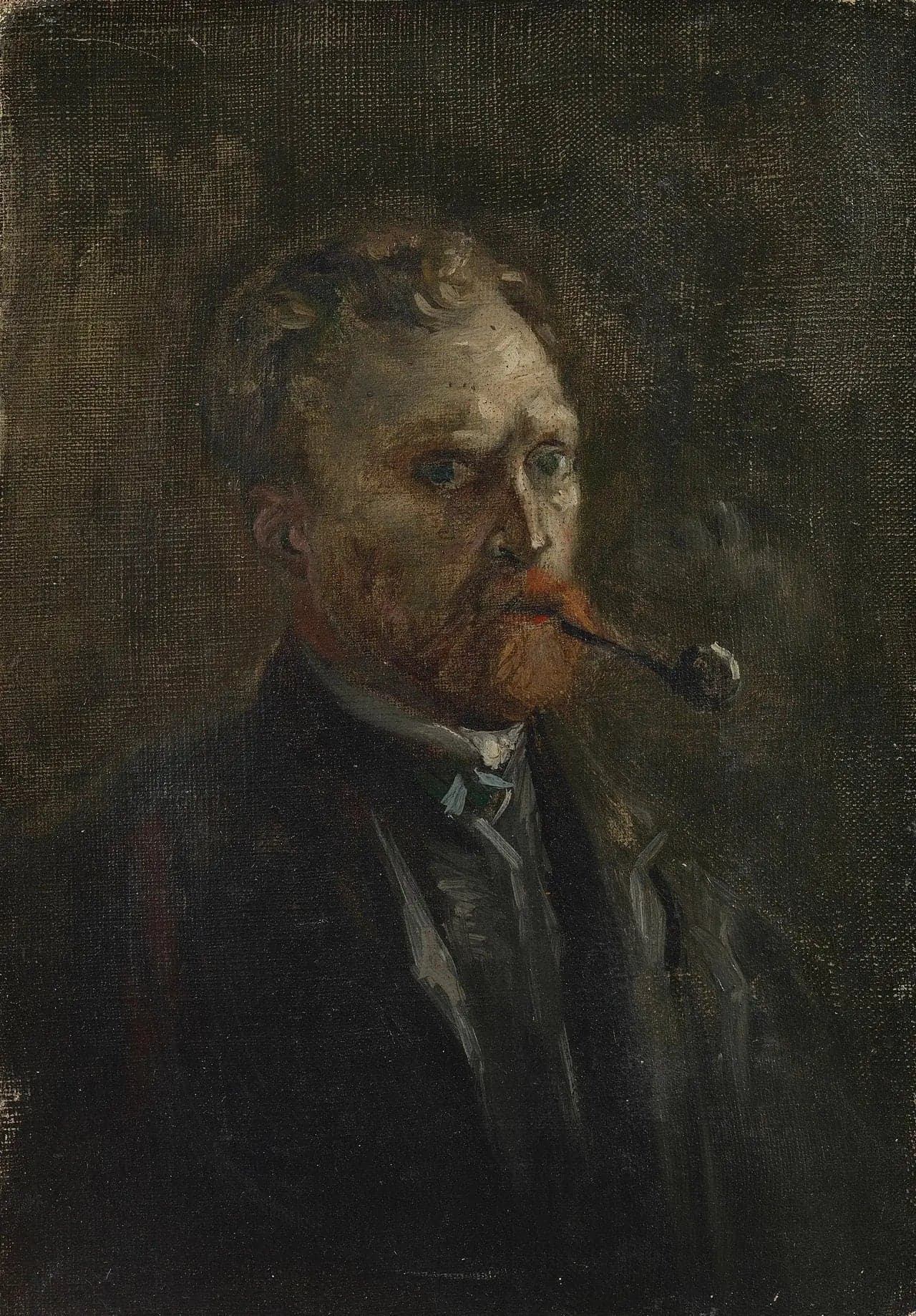
Self-portrait
Scene depicted
In Self-Portrait , Vincent van Gogh engages in visual introspection. The composition highlights his face, surrounded by small touches of color that convey his tumultuous state of mind. This painting is a true dive into the soul of an artist in search of identity through a bold palette.
Historical context
Created in 1887 in Paris , Self-Portrait is an emblematic work of the post-impressionist movement, a flourishing period of art that emerged at the end of the 19th century. This painting , currently exhibited at the Van Gogh Museum in Amsterdam, measures 14 x 19 cm and embodies the passion and intensity of the artist in his exploration of color and form.
Place in the artist's career
Self-Portrait represents a crucial milestone in the career of Vincent van Gogh , marking a transition to a more assertive and personal style, especially in comparison to The Sunflowers and The Starry Night . This canvas reveals the artist's growing fame, his unparalleled mastery of color, and his quest for inner truth.
Anecdote
“I am my own light, my own shadows,” Vincent is said to have remarked while painting his masterpiece in his Parisian studio. It was a spring morning, the scent of flowers floating in the air, that inspired him to capture this delicate essence of his being on the canvas , an oil painting vibrant with sincerity.