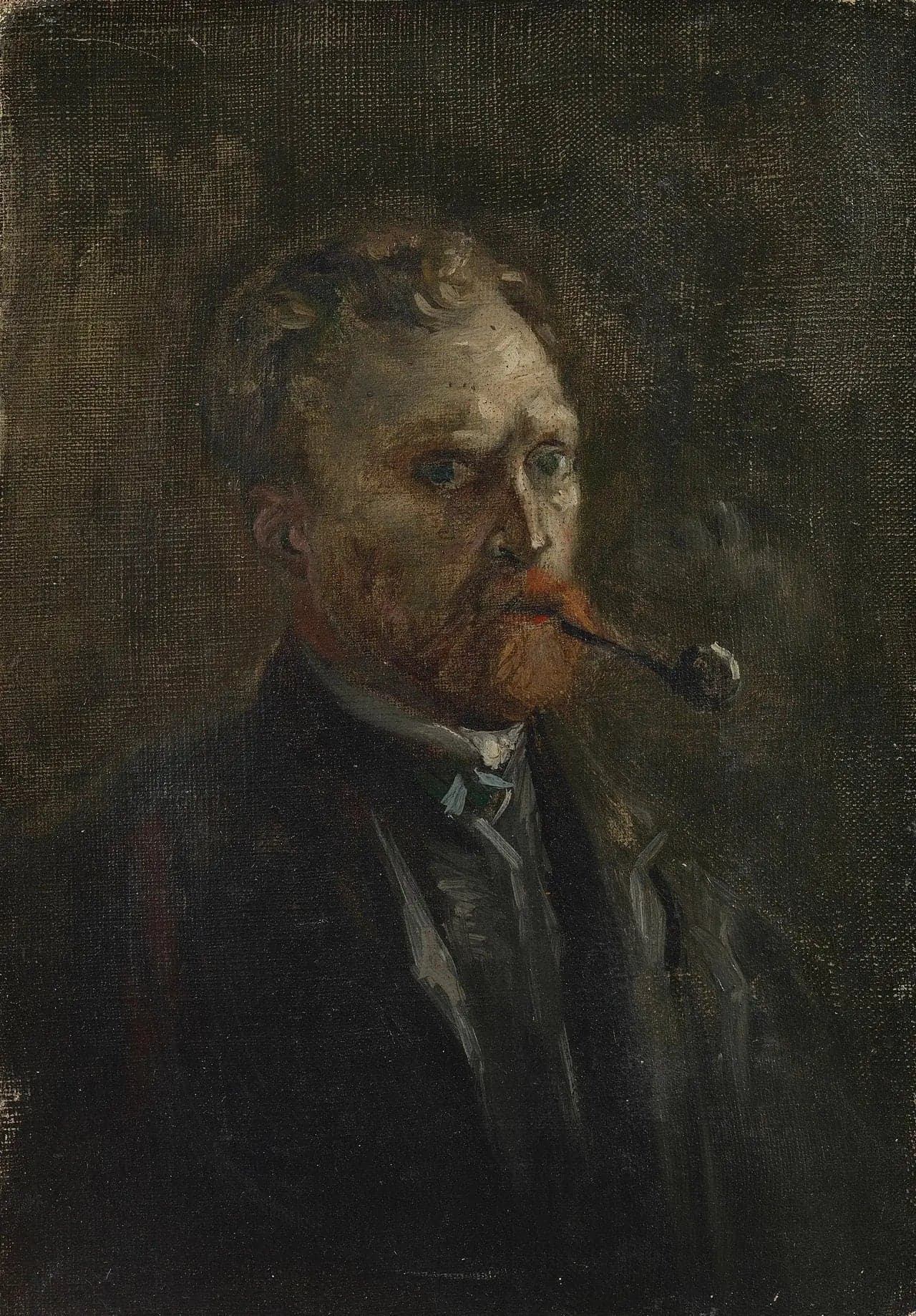
Self-portrait
Scene depicted
In this pictorial work, Vincent van Gogh presents himself to us with striking spontaneity. His piercing gaze, intense expression, and bold use of colors give this canvas a poignant narrative, a frozen moment that connects us directly to the artist. Every detail, from his clothing to his posture, invites the viewer to dive into the tormented soul of the artist.
Historical context
Created in 1887, this painting emblematic takes shape in Paris , artistic cradle of the late 19th century. Evolving at the heart of post-impressionism , Self-Portrait by Vincent van Gogh is part of a period where personal expression becomes paramount. Today, this canvas with dimensions of 33.5 x 41 cm proudly resides at the Wadsworth Atheneum , a museum that celebrates art in all its splendor.
Place in the artist's career
Self-Portrait stands at a crucial turning point in Van Gogh's career, marking a time of profound personal and stylistic development. Alongside works like The Starry Night and The Sunflowers , this canvas illustrates how the artist moved away from conventions to explore inner emotions. A vibrant artistic evolution, where each painting reveals the intensity of his existential struggle.
Anecdote
“The true self reveals itself in every brushstroke,” Van Gogh might have declared, as he captured his essence on the canvas during a cool spring morning. This moment of solitude illuminated by soft, golden light allowed him to unveil his inner emotions through the vibrant masterpiece that is Self-Portrait .