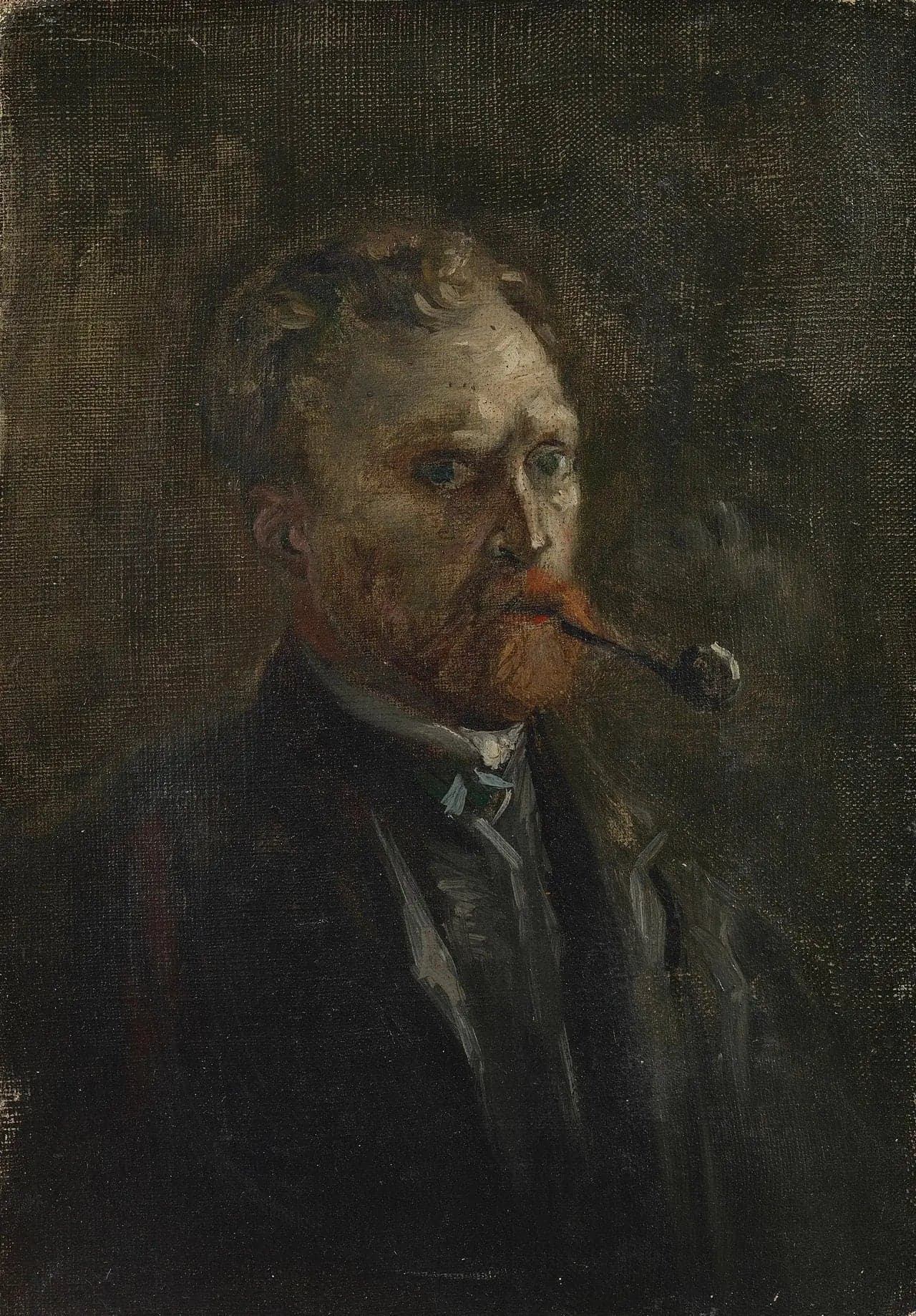
Self-portrait
Scene depicted
In this painting, Van Gogh reveals himself to the world, illuminating his face with bold brushstrokes. The piercing gaze of the painter seems to capture his soul, translating his inner universe and the turmoil of his mind. Through this canvas , he invites us to share his introspection, reflecting both solitude and passion.
Historical context
Created in 1886, in Paris , this painting belongs to the post-impressionist movement, reflecting a fascinating era where art renews itself and breaks free from conventions. The canvas is currently housed at the Van Gogh Museum in Amsterdam, an iconic place dedicated to the artist, and measures 19 x 27 cm.
Place in the artist's career
This canvas marks a period of profound transformation for Van Gogh. After "The Sisters of Pebbles" and before his famous " Starry Night ," " Self-Portrait " represents a quest for identity in his career, a bridge between his early works and his later, bolder achievements.
Anecdote
Van Gogh once stated: "I stand before the mirror and its realization is a revelation of self." This moment of introspection, taken at the heart of his studio, laid the groundwork for this masterpiece , a deeply personal pictorial adventure.