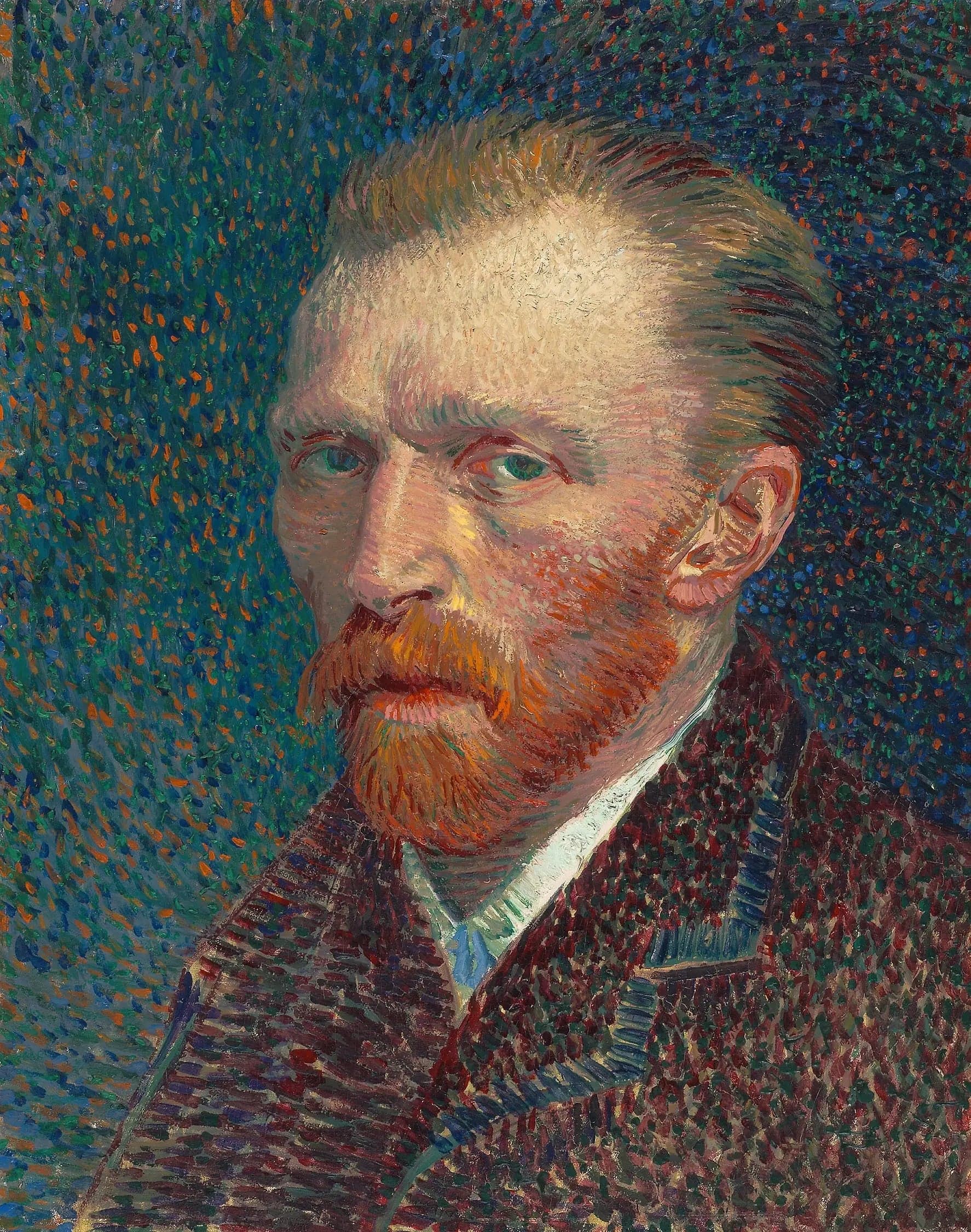
Self-portrait
Scene depicted
In this masterpiece , Vincent van Gogh depicts himself with unparalleled emotional intensity. The composition, marked by bold brushstrokes and a rich palette, invites the viewer to enter his universe. Every detail of his gaze, every nuance of his melancholy, awakens an almost palpable depth.
Historical context
Created in 1887 in Paris , this painting is part of the artistic movement of Post-Impressionism . At that time, Vincent van Gogh , although little recognized, was slowly establishing himself as an essential figure in art. Today, the canvas is revered within the collections of the Art Institute of Chicago and measures 33.7 x 42 cm.
Place in the artist's career
“ Self-Portrait ” is part of a fundamental period in Van Gogh's career, just before he gained notoriety. It can be juxtaposed with other works from the same period such as “ The Sunflowers ” and “ The Starry Night ”, thus testifying to an inevitable maturation, both technical and emotional.
Anecdote
“It is only through my portraits that I reveal my soul.” These words of van Gogh still resonate today. Imagine him, one spring morning, mobilizing all his creative energy to capture this fleeting reflection of himself, both intimate and evocative. This canvas thus becomes the mirror of his being, a moment suspended in time.