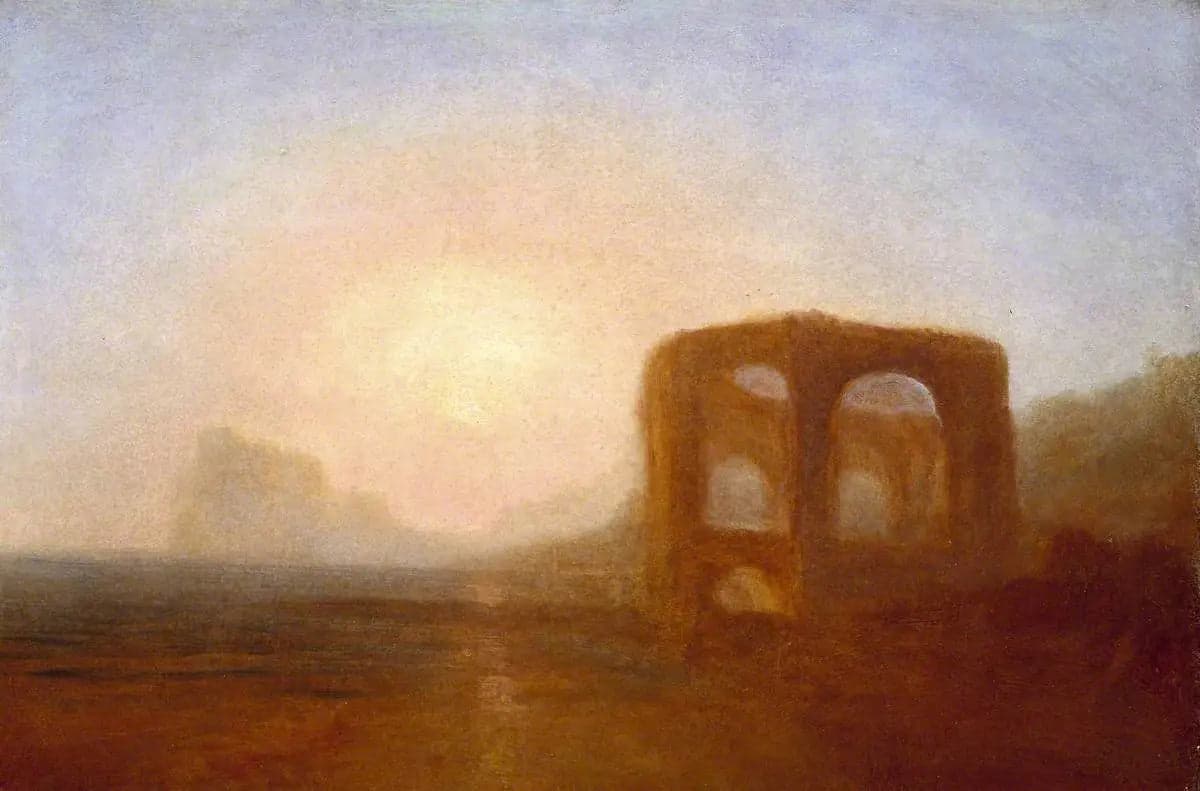
Seacoast with Ruin, probably the Bay of Baiae
- Original dimensions
- 41.3 x 60.3 cm
- Museum
- Tate
- Year
- 1828
Scene depicted
In his painting, Turner stages a majestic coast, where ancient ruins emerge from a contrast between the deep blue of the sea and the swirling clouds. This canvas tells the story of a glorious past, between the wild beauty of nature and the remnants of a declining civilization, inviting the viewer to reflect on the ephemeral.
Historical context
Created in 1828, this painting emblematic of the great master Joseph Mallord William Turner evokes the influence of the romantic movement, a period where emotion and nature meet to offer a complex view of the world. Located at the Tate , London, this canvas reveals a landscape inspired by the Bay of Baiae, once favored by Roman emperors for its beauty. While the dimensions of the work, 41.3 x 60.3 cm, highlight refined details, its emergence in a context of artistic transformation makes it a pivotal piece.
Anecdote
Turner is said to have once said: "Light is my language, I seek to capture it." The inspiration behind this masterpiece manifested on a sunny morning, where the sound of waves and the scent of maritime pines enveloped the painter. This fleeting moment, captured in the heart of the bay, infused the painting with intense emotional charge, connecting the artist to nature in a harmonious dance.