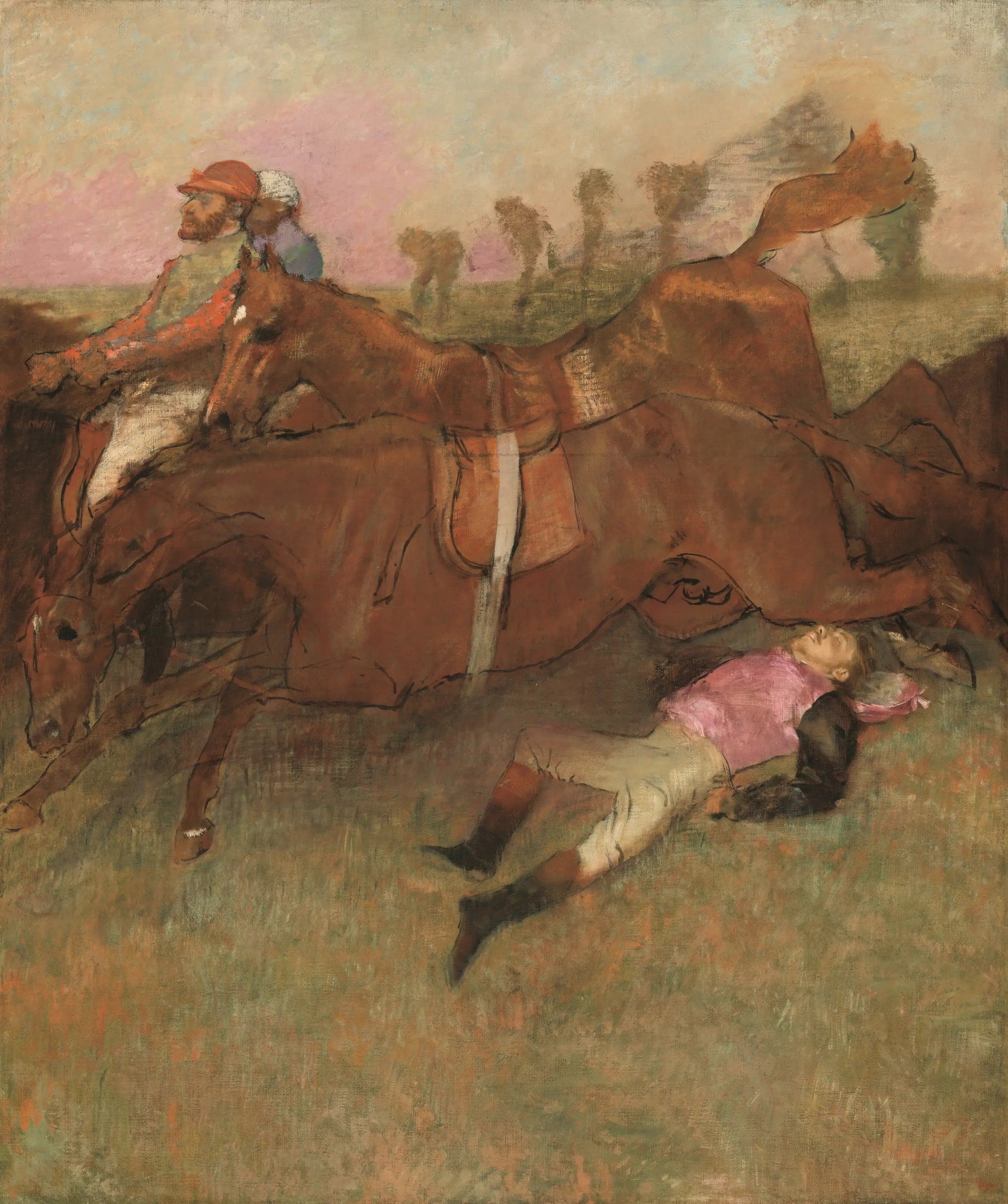
Scene of the Steeplechase: The Fallen Jockey
- Original dimensions
- 152 x 180 cm
- Museum
- National Gallery of Art
- Year
- 1866
Historical context
Created in 1866, this painting is emblematic of the Impressionist movement, born in Paris, a vibrant city, a crossroads of ideas and artistic aesthetics. It is in the heart of this cultural effervescence that Degas captures the immediacy and intensity of a sporting scene. The canvas , currently on display at the National Gallery of Art , stands out for its imposing dimensions, offering the viewer a total immersion in the action.
Place in the artist's career
Scene of the Steeplechase: The Fallen Jockey represents a turning point in the career of Edgar Degas . A growing fresco of his expertise, it plays with the conventions of his time. This painting echoes other canvases such as Dancers at the Ballet and The Dance Class, marking an evolution in the expression of movement and light, illustrating his desire to capture fleeting moments with emotional intensity.
Anecdote
Degas once mentioned: "Painting is a moment of life, frozen in time." It is this philosophy that fueled his inspiration when creating this masterpiece , observed one sunny morning at the racetrack. The momentum of the horses, the pounding of hooves, and the smell of fresh grass intertwined, prompting him to capture this blend of movement and raw emotion.