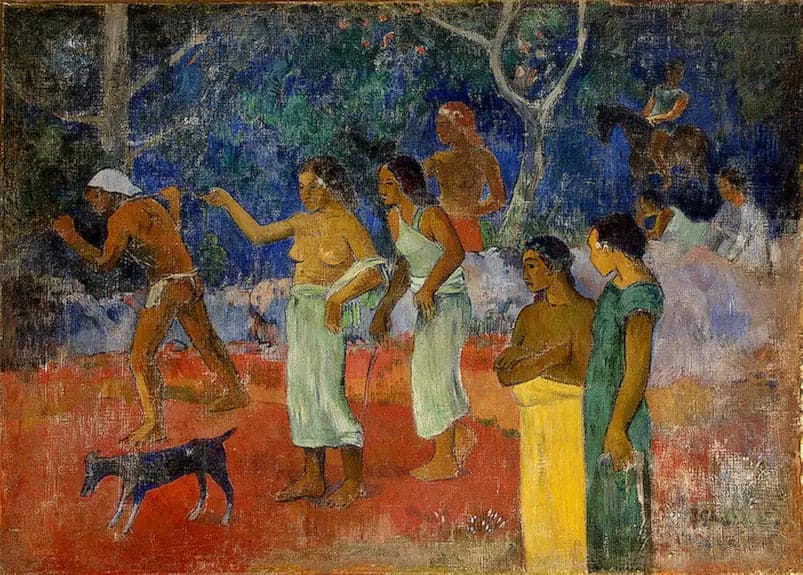
Scene of Tahitian Life
- Original dimensions
- 124 x 89 cm
- Museum
- Hermitage Museum
- Year
- 1896
Historical context
Created at the end of the 19th century, this painting is emblematic of the post-impressionist movement. Paul Gauguin , then residing in France, draws his inspiration from the pure and wild beauty of Tahiti, an idyllic land that becomes a symbol of escape and artistic freedom. This canvas , currently housed in the Hermitage Museum , is a vibrant testament to the exploration of color and landscape that characterizes this era.
Place in the artist's career
At the heart of his career, “Scene of Tahitian Life” represents a moment of artistic maturity for Paul Gauguin . Alongside his canvas “The Yellow Christ” and his masterpiece “Nafea Faa Ipoipo,” this work illustrates his quest for a unique pictorial language, where color and composition intertwine to express deep and personal emotions.
Anecdote
“Color is my language, and my canvas is my most sincere confession.” This heartfelt cry from Gauguin resonates in the canvas he created in 1896, inspired by bright mornings in Tahiti. In this pictorial work, he captures the serenity of a suspended moment, evoking the floral scents and melodies of gentle waves. The painting thus becomes a bridge between his soul and that of this nurturing land.